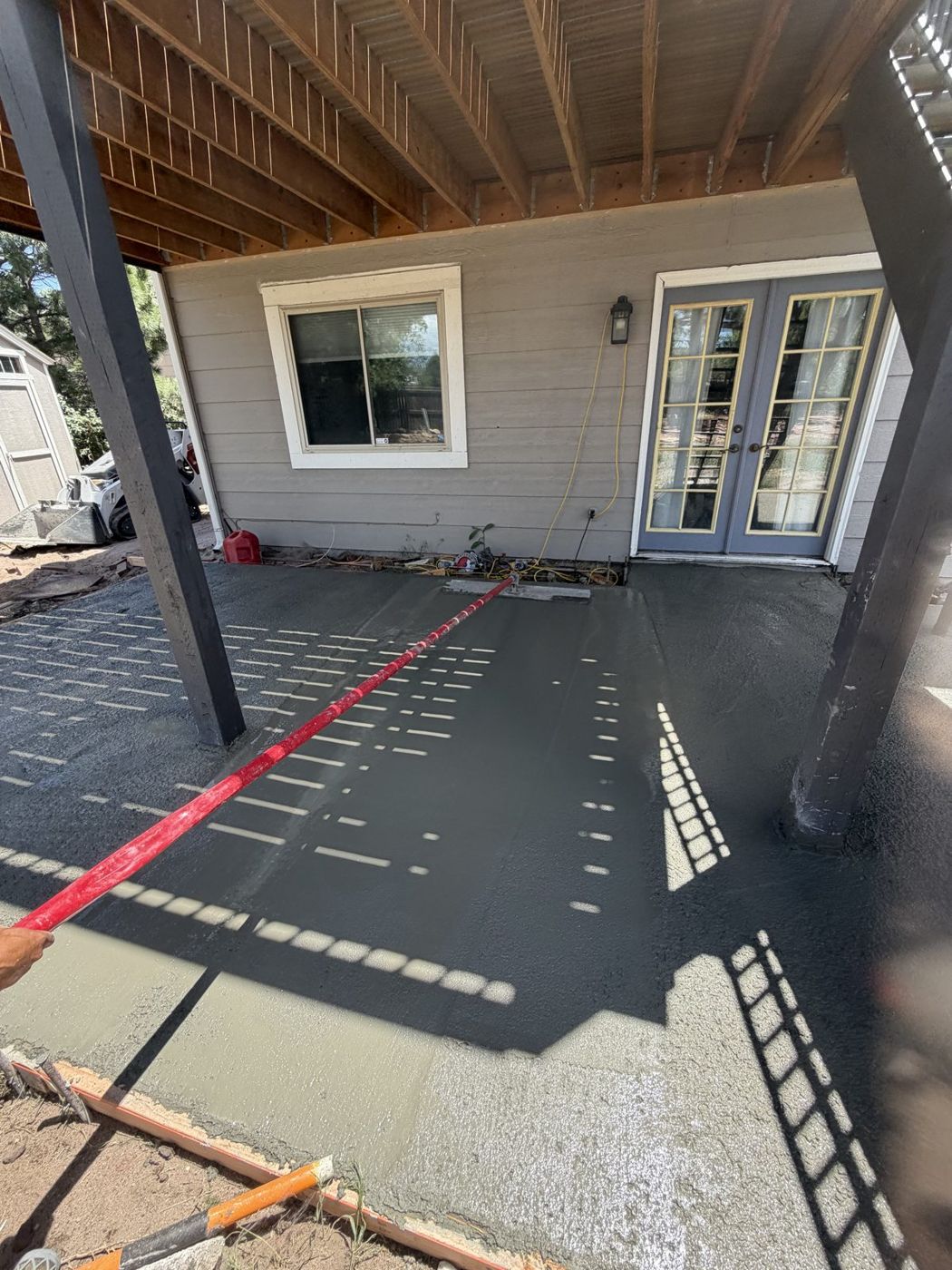
Durability
Why concrete cracks in Colorado Springs and how to stop it.
Which concrete cracks are normal in Colorado Springs, which mean trouble, and how the base, mix, joints and curing prevent the rest.
Read the article →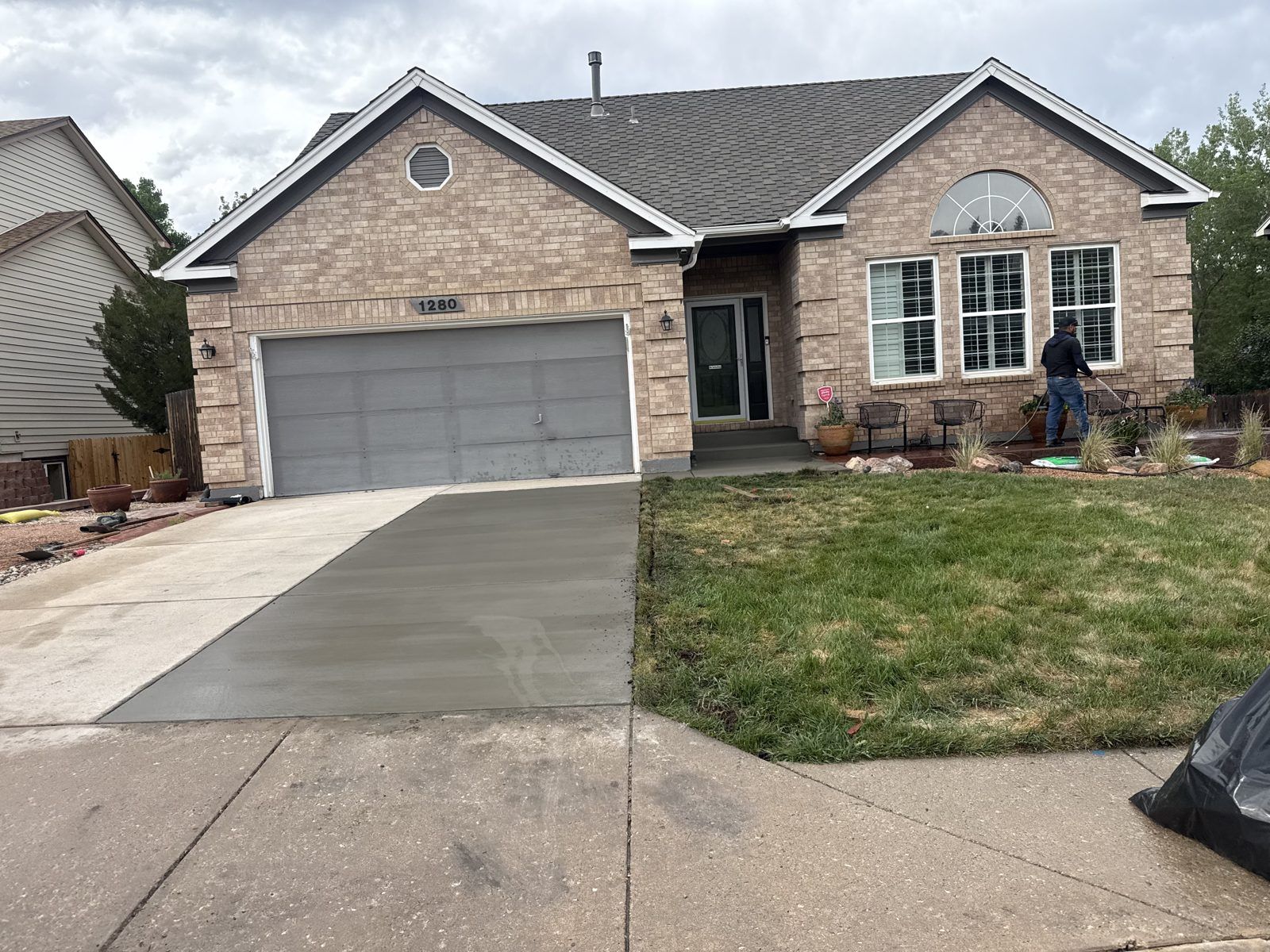
Planning
No figures here, just the work that decides one: what comes out, what goes underneath, how the top is finished, and the permits at the street.
By CO Springs Concrete · Updated September 2026 · 7 min read
A concrete driveway estimate in Colorado Springs comes down to three things: what has to come out, what goes underneath, and how the top is finished. Access for equipment and the concrete truck, the shape of the drive, drainage, permits for work at the street, and the season fill in the rest. Two quotes only compare fairly when they describe the same work.
You will not find a figure in this guide. If you searched for what affects concrete driveway cost, this is the answer without a number, because a number with no written scope tells you very little.
On a concrete driveway replacement in Colorado Springs, much of the work happens before new concrete shows up.
An old driveway has to be broken up, loaded and hauled away. That takes labor, equipment and trucking, and some quotes leave it out. Check that tear-out and haul-away are written into the scope.
A thick slab, or one full of steel, takes longer to break and weighs more to haul. You often cannot tell until someone looks at the edges, which is why an honest estimate happens on site. For newer subdivision slabs, see why builder-grade driveways crack.
Breaking and digging go faster when a machine can reach the work. A tight side yard, a steep lot, a fence or a retaining wall can mean smaller equipment or more hand work.
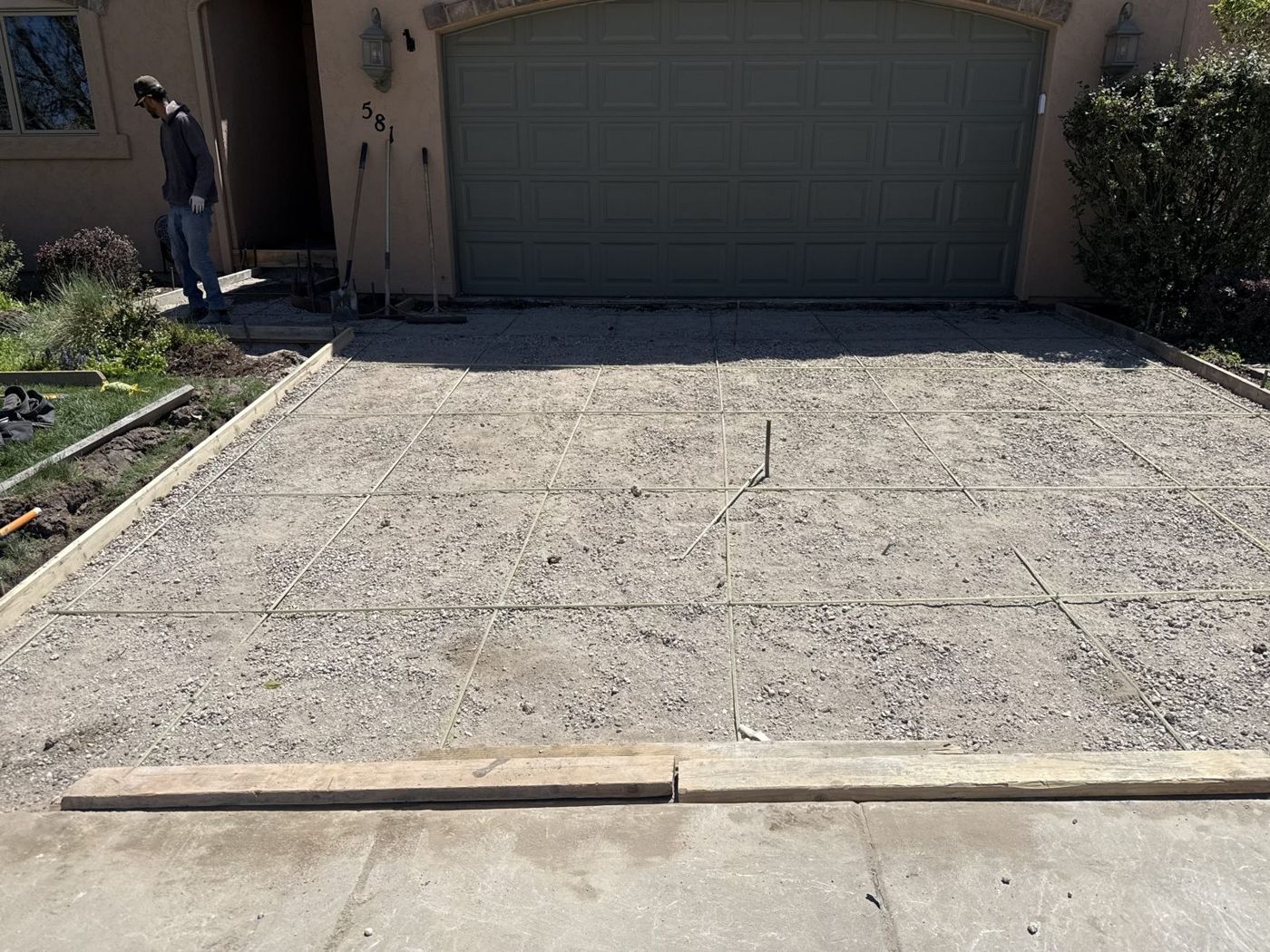
The American Concrete Pavement Association says uniform support is of utmost importance under concrete pavement, and that expansive soils can be managed by compacting the subgrade at the proper moisture content. That matters here: the Colorado Geological Survey calls expansive soil Colorado's most significant geologic hazard and lists cracked driveways among the common damage.
Thickness should suit the heaviest vehicle and the soil. Get it in writing, for every section. At the street, the City's standard specifications call for residential driveway aprons in the right-of-way to be six inches thick and no wider than 24 feet at the street opening, and a sidewalk crossing a residential driveway must be at least six inches thick.
No reinforcement stops concrete from cracking. The National Ready Mixed Concrete Association (NRMCA) says wire mesh will not prevent cracking but tends to keep cracks and joints from opening up. Synthetic fibers mainly reduce early plastic shrinkage and settlement cracks, and NRMCA says they should not replace structural steel, make a slab on grade thinner, or space joints farther apart. Rebar is a grid of steel bars placed before the pour. Ask for the bar size and spacing, and how the steel stays at the right height during the pour.
Water expands as it freezes. According to NRMCA, air-entrained concrete holds millions of small air bubbles that make room for that ice. For exterior slabs that stay moist and see deicers, NRMCA points to ACI 332, the American Concrete Institute's residential code, and recommends about 6 percent total air for common aggregate sizes.
The Federal Highway Administration, citing ACI's Guide to Durable Concrete, puts pavements that freeze near saturation and get deicers in exposure class F3, the very severe class. The City's concrete specification requires air entrainment for all concrete exposed to weather and de-icing agents. If a quote does not say air-entrained, ask.
Joints are planned cracks. NRMCA recommends a maximum spacing of 24 to 36 times the slab thickness, about 10 feet for a 4-inch slab, and no more than 15 feet. Panels should be nearly square, no longer than 1.5 times their width, with no L-shapes. Grooves should be at least a quarter of the slab deep, and saw cuts run within 4 to 12 hours after finishing. Curves need more joints, so ask to see the layout. See why concrete cracks in Colorado Springs.
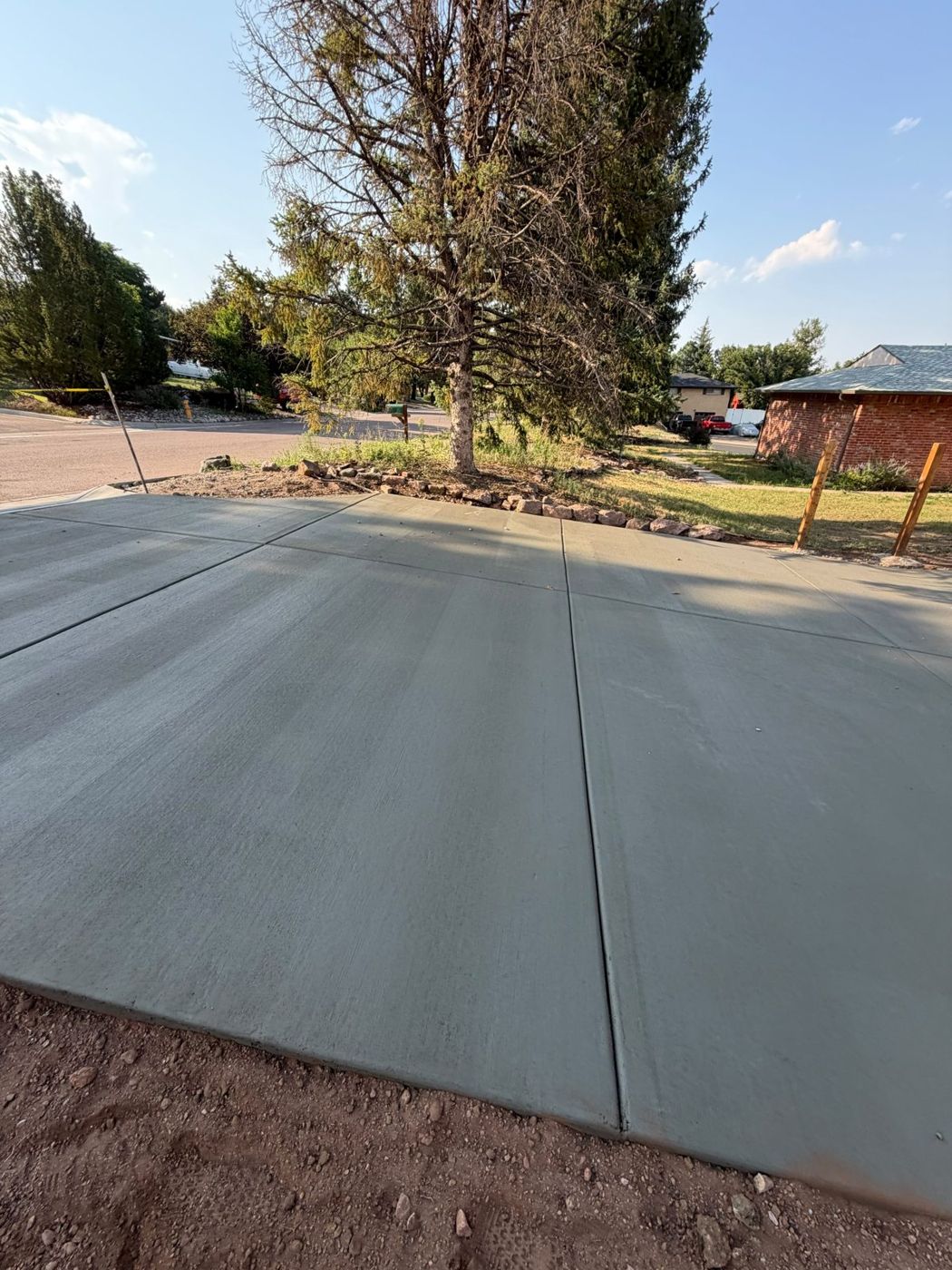
A broom finish is the everyday exterior surface. The crew screeds and floats the concrete, waits for bleed water to leave, then pulls a broom across it for traction. NRMCA says a broom finish is adequate for most exterior surfaces, and warns that overworking the top reduces entrained air in the surface layer.
Decorative finishes add steps and hands. Stamped concrete often means adding color, pressing pattern mats into the slab while it is workable, detailing edges by hand, then cleaning and sealing, all on a tight clock. Our stamped concrete page shows the patterns and process.
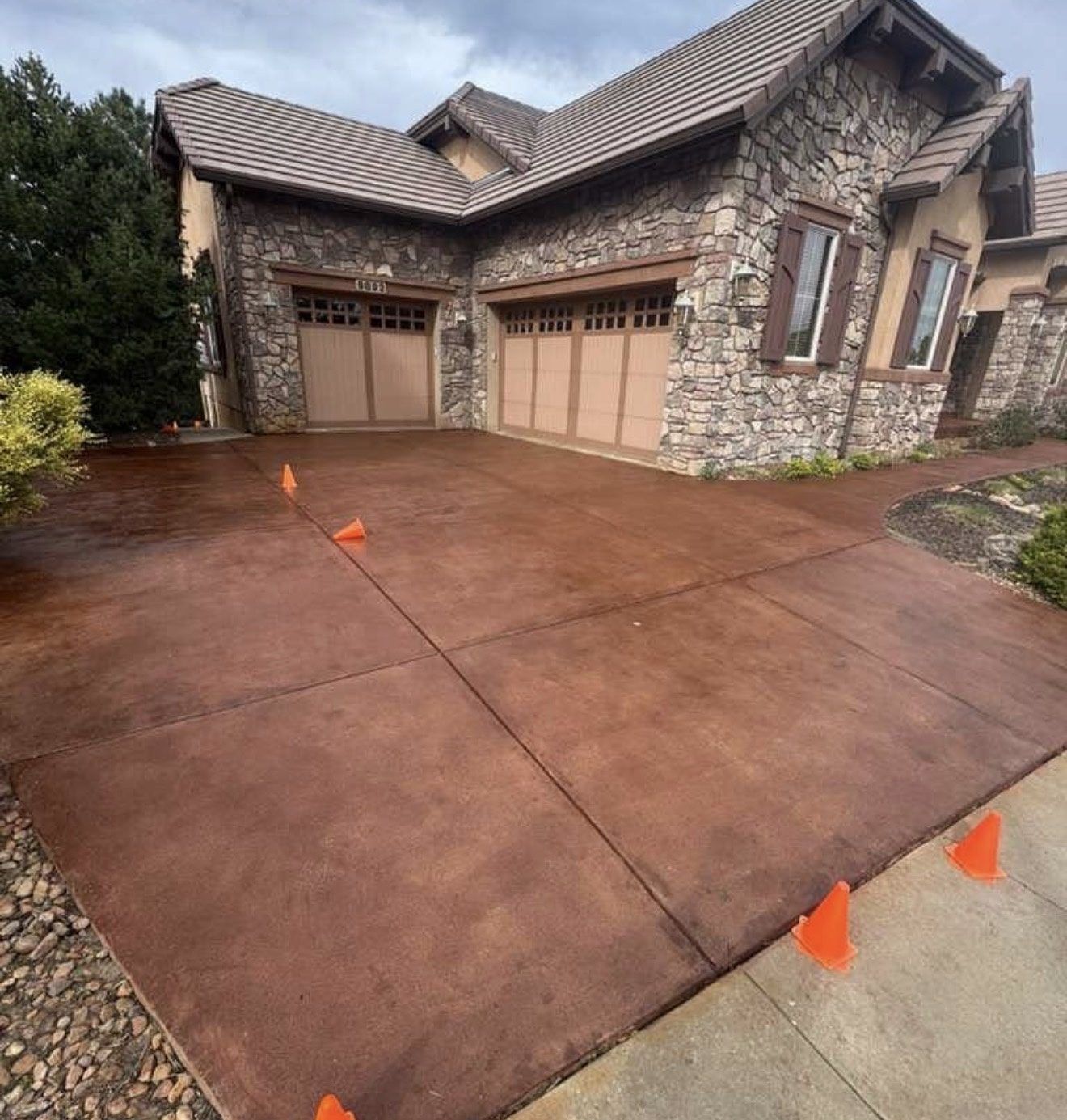
If the ready-mix truck can back up to the forms, concrete goes straight down the chute. If a long drive, slope or soft lawn keeps it away, the concrete has to be pumped or wheeled in, and a pump truck belongs in the scope.
Curves, flared aprons, and tie-ins to a garage slab, sidewalk or patio take more forming, hand finishing and joints than straight runs.
The International Residential Code requires impervious surfaces within 10 feet of a building foundation to slope at least 2 percent away from the building. Getting the grade right can mean extra digging or fill.
NRMCA's cold weather guidance, which draws on ACI 306R, defines cold weather as more than three consecutive days averaging below 40°F, with air at or below 50°F for more than half of any 24-hour period. Surfaces the concrete touches should be free of ice and snow and above freezing, and fresh concrete should be protected from freezing until it reaches 500 psi, about two days after placement. Pour-day timing is covered in what happens on pour day.
It depends on where the work is. The Pikes Peak Regional Building Department lists private driveways supported directly on grade among work that does not need a building permit.
The street end is different. The City of Colorado Springs says no one may construct or repair a sidewalk, curb and gutter, or driveway within the City right-of-way without first obtaining a license and a permit. The City's concrete permit, issued to licensed contractors, includes a category for removing and replacing existing concrete. That can cover the driveway approach, curb and gutter, and any public sidewalk your driveway crosses. Right-of-Way Management is at (719) 385-5977.
Outside city limits, for example in parts of Falcon, Black Forest or Peyton, the road out front may be a county road. El Paso County Public Works requires a permit application for work in the county right-of-way, and its form lists driveway aprons, curbs and culverts. Some HOAs also require design approval. Confirm the rules for your address with the City, the County or PPRBD.
Usually because they do not describe the same driveway. Put each concrete driveway quote side by side and check these lines.
| Item | What to look for in writing |
|---|---|
| Thickness | A stated thickness for the driveway and apron |
| Reinforcement | Rebar, mesh or fibers, with bar size and spacing |
| Base | Excavation depth, base material, compaction |
| Mix | Air-entrained exterior mix for freeze-thaw |
| Joints | Saw-cut or tooled, with a layout |
| Tear-out and haul-away | Included, or listed as an extra |
| Permits | Who pulls any right-of-way permit |
| Curing | Method and instructions for you |
| Cleanup | Forms pulled, edges backfilled, debris gone |
NRMCA says curing should typically continue for 3 to 7 days, and proper curing reduces crazing, dusting and scaling. The higher quote is not automatically better. Ask every contractor to fill in the same lines, and get a free on-site estimate from us to compare.
We are a locally owned, family-operated concrete contractor, licensed and insured, pouring driveways in Colorado Springs, Monument, Black Forest, Peyton, Falcon and Fountain. Every estimate starts with a free visit to your property and ends with a clear written quote.
See more of our concrete driveways, then book your free on-site estimate.
The Pikes Peak Regional Building Department lists private driveways built directly on grade as work that does not need a building permit. Work in the City right-of-way is different: the City requires a licensed contractor and a permit to build or repair a driveway, sidewalk, or curb and gutter there. Confirm the rules for your address before work starts.
It depends on the heaviest vehicle and the soil underneath, so ask for the thickness in writing. At the street, the City of Colorado Springs specifies six-inch-thick residential driveway aprons in the right-of-way. NRMCA also says synthetic fibers should not be used to make a slab on grade thinner, so fibers are not a reason to reduce thickness.
None of them prevents cracking. NRMCA says wire mesh tends to keep cracks and joints from opening up, and that synthetic fibers mainly reduce early plastic shrinkage cracking but should not replace structural steel. Rebar is a grid of steel bars placed before the pour. Ask which one a quote includes, the size and spacing, and how it stays in place.
Usually the two quotes describe different jobs. Compare slab thickness, reinforcement, base depth and compaction, whether the mix is air-entrained, joint layout, and whether tear-out, haul-away, permits, curing instructions and cleanup are included. When a line is missing from one quote, ask that contractor to add it so both describe the same driveway.
It can be done with precautions. NRMCA guidance based on ACI 306R says concrete should not be placed on surfaces with ice or snow, and fresh concrete should be protected from freezing until it reaches 500 psi, about two days after placement. Ask any contractor how they will protect the slab with blankets or heat, and when they would reschedule.
Keep reading
Which concrete cracks are normal in Colorado Springs, which mean trouble, and how the base, mix, joints and curing prevent the rest.
Read the article →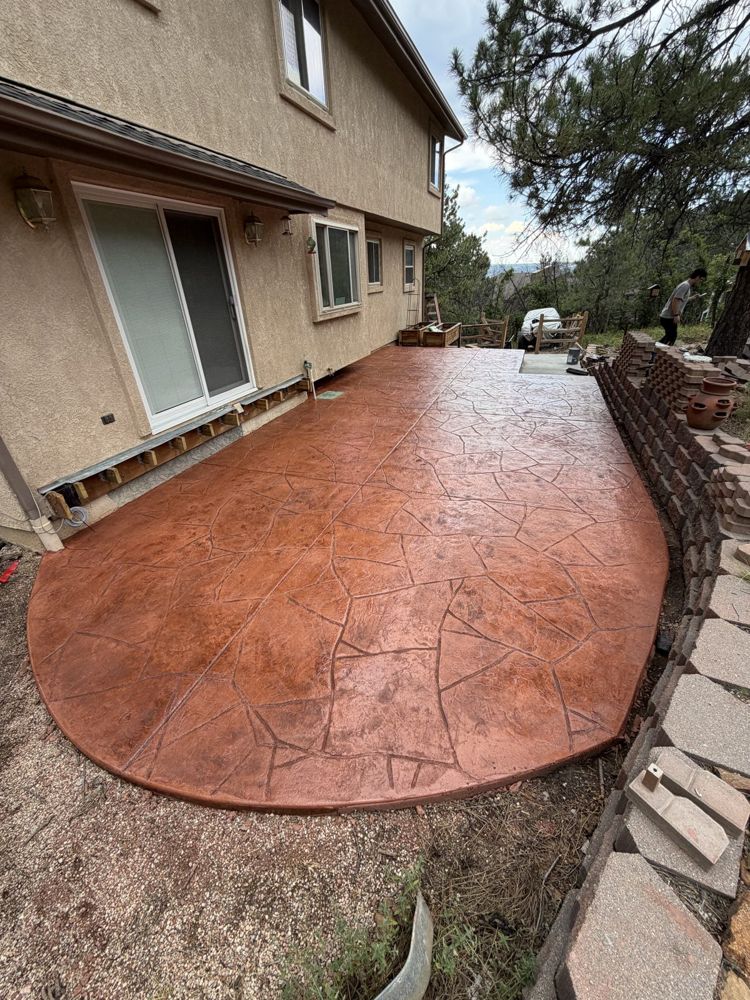
When to seal concrete before winter, penetrating vs film-forming sealers, and which ice melts research says to avoid.
Read the article →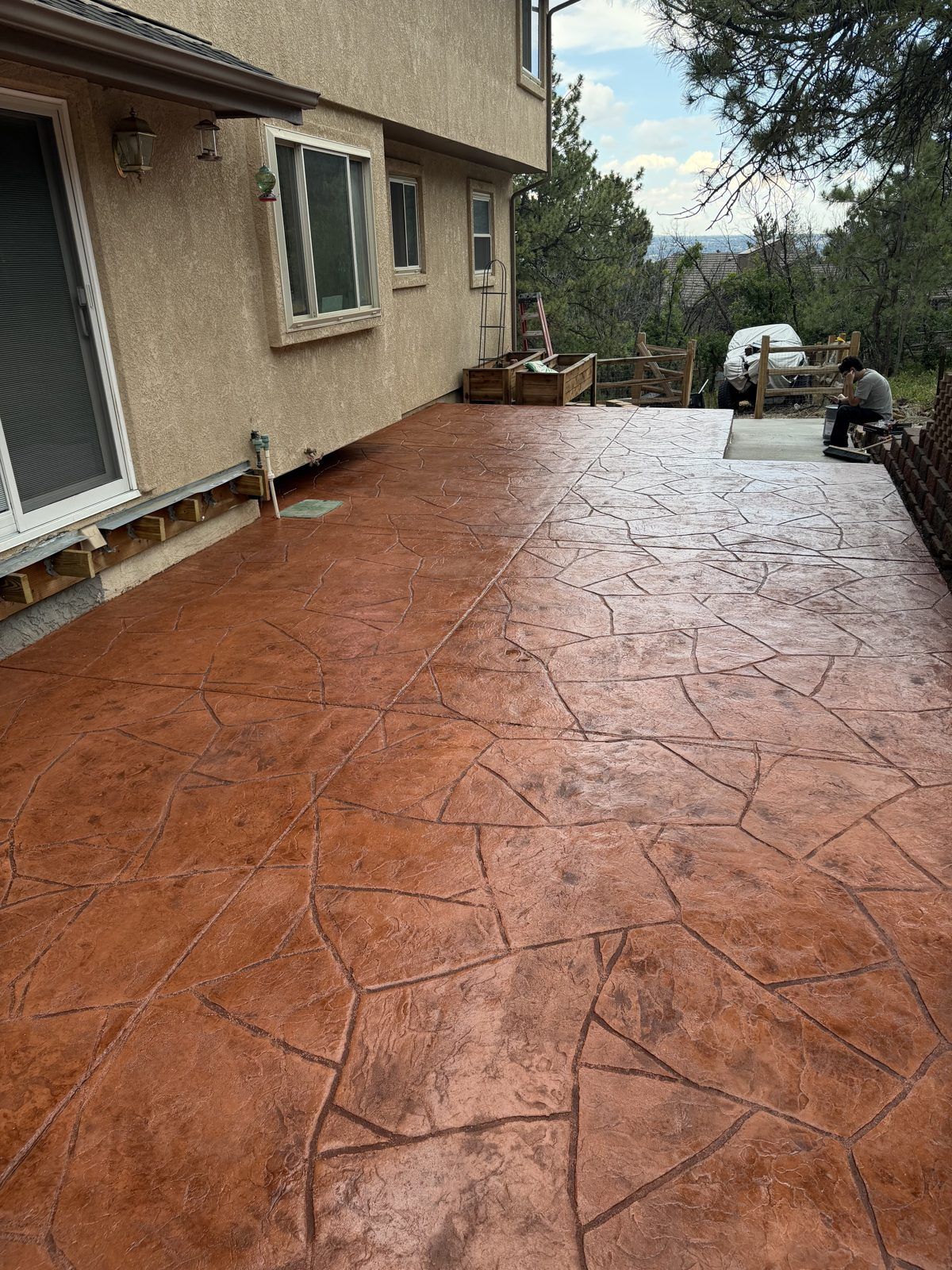
Texture or color? How stamped and stained concrete handle Colorado Springs sun, snow and freeze-thaw, plus sealing, traction and repairs.
Read the article →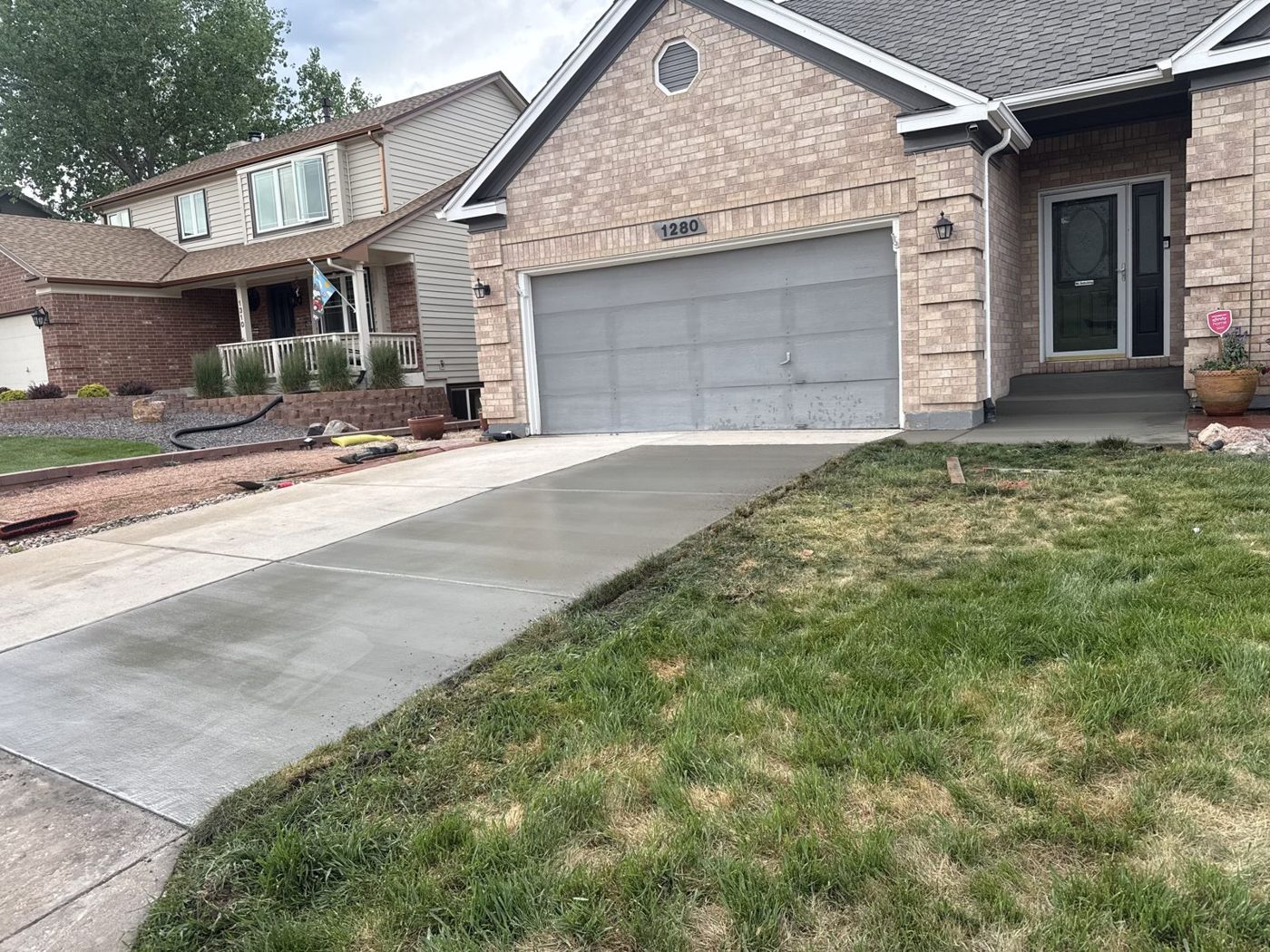
Free on-site estimate. We look at it, measure it and give you a clear written quote.