Maintenance
Seal concrete before winter and choose ice melt wisely.
When to seal concrete before winter, penetrating vs film-forming sealers, and which ice melts research says to avoid.
Read the article →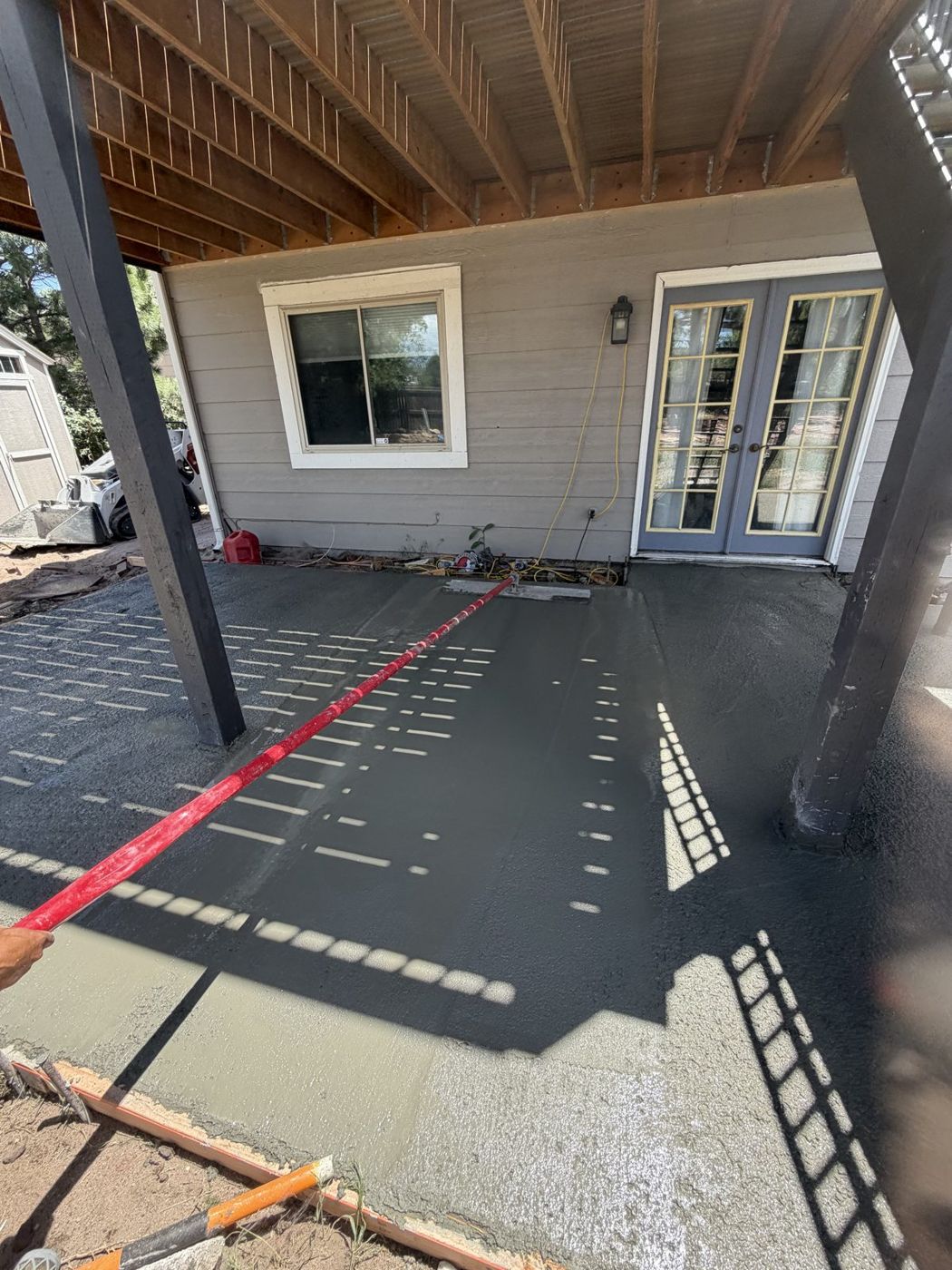
Durability
Freeze-thaw, swelling clay, shrinkage and deicers all work on a slab here. Learn which cracks are normal, which are not, and what the guidance says prevents them.
By CO Springs Concrete · Updated September 2026 · 7 min read
Concrete cracks for two basic reasons: it shrinks as it dries, and it is weak when pulled apart. Colorado Springs adds more stress on top. Water in the slab freezes and expands, clay soils swell and shrink, and deicers speed up surface damage. No slab is crack-proof, but the right base, mix, joints and curing keep cracks small and in planned places.
Here is why concrete cracks in Colorado Springs, which cracks are normal, and what prevents the rest.
Every slab starts with a built-in weakness. Concrete shrinks as it dries and is much weaker in tension than in compression. The ground under the slab holds it in place while it tries to shrink, so tension builds until something gives.
The National Ready Mixed Concrete Association (NRMCA) is plain about it: all concrete tends to crack, and completely crack-free concrete is not possible. What a good installer controls is where cracks form and how wide they get.
NRMCA traces most cracking to installation: poor jointing, a badly prepared subgrade, too much water, poor finishing, fast drying and skipped curing. Here, freeze-thaw cycles, swelling clay and deicers pile on.
Concrete is full of tiny pores that soak up snowmelt. Ice is about 9 percent less dense than liquid water, according to the USGS, so water needs more room once it freezes. In a saturated slab, that growth pushes on the cement paste around it. Each thaw lets more water in. Each freeze pushes again.
How often does that happen here? NOAA's engineering weather data for the Colorado Springs airport station lists an average of 52.2 freeze-thaw cycles a year, based on a 1988 to 2017 record. A night below freezing is not the same thing as a freeze-thaw cycle, so be wary of much larger numbers that count freezing days instead.
About fifty cycles a year is plenty. NRMCA notes that scaling risk rises with the number of cycles, and the Federal Highway Administration says deicing chemicals amplify freeze-thaw damage by keeping concrete wetter.
The main defense is entrained air. An admixture puts millions of microscopic bubbles in the mix, and those bubbles give expanding water somewhere to go so pressure does not build up.
Not every crack means the same thing.
| Crack type | When it shows up | What it looks like | What it usually means |
|---|---|---|---|
| Plastic shrinkage | While the concrete is still soft, soon after placing | Shallow, roughly parallel cracks, often 1 to 3 feet apart | The surface dried faster than bleed water could replace it. Usually cosmetic. |
| Drying shrinkage | Later, as the slab dries out | New random cracks, or existing cracks and joints opening slightly | Normal shrinkage. Joints should take most of it. |
| Settlement or subgrade | Any time | The slab has dropped or lifted at the crack | Soft, poorly compacted or moving ground underneath. Worth a closer look. |
| Freeze-thaw scaling and spalling | After one or more winters | Flaking or peeling surface, chips near joints and cracks | Water freezing in a saturated slab, often with too little air, a weak surface or poor curing. |
| Deicer damage | Often worst on newer slabs | Scaling where salt and slush collect | Too much deicer, the wrong chemical, or salt on young concrete. |
According to NRMCA, these form when surface water evaporates faster than bleed water rises to replace it. Wind above 5 mph, low humidity and high temperatures all raise the risk. Windbreaks, fog sprays and prompt curing help. The cracks rarely weaken a slab, but they can let water and chemicals in.
Homeowners often call any flaking "spalling." NRMCA defines scaling as flaking of the finished surface from freeze-thaw exposure. The FHWA lists scaling, spalling and map cracking as the forms freeze-thaw damage takes, generally starting near joints or cracks.
It can. The Colorado Geological Survey describes expansive soils as clay soils that swell when wet and shrink when dry. It lists cracked driveways, sidewalks and basement floors among the damage, and says these clays can expand up to 20 percent by volume.
The survey maps potentially swelling soil and rock along the Front Range urban corridor from Fort Collins to Pueblo, which takes in Colorado Springs. CSU Extension notes that all of Colorado's major population centers sit partly on expansive soils. Whether your lot has them depends on the ground at your address.
A slab cannot out-muscle swelling clay. What helps is a uniform base and good drainage. NRMCA's guidance is to remove topsoil and soft spots, compact the subgrade, slope it for drainage, and never pour on frozen ground.
CSU Extension's advice for houses points the same way: grade so water drains away, and keep sprinklers from soaking the soil right beside the foundation. If a driveway in a newer subdivision cracked early, our post on why builder-grade driveways crack covers the usual causes and what replacement involves.
Most small cracks that appear early are not a structural problem. NRMCA says early random cracks, while unsightly, rarely affect a slab's structural integrity or service life. A thin crack running inside a saw-cut joint is the joint doing its job.
Usually normal:
Worth a closer look:
For comparison, the City of Colorado Springs rates damage on public sidewalks by how much of the panel is broken, how many inches it has settled, and how much has spalled. Even a harmless crack is a path for water, so keep an eye on it.
For exterior flatwork that freezes and sees deicers, here is what NRMCA and the American Concrete Institute (ACI) recommend for the mix.
| Guidance | Exposure | Minimum strength | Max water-cement ratio | Air content (3/4 to 1 inch stone) |
|---|---|---|---|---|
| NRMCA CIP 2, consistent with ACI 332 (residential code) | Exterior slab, often wet, deicers used | 4,000 psi | Not listed | 6 percent |
| ACI 318, class F2 | Frequent water, no deicers | 4,500 psi | 0.45 | 6.0 percent |
| ACI 318, class F3 | Frequent water and deicers | 4,500 psi plain, 5,000 psi reinforced | 0.45 plain, 0.40 reinforced | 6.0 percent |
ACI 318 is written for structural concrete, so residential flatwork usually follows ACI 332. According to an ACI Concrete International article on exposure classes, water-cement limits reduce the chance of the concrete becoming saturated, and adding more air than the table calls for does not improve durability.
The rest of the checklist comes from NRMCA's sheets on cracking, joints and curing:
Here is what our crew does on every pour. It is also a fair list to hold any contractor to.
The crew that measures your job is the crew that pours it, and we finish with a walkthrough. When comparing quotes, ask each contractor what strength and air content they order, how they space joints, and how they cure.
The first winter matters most. NRMCA advises skipping deicing chemicals on new concrete if you can, using clean sand for traction, and using deicers in moderate amounts after that. Never use ammonium sulfate, ammonium nitrate or magnesium-based salts, which it says destroy concrete surfaces.
NRMCA also suggests a breathable silane or siloxane sealer, applied when the slab is reasonably dry. Our guide to sealing concrete before winter and choosing a safe ice melt covers timing and products. Hose off salty buildup when the weather allows.
Planning new concrete driveways, patios or pads? We are locally owned, family operated, licensed and insured. Book a free on-site estimate for a clear written quote, or call (719) 437-3658.
Usually, yes. Concrete shrinks as it dries, and industry guidance says completely crack-free concrete is not possible. Early hairline cracks, especially inside saw-cut control joints, rarely affect a slab's strength or service life. Watch for cracks where one side sits higher than the other, spreading surface flaking, or cracks that appear years later near joints and edges.
Some do. As a slab keeps drying, existing cracks can widen slightly and new ones can form, which is why control joints matter. Hairline cracks also let water and deicer solutions into the slab, where freeze-thaw cycles can enlarge the damage. A crack that stays tight and level is usually cosmetic. One that offsets or flakes deserves a closer look.
Industry guidance traces most cracking to how the slab was built. Common causes include drying shrinkage, joints spaced too far apart or cut too shallow, a poorly compacted base, too much water in the mix, poor finishing and skipped curing. In Colorado Springs, freeze-thaw cycles, swelling clay soils and winter deicers add stress.
No. Concrete shrinks as it dries and is weak in tension, so some cracking is expected. You can control it. A compacted base, an air-entrained mix without extra water, control joints spaced about 24 to 36 times the slab thickness, properly placed steel and several days of curing keep cracks small and mostly inside the joints.
Industry guidance says to avoid deicing chemicals on newly placed concrete during its first winter if you can, and to use clean sand for traction instead. After that, use deicers in moderate amounts. Never use ammonium sulfate, ammonium nitrate or magnesium-based products, because they attack concrete surfaces. Hose off salty slush from cars when the weather allows.
Keep reading
When to seal concrete before winter, penetrating vs film-forming sealers, and which ice melts research says to avoid.
Read the article →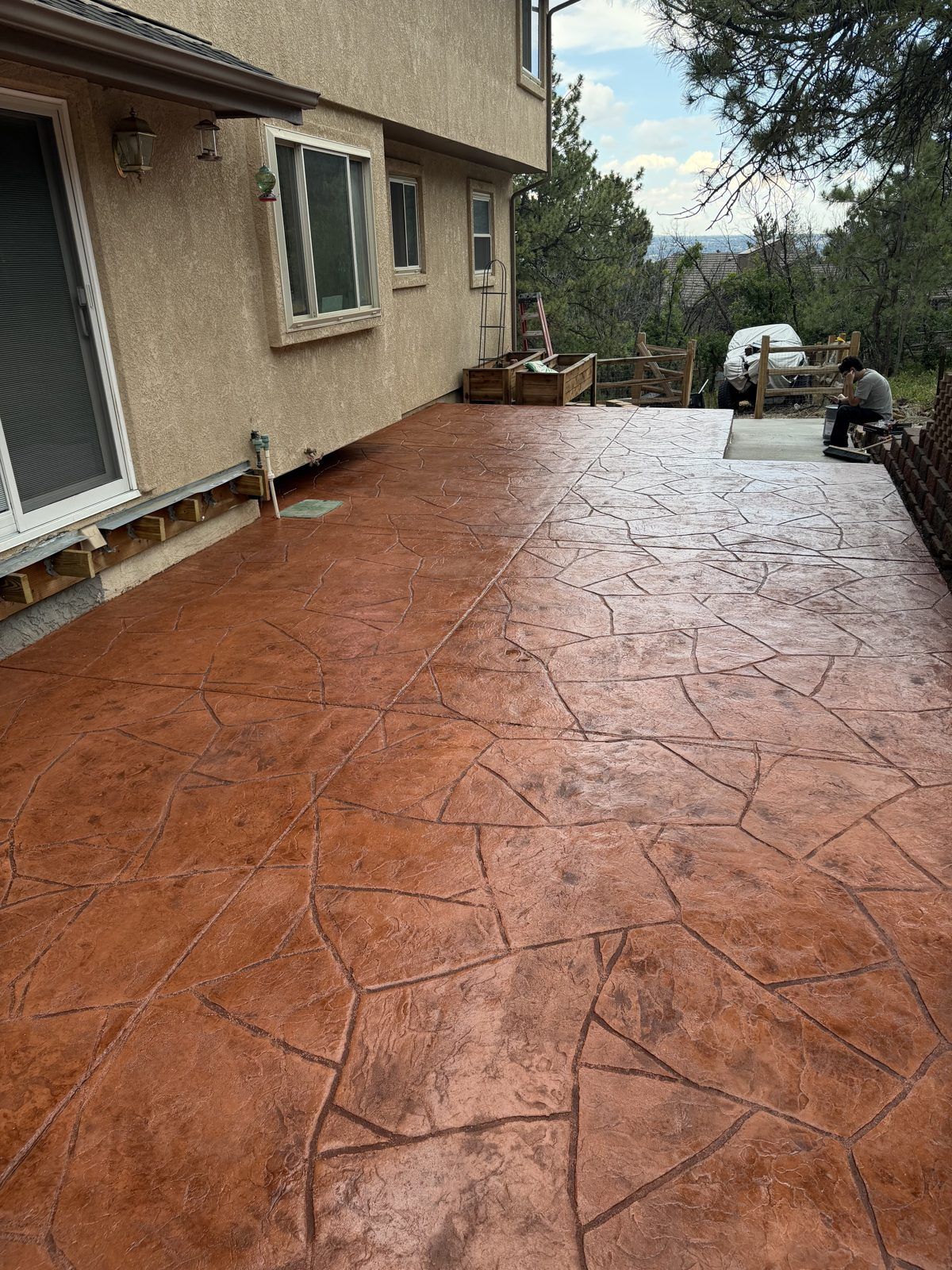
Texture or color? How stamped and stained concrete handle Colorado Springs sun, snow and freeze-thaw, plus sealing, traction and repairs.
Read the article →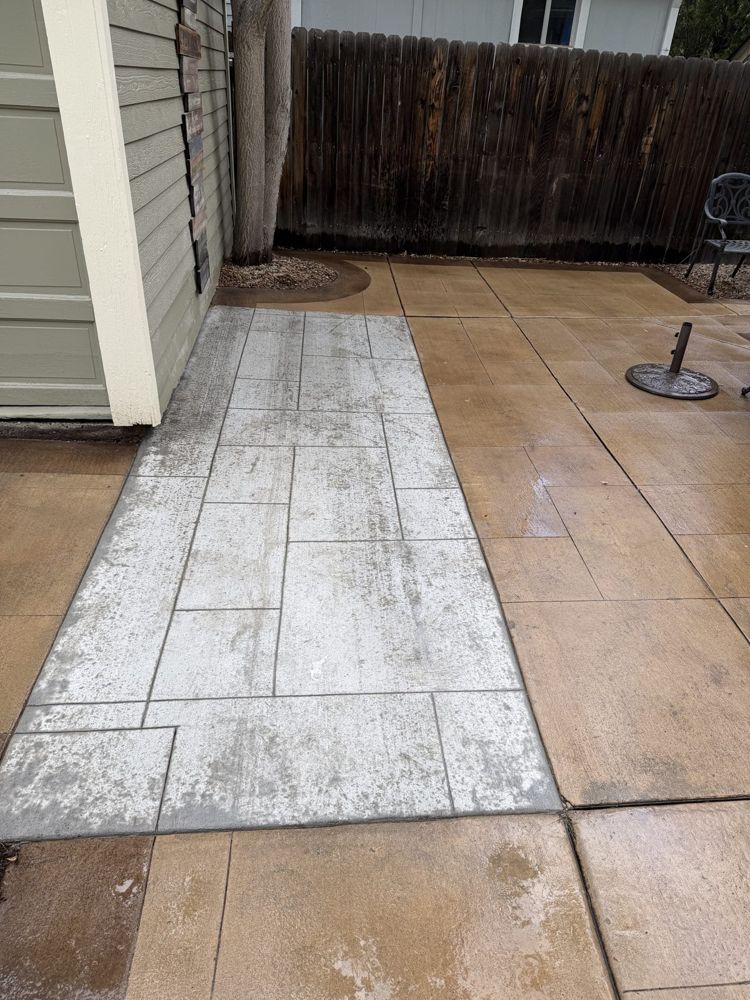
An honest look at stamped concrete and pavers on Colorado Springs clay: frost, cracking vs shifting, weeds, repairs, sealing and ice melt.
Read the article →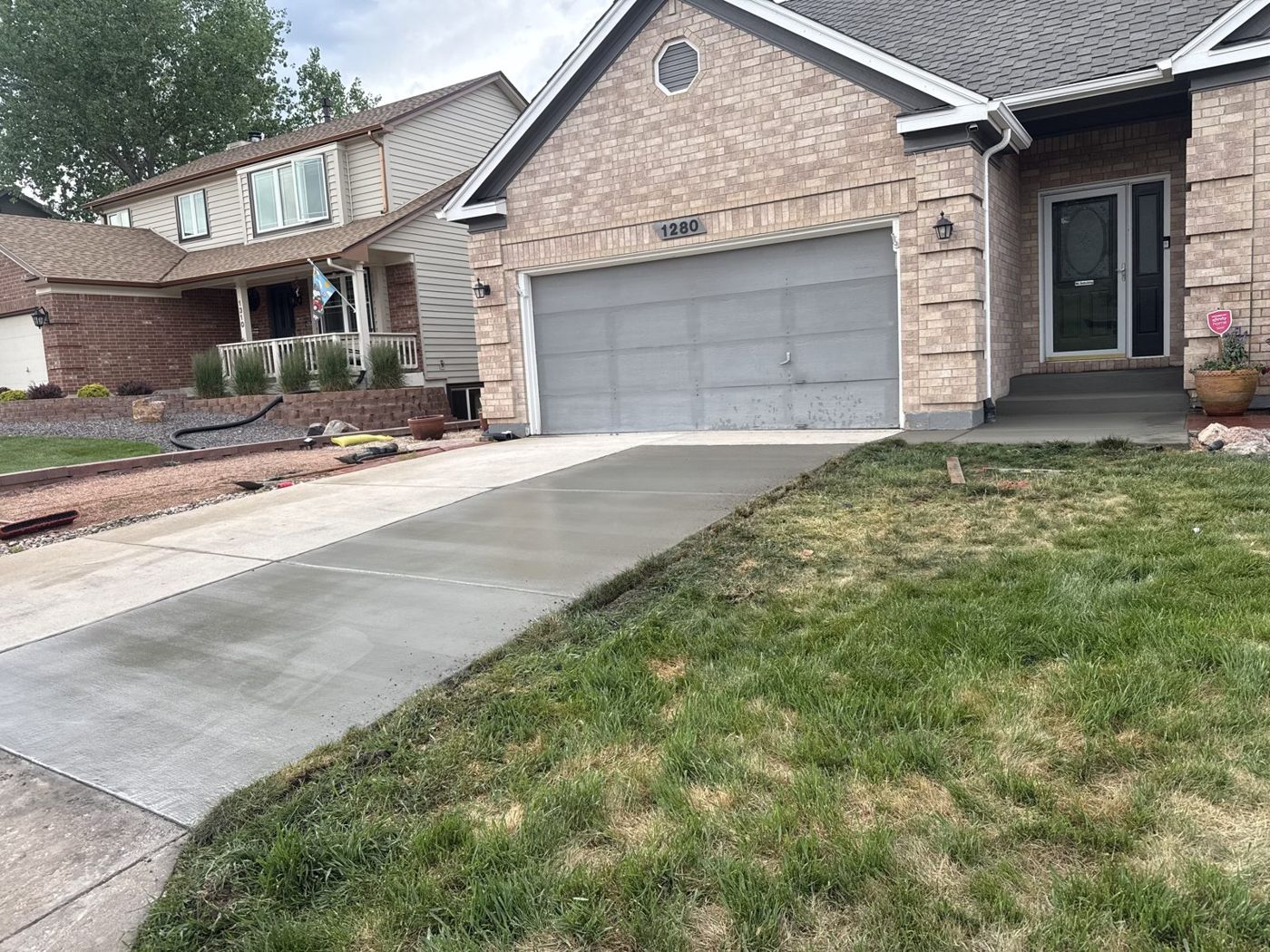
Free on-site estimate. We look at it, measure it and give you a clear written quote.