Planning
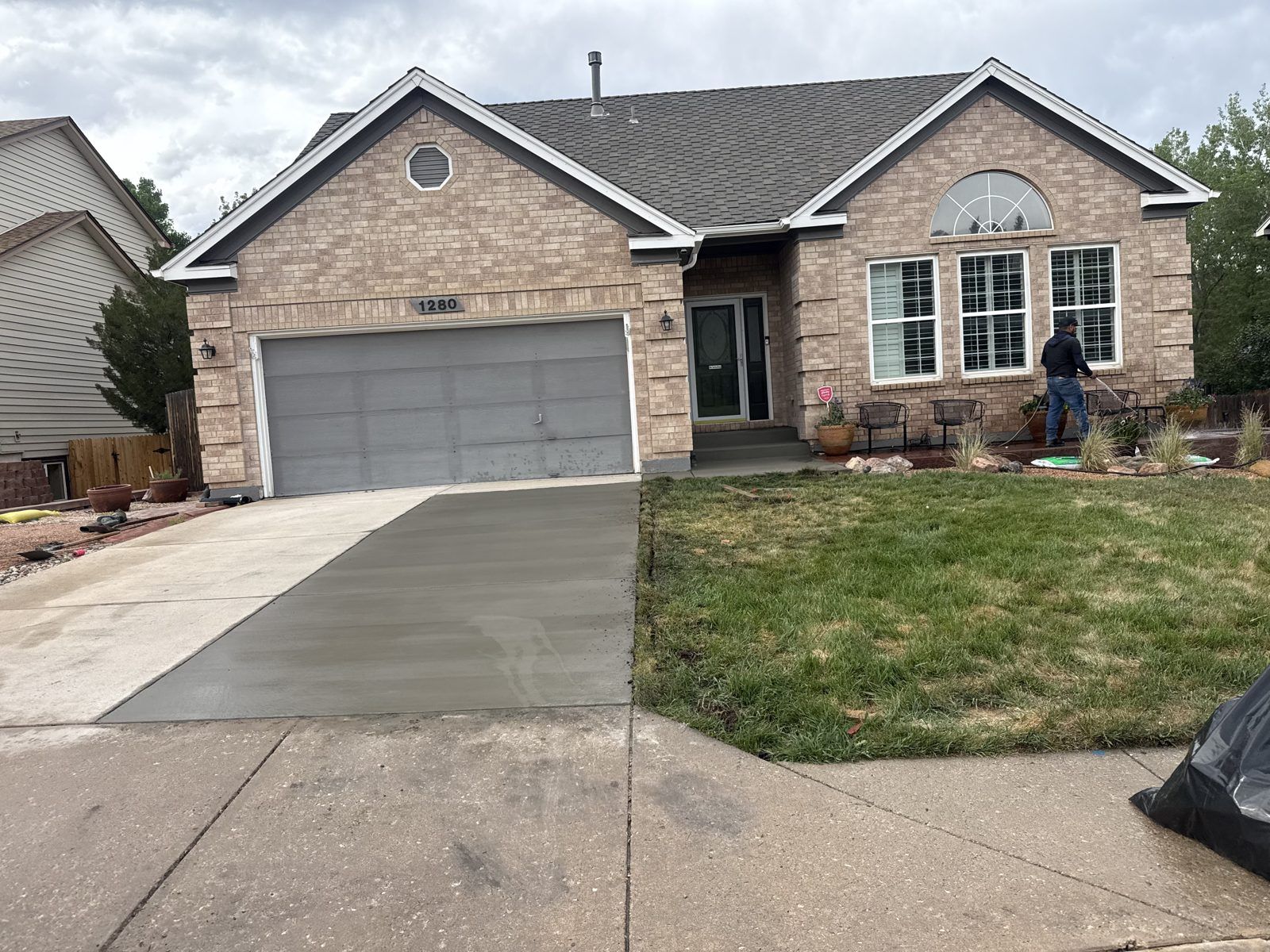
What goes into a driveway estimate in Colorado Springs.
What really decides a concrete driveway estimate in Colorado Springs, why two quotes differ, and the questions to ask any contractor.
Read the article →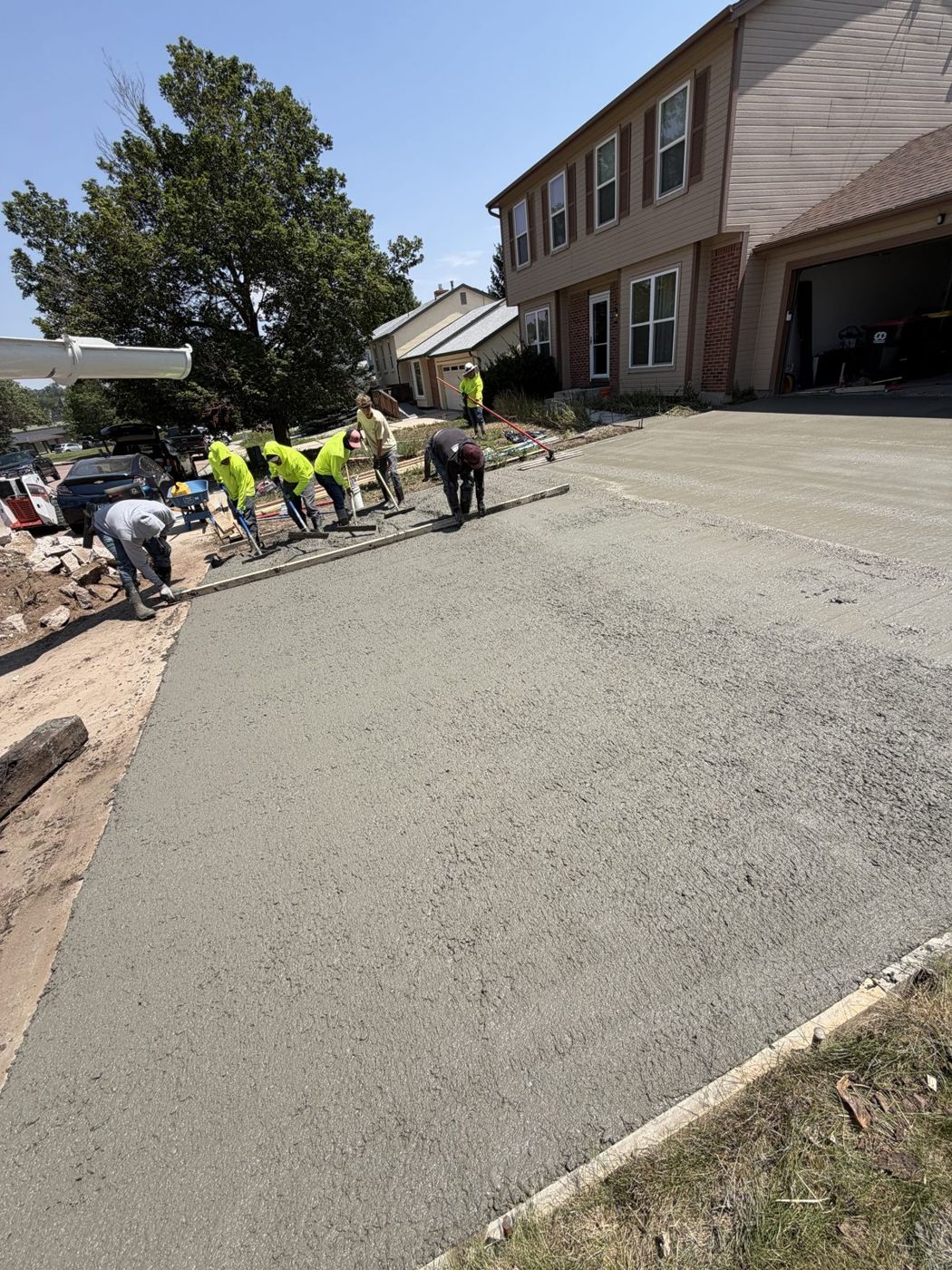
Planning
What happens on pour day, stage by stage, and how long to wait before walking, driving or parking heavy loads, drawn from NRMCA, FHWA and Colorado DOT guidance.
By CO Springs Concrete · Updated September 2026 · 9 min read
How long before you can drive on new concrete? Concrete industry driveway guidelines say to keep cars off for 7 days of curing. Colorado's DOT keeps people off new sidewalks while they cure, which is three days when the concrete is kept moist. Heavier vehicles wait longer, and full design strength is most often judged at 28 days.
Those are published guidelines, not a promise for your slab. Cold nights, hot wind and the mix all change the clock, so your contractor's instructions for your mix and weather govern. On every job, we give homeowners cure instructions and dates.
Here is what to expect on concrete pour day for a new concrete driveway or patio, stage by stage.
Here is the sequence, with a short clip from one of our jobs at each stage.
We excavate and compact the base. Colorado's DOT asks for the same on public sidewalks: a foundation shaped and compacted to a firm, even surface, then moistened right before the concrete goes in.
We set rebar sized to the job, held up on chairs so it sits in the slab instead of on the dirt. NRMCA notes that reinforcement such as wire mesh will not stop cracking, though it helps keep cracks from opening up. Joints control where cracks form; more in why concrete cracks.
Once the trucks roll, the day runs on a clock. NRMCA calls for trucks to discharge right away and says adding water to concrete more than 1½ hours old should be avoided.
Extra water on site makes concrete easier to move but can leave a weak surface, which NRMCA ties to scaling. We use an air-entrained exterior mix suited to freeze-thaw; its tiny air bubbles give freezing water room to expand. If your old driveway is coming out, plan to park on the street for the full wait.
Concrete goes into the forms over the steel, here through a pump. Temperature sets the pace. NRMCA's rule of thumb is that a 20°F drop in concrete temperature roughly doubles setting time, while hot concrete sets quicker and has to be finished faster.
Screeding pulls a straightedge across the forms to strike off extra concrete. NRMCA says bull floating should follow promptly, then finishing waits until bleed water, the sheen that rises to the top, has come up and gone. It warns that on dry, windy days the surface can look dry while the slab is still bleeding.
We finish by hand with trowels and edgers. NRMCA warns against overworking the surface, which reduces entrained air near the top, and against sprinkling water on the slab to ease finishing.
Concrete shrinks as it hardens and dries. Control joints are planned cracks: grooves that give the slab a straight place to crack.
Timing is the hard part. NRMCA gives 4 to 12 hours after finishing for conventional saw cuts, and 1 to 4 hours for early-entry saws. If the blade ravels the edges, the cut has to wait; wait too long and the slab can crack on its own first. Weather and mix move that window, per a Michigan Concrete Association guideline, so a cut can land the next morning, as here.
So how long does a concrete driveway take to cure? Curing means keeping new concrete moist and warm so it keeps gaining strength. NRMCA says curing should start right after finishing and typically last 3 to 7 days, and that concrete left to dry out can lose as much as half its potential strength. It also recommends keeping placed concrete above 50°F.
NRMCA's curing sheet, which draws on ACI 308, sorts methods into two groups:
Season matters, since water curing is not recommended when freezing is near. Your cure instructions say which method your slab is on and what you need to do.
Here is how published concrete cure time guidance lines up for normal conditions. Cold weather stretches every line.
| Milestone | What the guidance says | Source |
|---|---|---|
| Walk on it | Keep people and vehicles off during the curing period; with moist curing, that is 3 days | CDOT Section 608 |
| Drive a car on it | After 7 days of curing, or sooner if tests confirm 2,500 psi | Michigan Concrete Association; Illinois Ready Mixed Concrete Association |
| Heavy truck, RV or loaded trailer | No set day count found; vehicles stay off longer as the engineer directs | CDOT Section 608 |
| Full design strength | Strength requirements are most often set at 28 days | NRMCA CIP 35 |
| Ready for freeze-thaw | Protect from freezing until 500 psi (about 2 days) and from freeze-thaw cycles until 3,500 psi | NRMCA CIP 27 |
On public sidewalks, Colorado's DOT keeps pedestrians off for the whole curing period. For your slab, walk on it when your contractor says the surface is ready, and stay off plastic sheeting or wet burlap so you do not disturb the cure.
State paving specs use a similar rule: Iowa's DOT requires standard pavement to reach both a minimum age of 7 days and a tested strength of 3,000 psi before opening. No guidance we checked gives a calendar day for an RV, a loaded trailer or a delivery truck. Ask for that date in your cure instructions, and mention an RV at the estimate.
Yes, with planning. Federal Highway Administration guidance, based on ACI 306, uses 40°F as the cold-weather threshold: below it, fresh concrete sets more slowly, takes longer to finish and gains strength less rapidly. The National Weather Service in Pueblo lists Colorado Springs' average first fall freeze as October 2 and average last spring freeze as May 8, with freezes on record as early as September 1 and as late as June 18.
The stakes are real. NRMCA says fresh concrete freezes below about 25°F and can lose more than half its potential strength. It says to protect concrete from freezing until it reaches 500 psi, about two days after placement.
Cold-weather protection, per NRMCA:
Colorado's DOT holds its own paving to this: when air is expected to drop below 40°F within three days, pavement temperature is monitored and kept at or above 40°F until the concrete reaches 2,000 psi. For you, a late-fall or early-spring pour can mean a longer finishing day, a later saw cut and a longer wait to drive.
Colorado Springs sits at 6,035 feet, according to the City. Colorado State University describes the state as dry, with low humidity, plenty of sunshine and daily temperature swings of 30°F or more across much of Colorado. Those match the factors in the ACI 305R definition of hot weather that NRMCA cites: high air and concrete temperatures, low humidity, high wind and solar radiation. NRMCA notes they can occur any time of year in arid climates.
The pour-day risk is plastic shrinkage cracking: shallow, roughly parallel cracks that form when the surface dries faster than bleed water replaces it. NRMCA lists wind over 5 mph, low humidity and high temperatures as the triggers. Its precautions:
NRMCA also says concrete cured hot early on ends up weaker later than the same concrete cured around 70°F, and a hot day followed by a cool night can cause thermal cracking.
Want to see these stages in motion? Watch our work in motion. If you are planning a driveway or patio, book a free on-site estimate. You get a clear written quote, and the crew that measures the job pours it.
No single hour count applies to every slab. Colorado's DOT keeps both people and vehicles off new sidewalks during the curing period, which is three days when the concrete is kept moist. For a driveway or patio, walk on it when your contractor says the surface is ready, based on the mix, the weather and the curing method used.
NRMCA says curing, the period when concrete is kept moist and warm, typically runs 3 to 7 days. Strength keeps building after that. Industry driveway guidelines keep cars off for about 7 days, and strength requirements are most often set at 28 days. Cold weather slows all of this, so the dates your contractor gives for your pour come first.
Three days is earlier than concrete industry driveway guidelines, which keep cars off for 7 days of curing unless strength tests confirm the concrete is ready sooner. State paving specs are similar, requiring a minimum age plus a tested strength before opening. Without a test, wait for the date in your contractor's cure instructions.
Federal Highway Administration guidance, based on ACI 306, uses 40°F as the cold-weather threshold, below which fresh concrete sets and gains strength more slowly. Concrete can still be placed with planning: no frozen ground, insulated blankets, and protection from freezing until it reaches 500 psi, about two days per NRMCA. Fresh concrete that freezes can lose more than half its potential strength.
Only if your cure instructions call for it. Water curing works when the slab stays continuously damp, and NRMCA says alternating wetting and drying is not acceptable curing. Other accepted methods include a spray-on curing compound or plastic sheeting, and water curing is not recommended when freezing temperatures are near. Follow the method and dates your contractor gives you.
Keep reading
What really decides a concrete driveway estimate in Colorado Springs, why two quotes differ, and the questions to ask any contractor.
Read the article →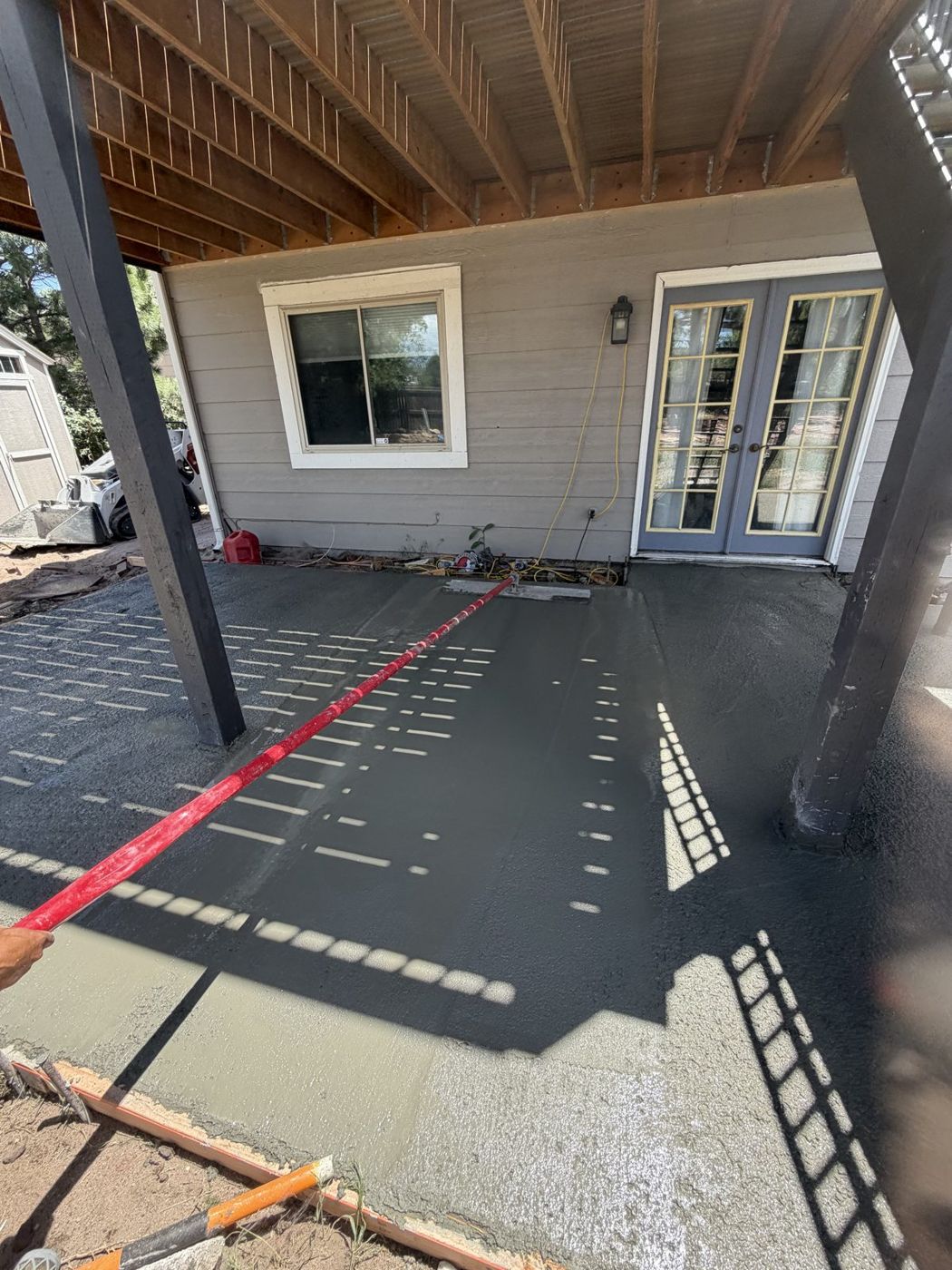
Which concrete cracks are normal in Colorado Springs, which mean trouble, and how the base, mix, joints and curing prevent the rest.
Read the article →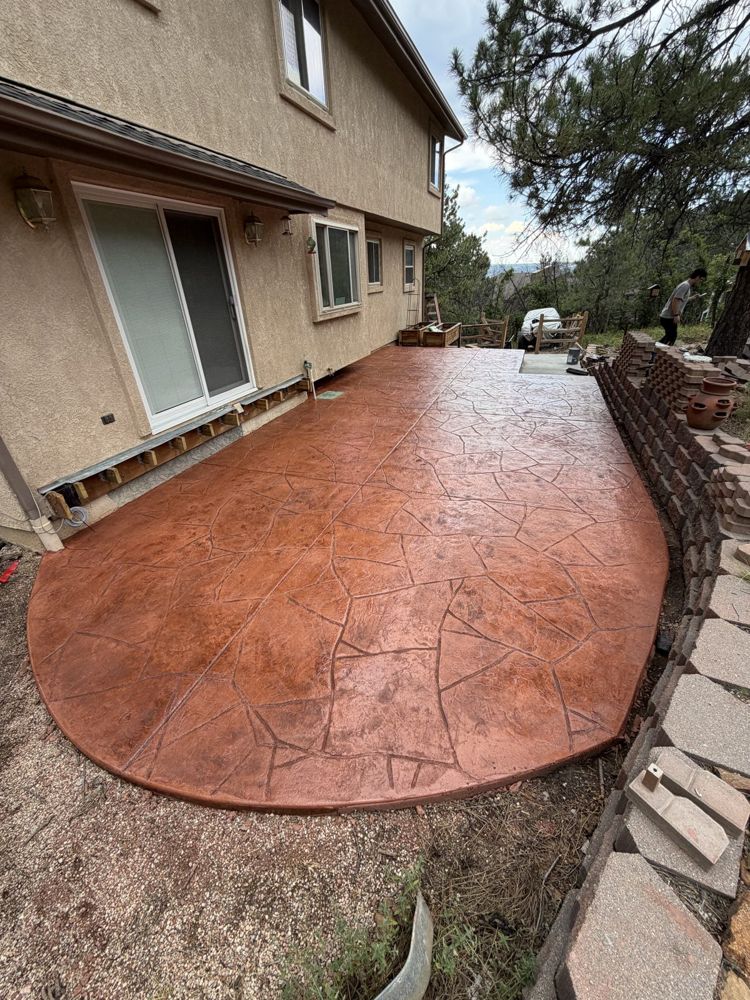
When to seal concrete before winter, penetrating vs film-forming sealers, and which ice melts research says to avoid.
Read the article →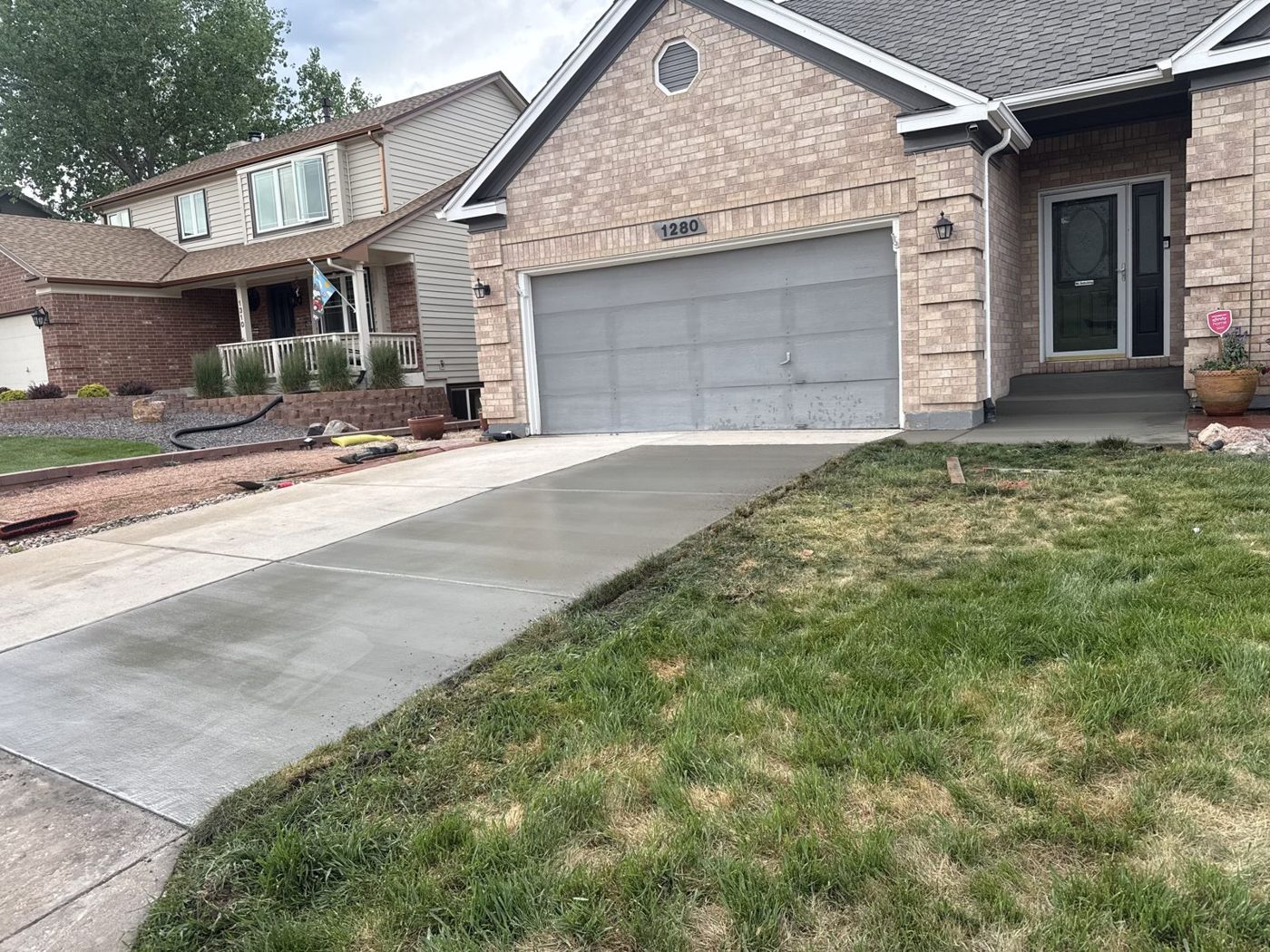
Free on-site estimate. We look at it, measure it and give you a clear written quote.