Local
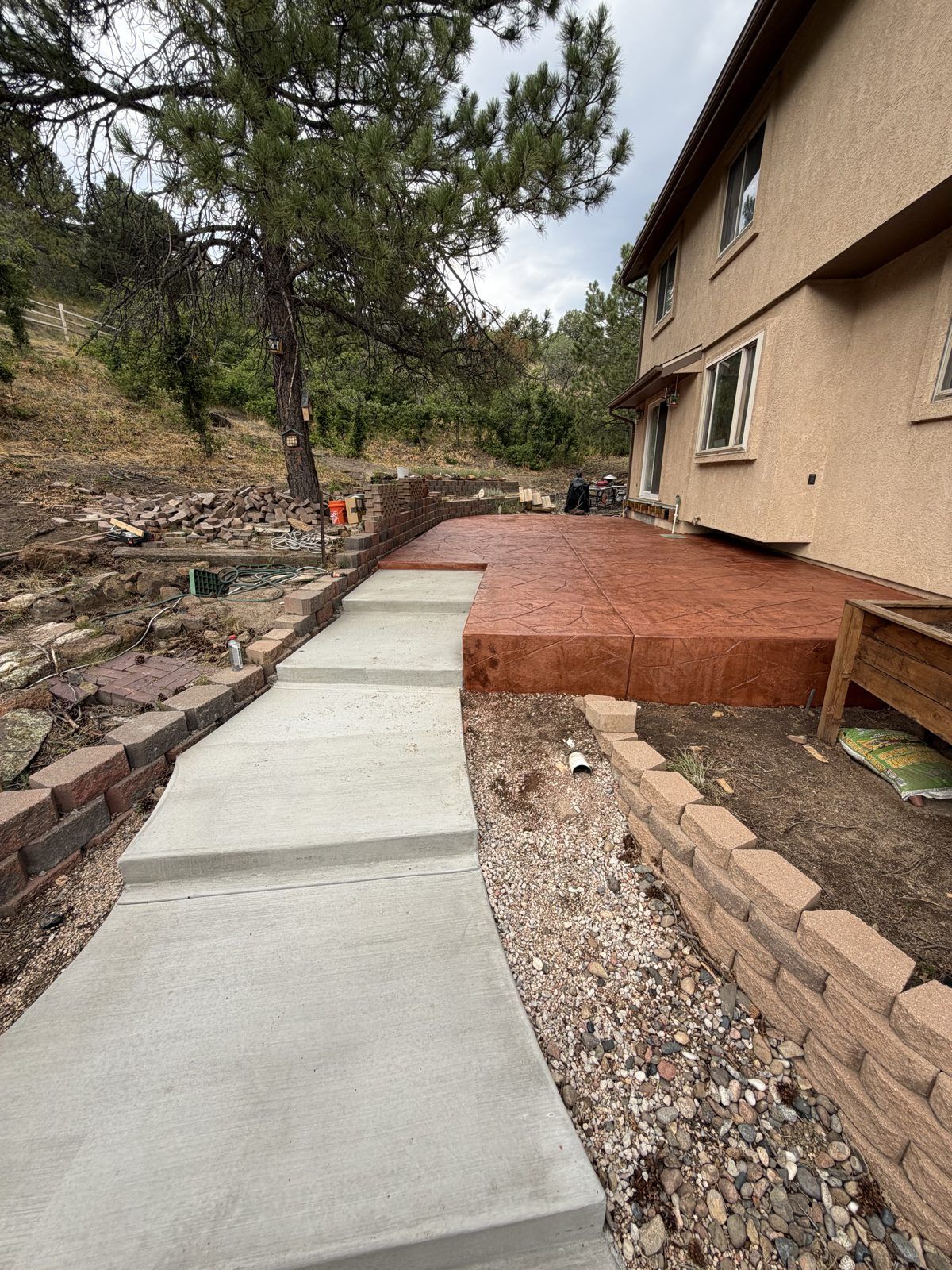
Sidewalks in Colorado Springs: width, slope and permits.
Who repairs the sidewalk in front of your house, when you need a permit, and how wide and sloped a new walkway should be in Colorado Springs.
Read the article →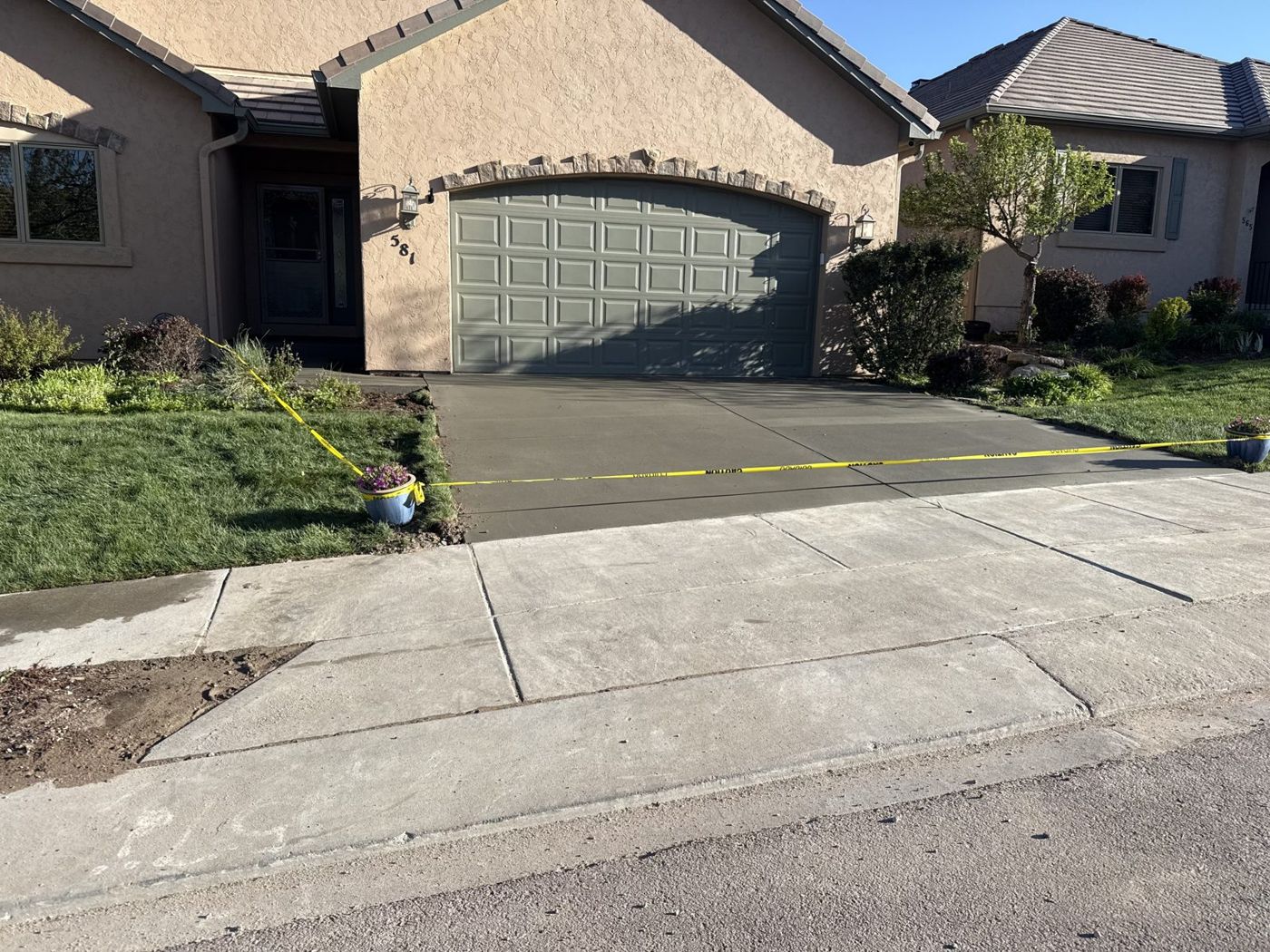
Local
Cracking, sinking or flaking on a driveway only a few years old? Here is what research says causes it, how to judge the damage, and what replacement involves.
By CO Springs Concrete · Updated September 2026 · 9 min read
Driveway replacement in Falcon, CO and Banning Lewis Ranch usually comes down to one question: is the damage on the surface, or did the ground under the slab move? Fine cracks that show up early rarely shorten a driveway's life. Sections that sink, tilt or keep opening point to a support problem, and that is when tearing out and replacing makes sense.
This guide is for owners of newer homes on the east side of Colorado Springs and out toward Falcon. For the general science of cracking, read why concrete cracks in Colorado Springs.
Banning Lewis Ranch is in the city. The City of Colorado Springs says the ranch was annexed into the city in 1988 and makes up the eastern side of the city, roughly from just south of Woodmen Road to south of the airport, east of Marksheffel Road.
Falcon is not a city or a town. El Paso County's own documents place the Falcon area in unincorporated El Paso County, so the county is your starting point there. Go by what the city or county says about your parcel, not by the name on your mailing address.
The city says a concrete permit is required when a licensed contractor installs or repairs sidewalk, curb, gutter or other concrete in the City right-of-way. It has a permit type for removing and replacing existing concrete. It also says a general contractor license does not cover right-of-way work. Contractors need a separate excavation and concrete license from the City Clerk's Office.
El Paso County Public Works issues Work in the Right-of-Way permits. The county's application lists "Driveway Apron" as a structure type, with boxes for new, repair, remove and replace work.
In Banning Lewis Ranch, the metro district's design review page says exterior improvements must be reviewed and approved before changes are made. Its homeowner guidelines say concrete and other hardscape must match or complement the home and must not change established drainage patterns. They also say design approval covers looks only, and city or county permits may still be required. Subdivisions around Falcon may have their own HOA rules. Confirm every step for your address with the city or county and your HOA before work starts.
The Colorado Geological Survey (CGS) describes two soil hazards that matter for slabs. Expansive clays swell as they take on water and shrink as they dry. CGS says these clays occur more often on the plains than in the mountains, and that most homes and roads in Colorado sit in areas of potentially expansive clay. Cracked and heaved driveways are on its list of typical damage.
Collapsible soils do the opposite. CGS describes them as low-density soils that shrink in volume when wet, common in almost all semi-arid, non-mountainous parts of the state. It names watering lawns and leaking water lines as the usual triggers, and the result is settlement under slabs.
CSU Extension adds that every major population center in Colorado sits partly on expansive soils. None of this tells you what is under your own driveway. You can look up mapped soils for your lot on the USDA's Web Soil Survey, and a geotechnical engineer can test a specific lot.
A new subdivision puts several risks in one place: freshly graded lots, ground that was dug and refilled near the house and street, new sprinklers, and driveways poured in every season. The National Ready Mixed Concrete Association (NRMCA) lists the usual causes of cracking as joints, subgrade preparation, too much water in the mix, finishing, fast drying and curing. It also says no concrete is completely crack-free.
| Common cause | What the guidance says |
|---|---|
| Settling backfill and utility trenches | Ground near the house and street is usually dug and refilled for the foundation and utility lines. The American Concrete Pavement Association says backfill should match the moisture and density of the soil beside it, so support stays uniform. |
| Uneven subgrade compaction | NRMCA says topsoil and soft spots should come out and the soil under a slab should be well compacted. Smooth, uniformly compacted subgrades help prevent cracking. |
| A slab not sized for its loads | NRMCA's first rule for minimizing cracks is to design for every load the slab will carry. |
| Joint spacing and layout | NRMCA puts maximum joint spacing at 24 to 36 times the slab thickness, about 10 feet for a 4-inch slab, and no more than 15 feet. Panels should be close to square, with joint grooves at least a quarter of the slab depth. |
| Hot, dry or windy pour days | Plastic shrinkage cracks form when the surface dries before the concrete sets. Winds over 5 mph, low humidity and high temperatures raise the risk. |
| Cold weather and short curing | NRMCA says curing typically runs 3 to 7 days, concrete should stay above 50°F, and it must be protected from freezing until it reaches at least 500 psi. |
| Deicers in the first winters | NRMCA advises no deicers the first winter and clean sand for traction. More in our post on sealing before winter and choosing ice melt. |
| Downspouts, sprinklers and grading | CGS warns against water ponding near a foundation. CSU Extension says to keep downspout extensions in place and sprinklers at least five feet from the foundation. |
Salt tracked in by cars counts too. NRMCA suggests hosing it off driveways when conditions permit, and warns that magnesium-based road salts carried in on tires damage concrete surfaces. The Banning Lewis Ranch guidelines also keep sprinkler piping and heads at least five feet from foundation walls and slabs.
Dated photos with a tape measure beside each crack will show whether things are stable or getting worse.
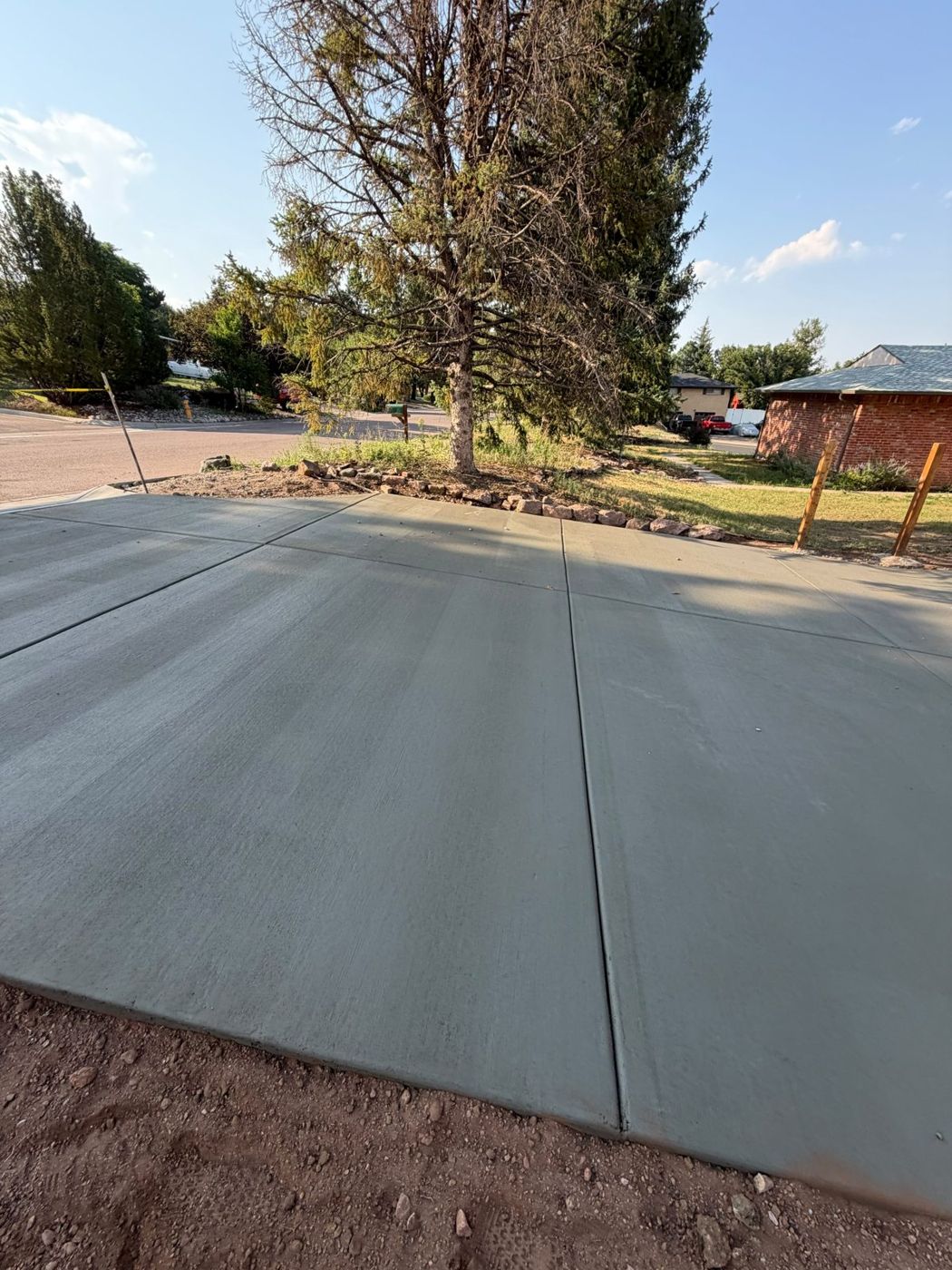
If the slab is level and the cracks are fine and stable, you may not need to do anything. NRMCA says light to moderate scaling can be repaired with a thin bonded resurfacing. The repair is only as strong as the concrete it bonds to, and it will not match the original color.
Replacement makes sense when panels have dropped or heaved, cracking keeps spreading, heavy scaling keeps getting worse, or the ground under the slab needs fixing. The American Concrete Pavement Association says soft spots found after removing old pavement must be dug out, not simply covered with gravel.
Raising sunken slabs back to level with mudjacking or foam injection is a separate trade, and a leveling company can tell you whether your slabs are candidates.
If your home is only a few years old, find your builder warranty documents before you pay anyone for repairs. Read what they say about driveways and flatwork, and how to file a claim.
Here is how a replacement runs with our crew, the same way we build all our concrete driveways.
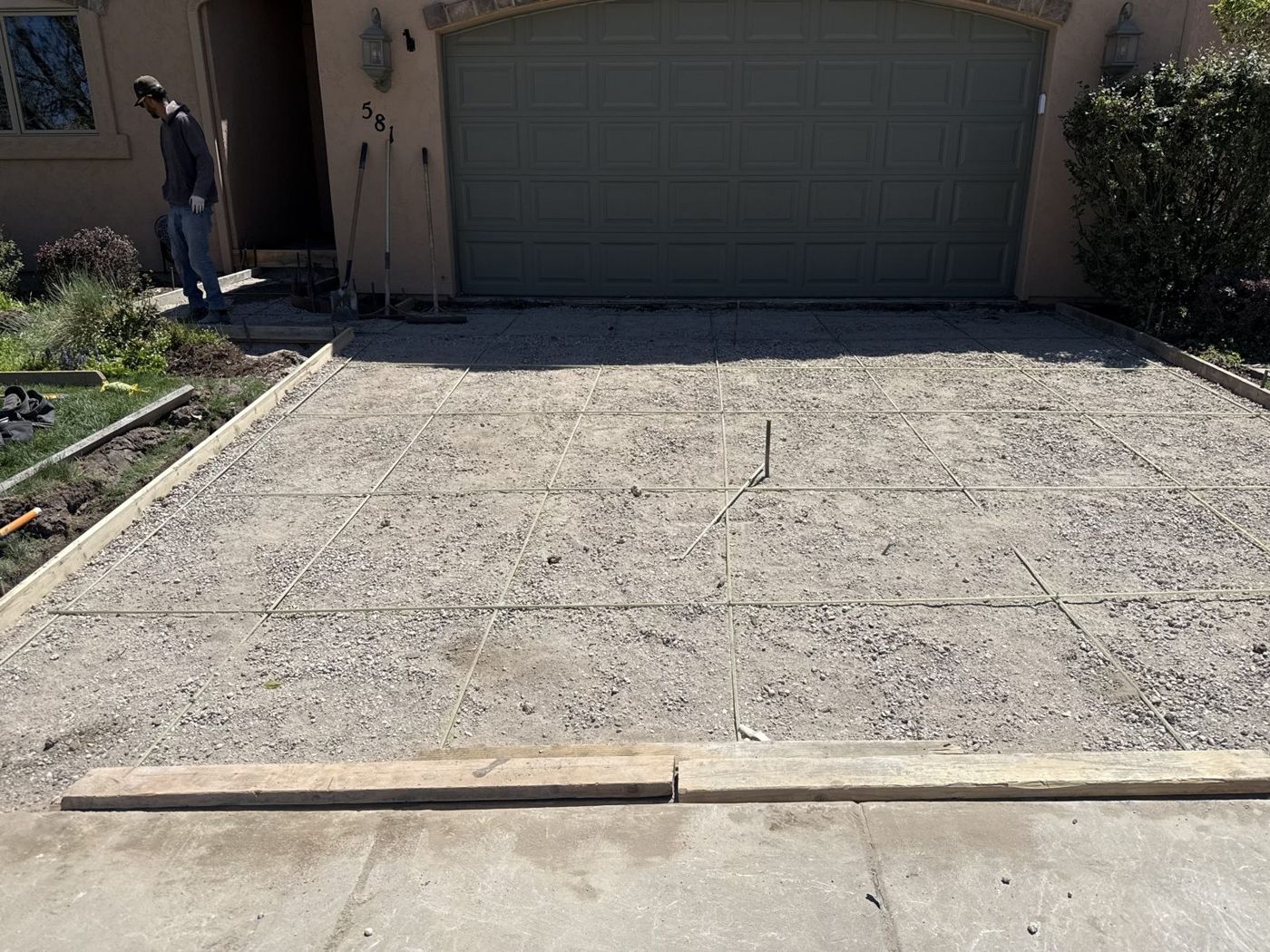
We are a locally owned, family-operated, licensed and insured crew, and we pour across Colorado Springs, Falcon, Peyton and the rest of our service area. If your driveway is cracking, sinking or flaking, book a free on-site estimate and we will tell you what we see.
Some cracking is normal. The National Ready Mixed Concrete Association says no concrete is completely crack-free and that most random cracks appearing early rarely affect structural integrity or service life. Control joints are there to give shrinkage cracks a planned place to form. Sunken, tilted or steadily widening sections are different and deserve a closer look.
A slab sinks when the ground under it compresses or shifts. Around a newer home, soil near the foundation and utility lines has often been dug and refilled, and refilled soil that is looser than its surroundings can settle. Water from downspouts or sprinklers can make clay swell or collapsible soils settle. A contractor should find the cause before replacing anything.
If the slab is level and the cracks are fine and stable, repair or simple monitoring is often enough. Replacement makes more sense when panels have dropped or heaved, cracks keep spreading, heavy scaling is getting worse, or the base underneath needs correcting. Pouring new concrete over the same soft ground tends to repeat the problem.
It depends on what the work touches. Banning Lewis Ranch is in the City of Colorado Springs, which requires a permit for concrete work in the public right-of-way. Falcon is in unincorporated El Paso County, which issues its own right-of-way permits. Banning Lewis Ranch also requires design review for exterior changes. Confirm with each office for your address.
The National Ready Mixed Concrete Association advises avoiding deicing chemicals during a new slab's first winter and using clean sand for traction instead. After that, use deicers in moderate amounts. It warns never to use ammonium-based or magnesium-based products on concrete, and suggests hosing off salt that cars track onto driveways when the weather allows.
Keep reading
Who repairs the sidewalk in front of your house, when you need a permit, and how wide and sloped a new walkway should be in Colorado Springs.
Read the article →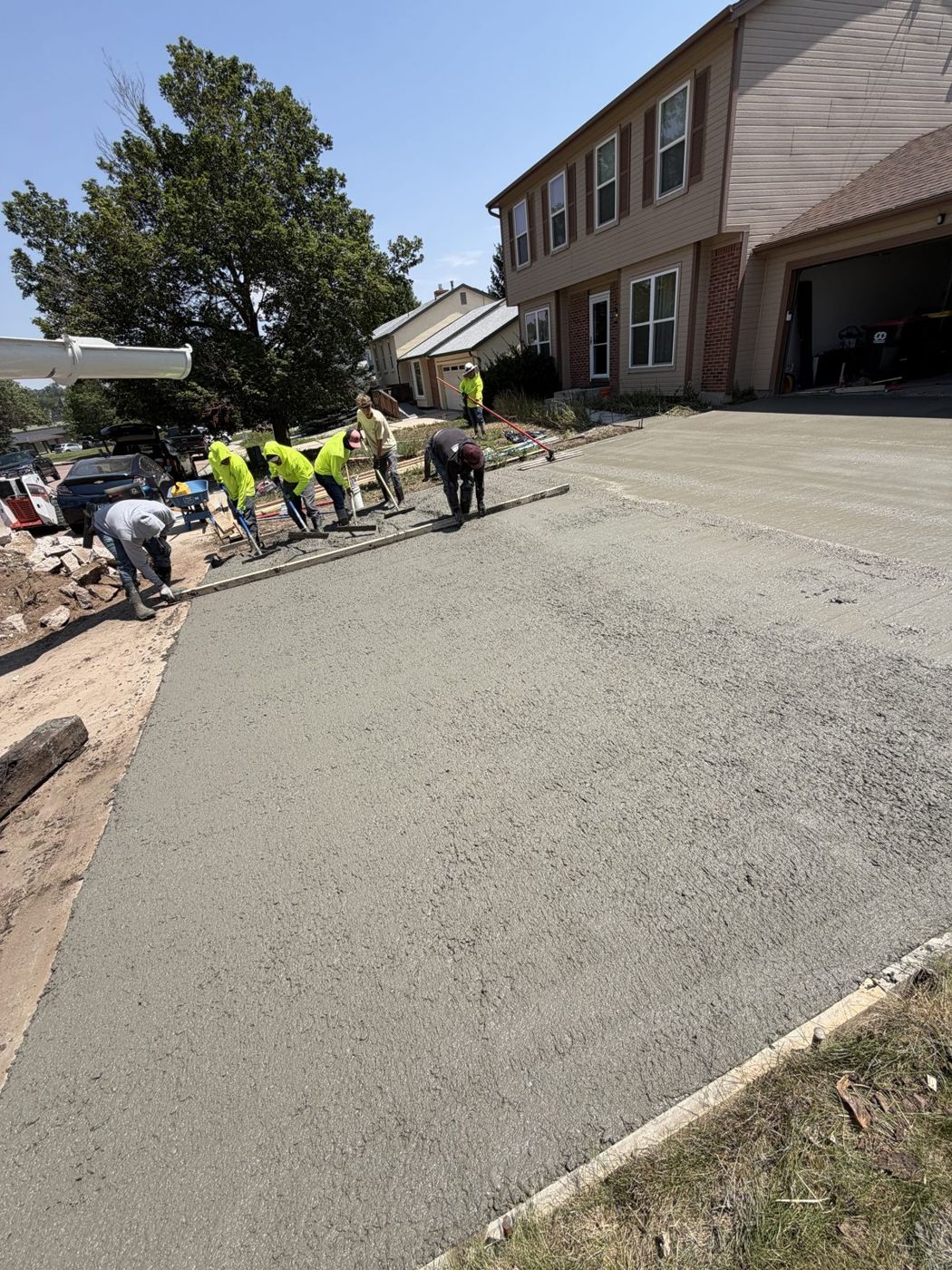
When you can walk and drive on new concrete, what happens on pour day, and how Colorado Springs cold, sun and wind change the schedule.
Read the article →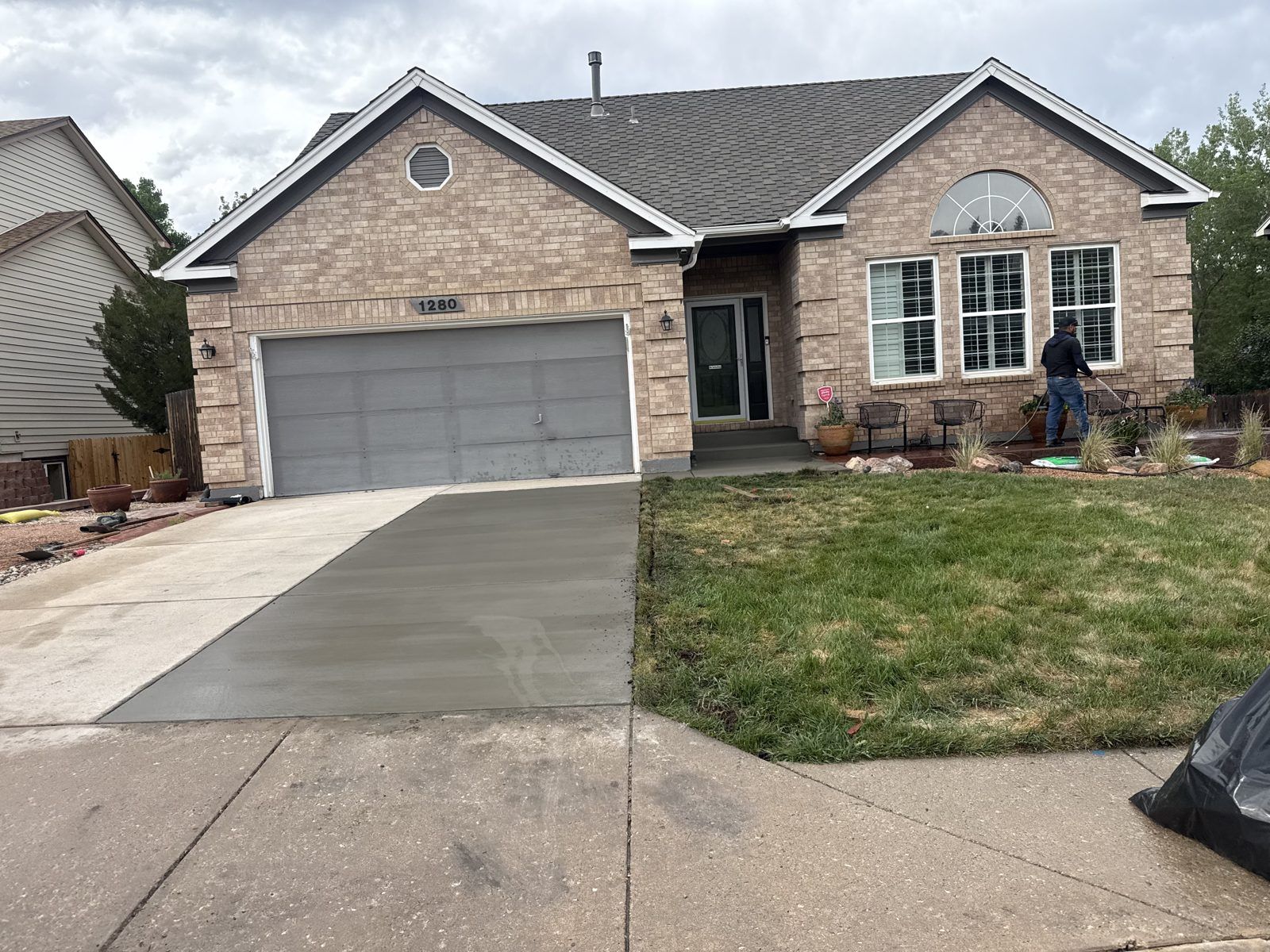
What really decides a concrete driveway estimate in Colorado Springs, why two quotes differ, and the questions to ask any contractor.
Read the article →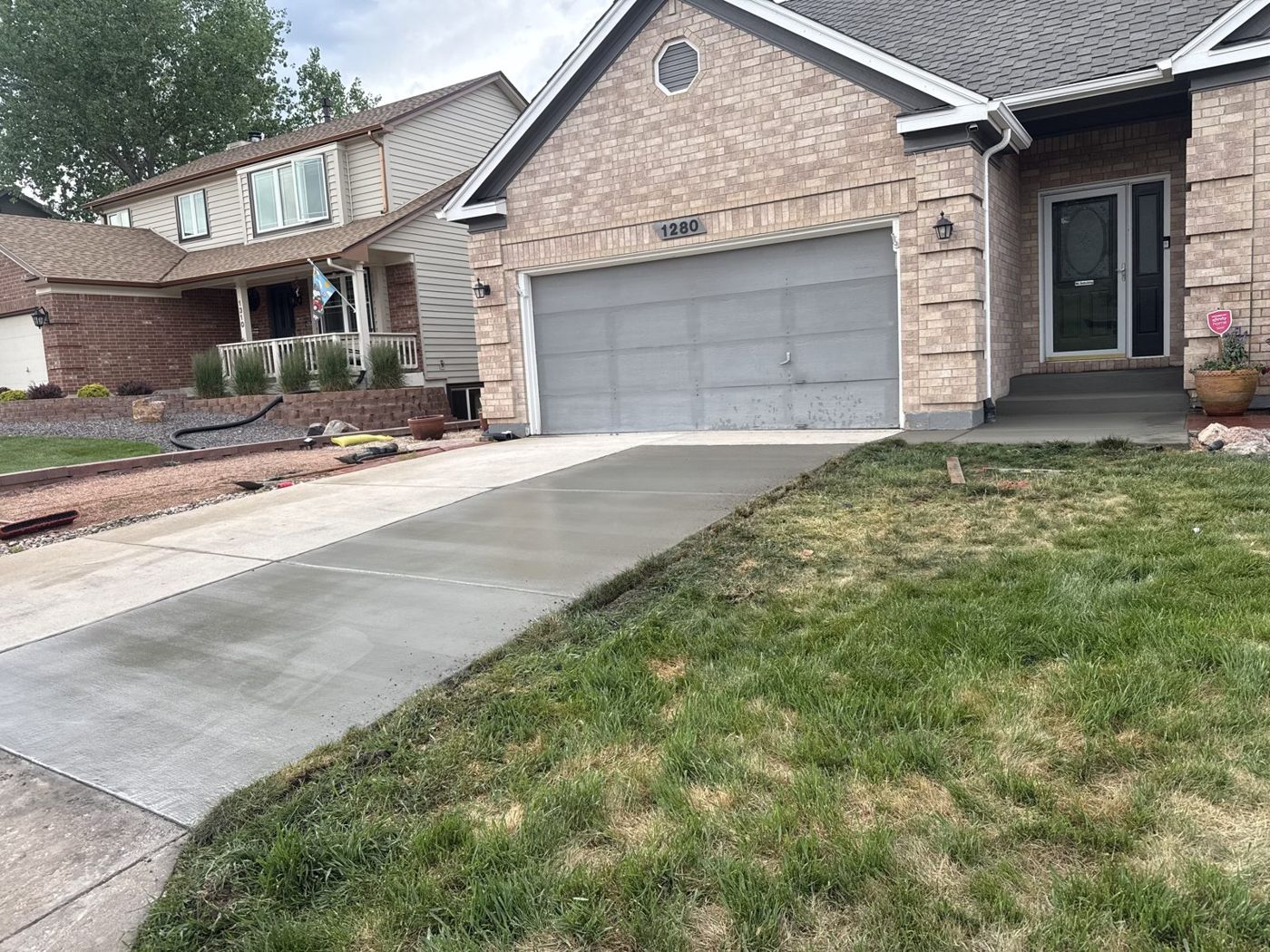
Free on-site estimate. We look at it, measure it and give you a clear written quote.