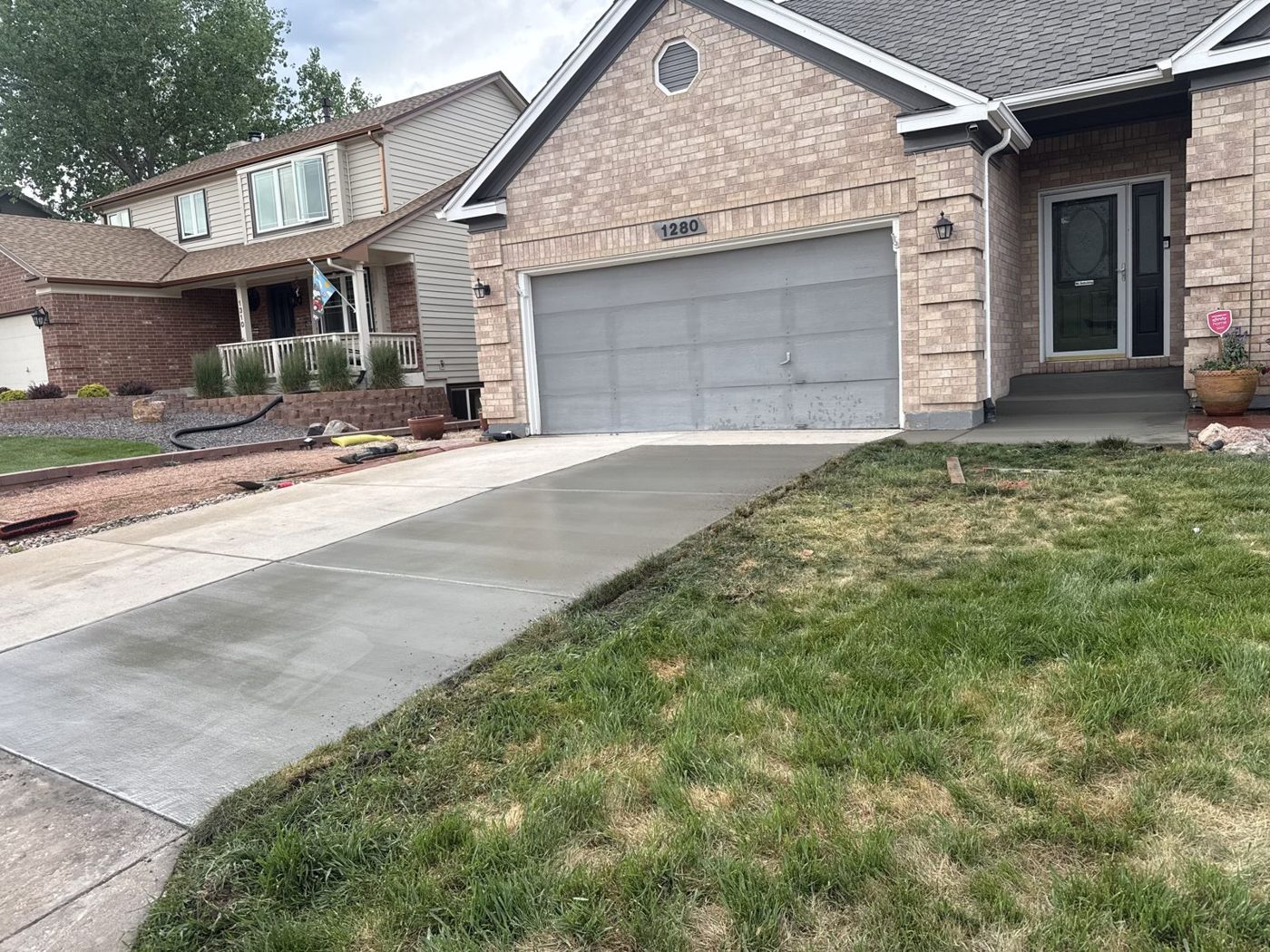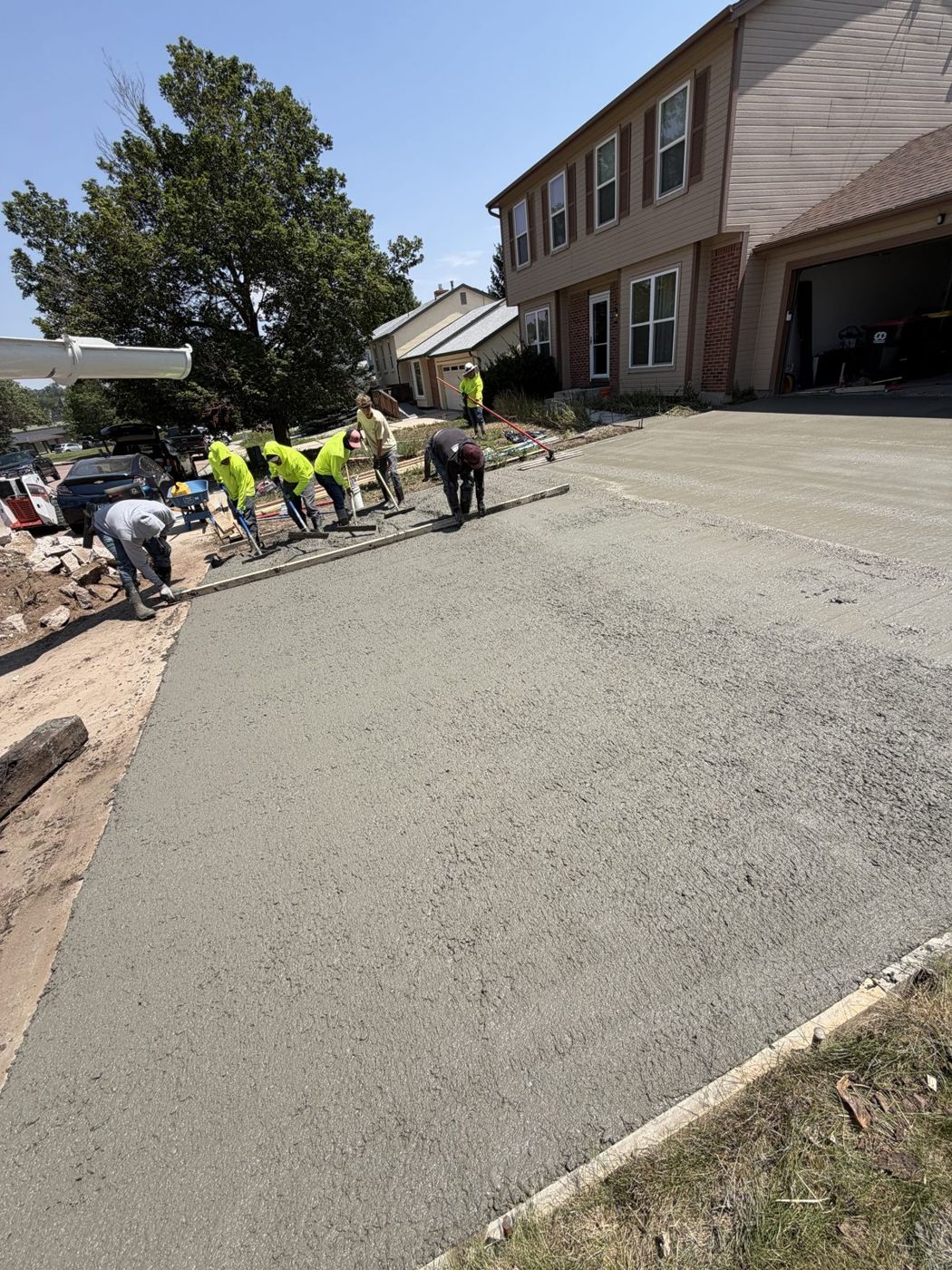
Concrete Advice for Colorado Homeowners
Straight answers on cracking, freeze-thaw, finishes, and what it really costs to do concrete right in Colorado Springs—from the crew that pours it.
Why Concrete Cracks in Colorado Springs—and How to Stop It
Colorado Springs sees 150+ freeze-thaw cycles a year. Here's what that does to a cheap pour, and the four things that make concrete last 30+ years instead of 5.
Read the article →Stamped vs. Stained Concrete: Which Is Right for Your Colorado Springs Project?
Both look great in the showroom. Only one holds up to our altitude and freeze-thaw without constant upkeep. A plain-English cost and durability comparison.
Read the article →Durability · June 2026
Why Concrete Cracks in Colorado Springs—and How to Stop It
If you've watched a driveway go from smooth and gray to cracked, flaking, and pitted in just a few winters, you're not imagining it—and it's almost never bad luck. Colorado Springs is one of the hardest places in the country to keep concrete intact, and the reason comes down to one relentless force: the freeze-thaw cycle.
The freeze-thaw cycle, explained
Along the Front Range we get more than 150 freeze-thaw cycles a year—nights that drop below freezing followed by days that climb back above it. Concrete is porous, so it quietly soaks up snowmelt and rain. When that trapped water freezes, it expands by about 9%. That expansion pushes outward from inside the slab with enough force to crack and flake the surface. Thaw, refreeze, repeat—150+ times a winter—and a slab that wasn't built for it starts to fail.
This is why a driveway poured to ordinary "good enough" specs in Texas or Arizona can crumble in Colorado. The climate, not the contractor's good intentions, sets the bar.
The four things that actually make concrete last here
1. The right concrete mix (4,500 PSI, not 3,000)
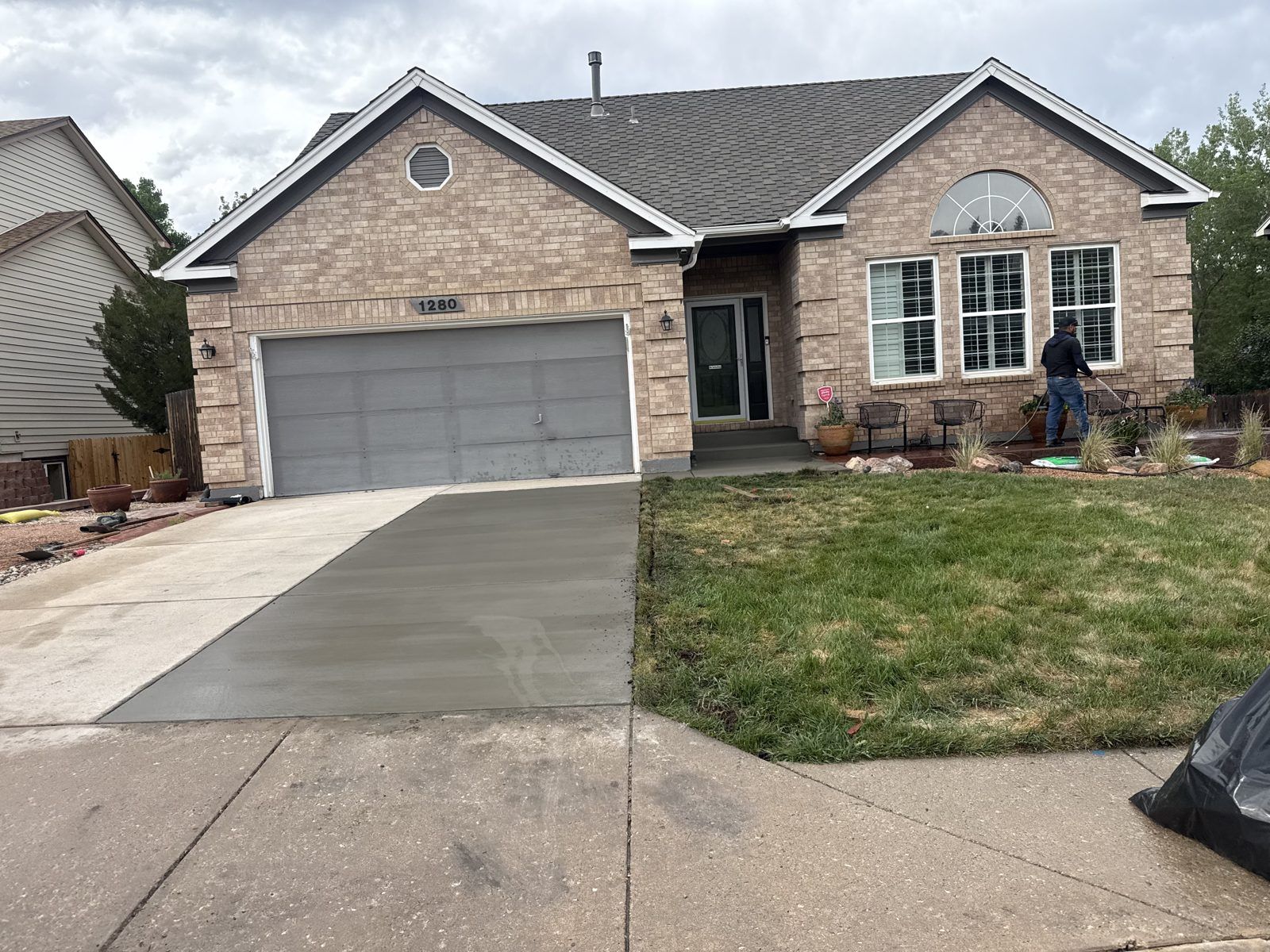
Standard residential concrete is often 3,000 PSI. In Colorado's freeze-thaw conditions that mix is under-built. We pour a minimum of 4,500 PSI for exterior flatwork so the slab has the compressive strength to resist internal ice pressure.
2. Air entrainment (the invisible insurance)
Air-entrained concrete has roughly 6% microscopic air bubbles mixed in. Those tiny voids give freezing water somewhere to expand into, relieving the pressure before it can crack the surface. It's the single most important—and most often skipped—defense against spalling in our climate.
3. Proper base prep for Colorado's soil
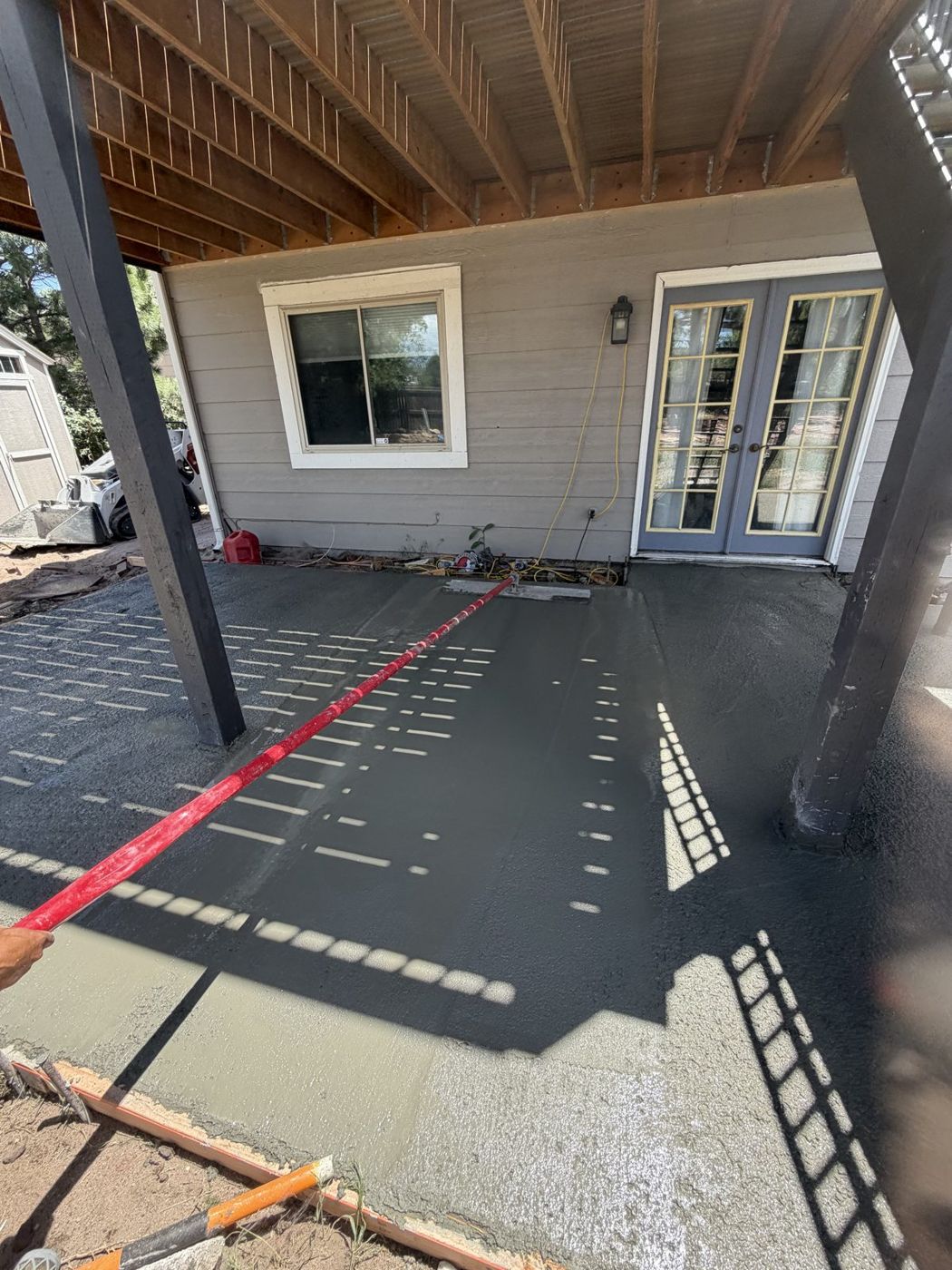
Our expansive clay soils swell and shrink with moisture, and that movement telegraphs straight up through a thin slab. A driveway is only as stable as what's under it: that means deep enough excavation and 4–6 inches of properly compacted base material before a single yard of concrete is poured.
4. Sealing and control joints
Control joints give the slab planned places to crack so it doesn't crack randomly. A quality sealer keeps water out of the pores in the first place—and at our altitude sealer wears faster, so it should be refreshed every 2–3 years.
Built right vs. built cheap
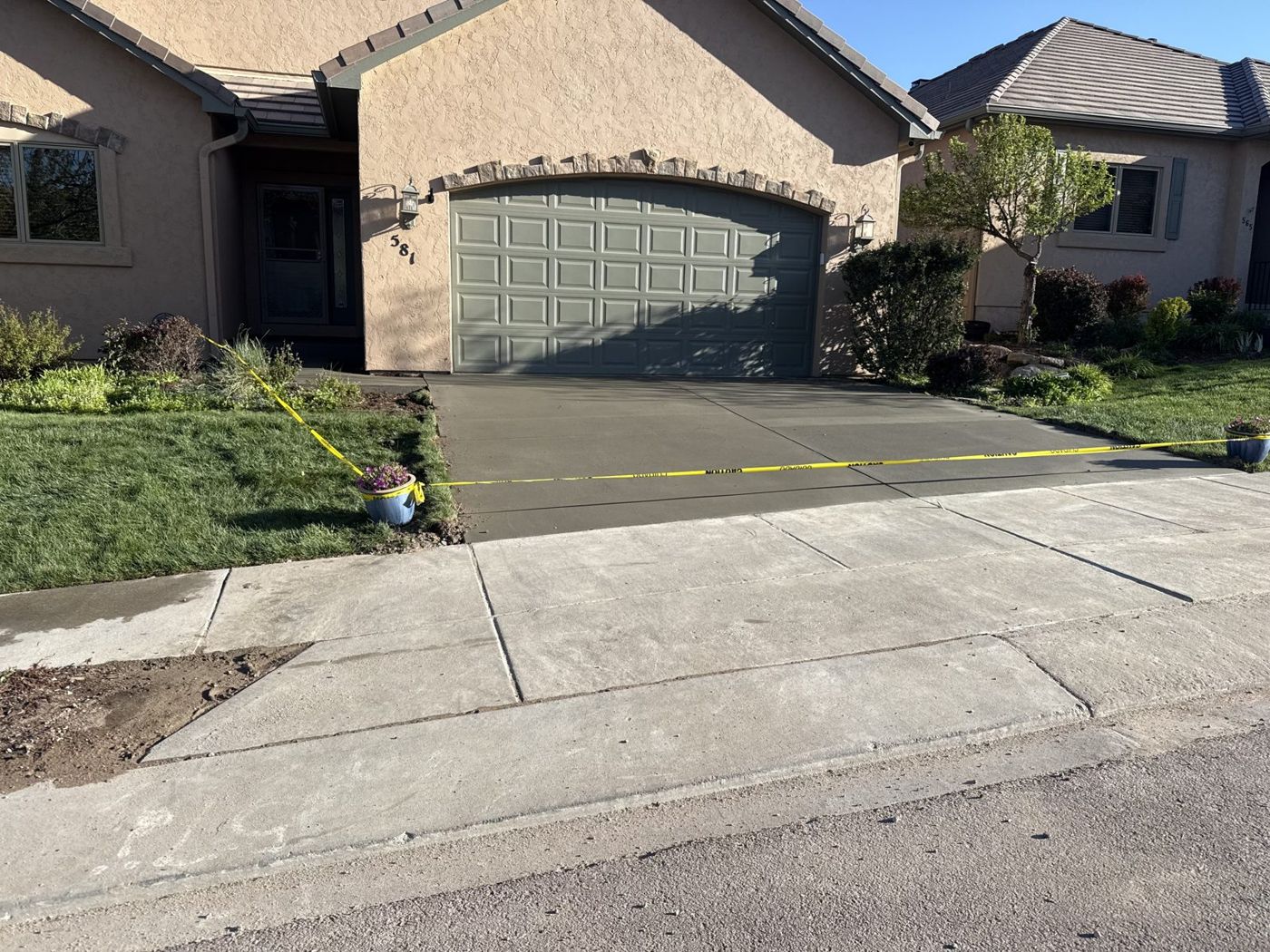
The difference isn't subtle. Properly specified and installed concrete lasts 25–35 years in our climate. Concrete poured without the right mix, air entrainment, or base prep can start failing in 5–8 years. The cheaper pour almost always costs more in the end, because you pay for it twice.
Thinking about a new driveway or patio?
We pour 4,500 PSI, air-entrained, on a properly prepped base—engineered for Colorado freeze-thaw. Get a free, no-obligation estimate.
Get My Free QuoteFinishes & Cost · June 2026
Stamped vs. Stained Concrete: Which Is Right for Your Colorado Springs Project?
Decorative concrete can turn a plain gray slab into the best-looking feature on your property. The two most popular options in Colorado Springs are stamped and stained concrete—and homeowners often use the terms interchangeably even though they're completely different. Here's the plain-English breakdown, including what each really costs and how each holds up to our climate.
What's the difference?
Stamped concrete
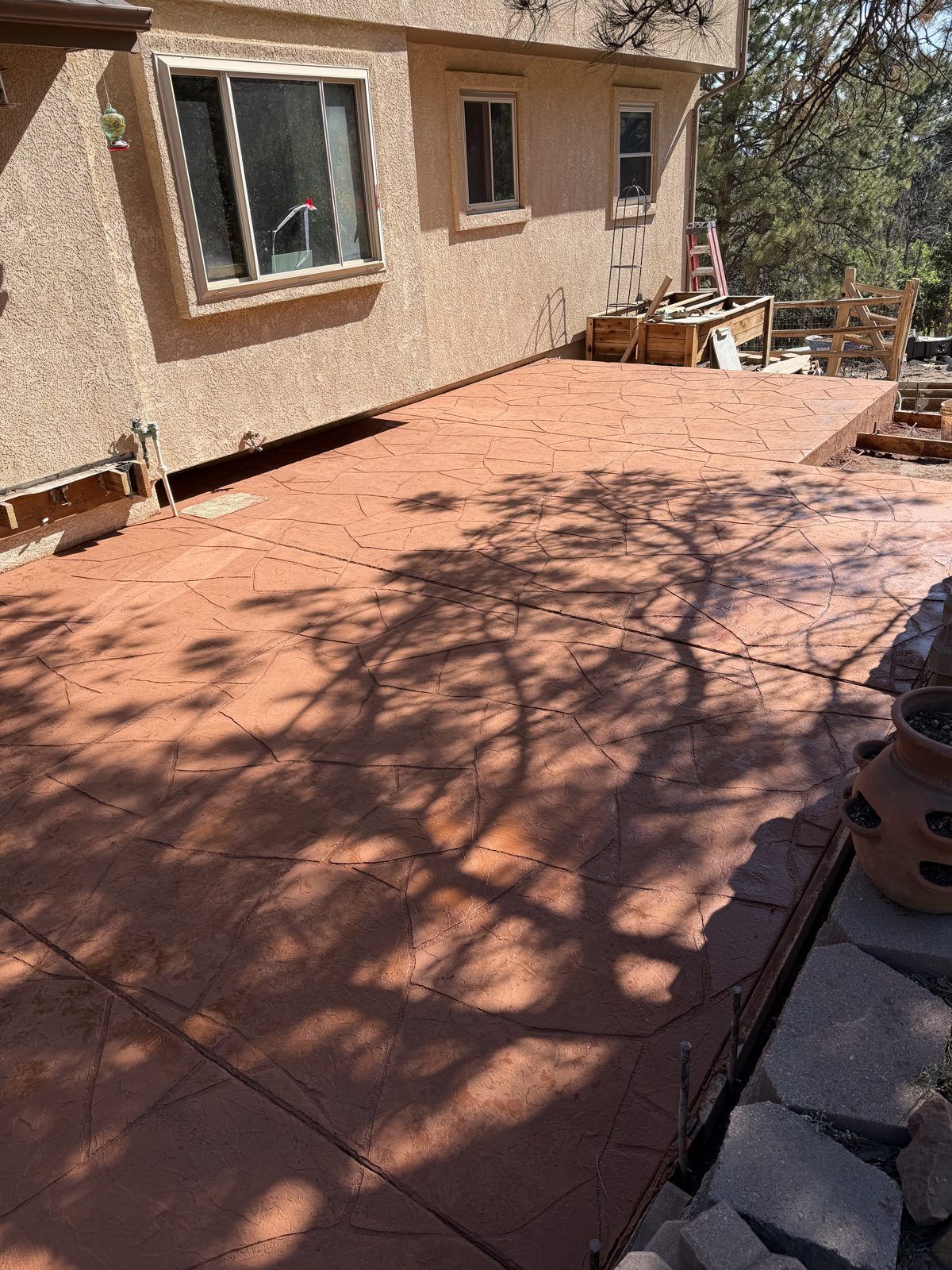
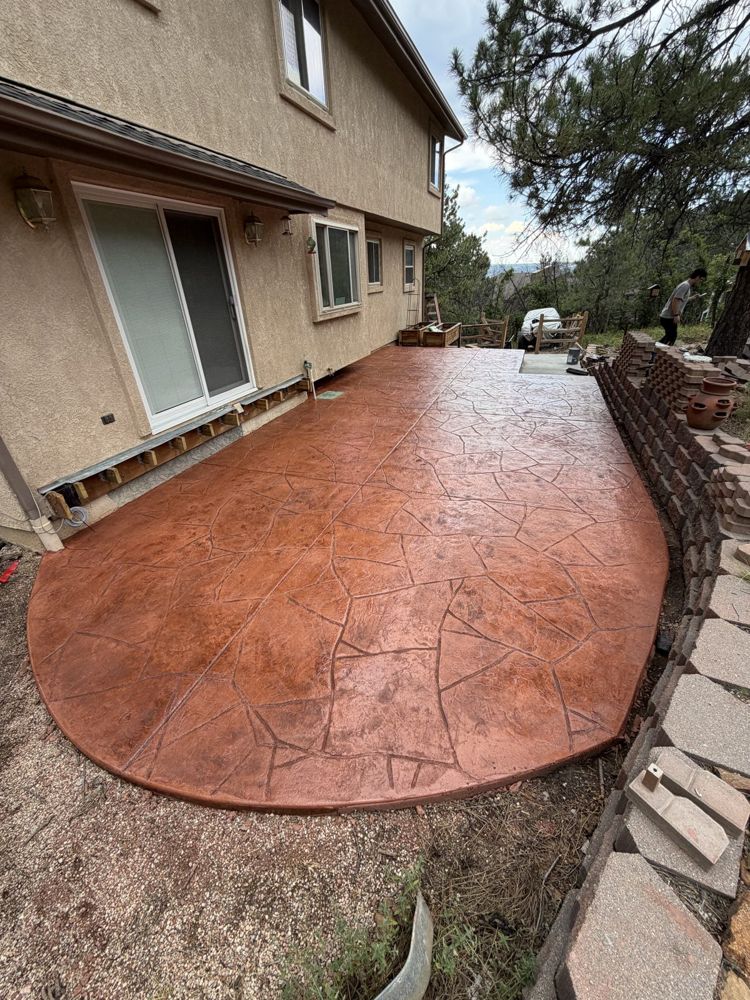
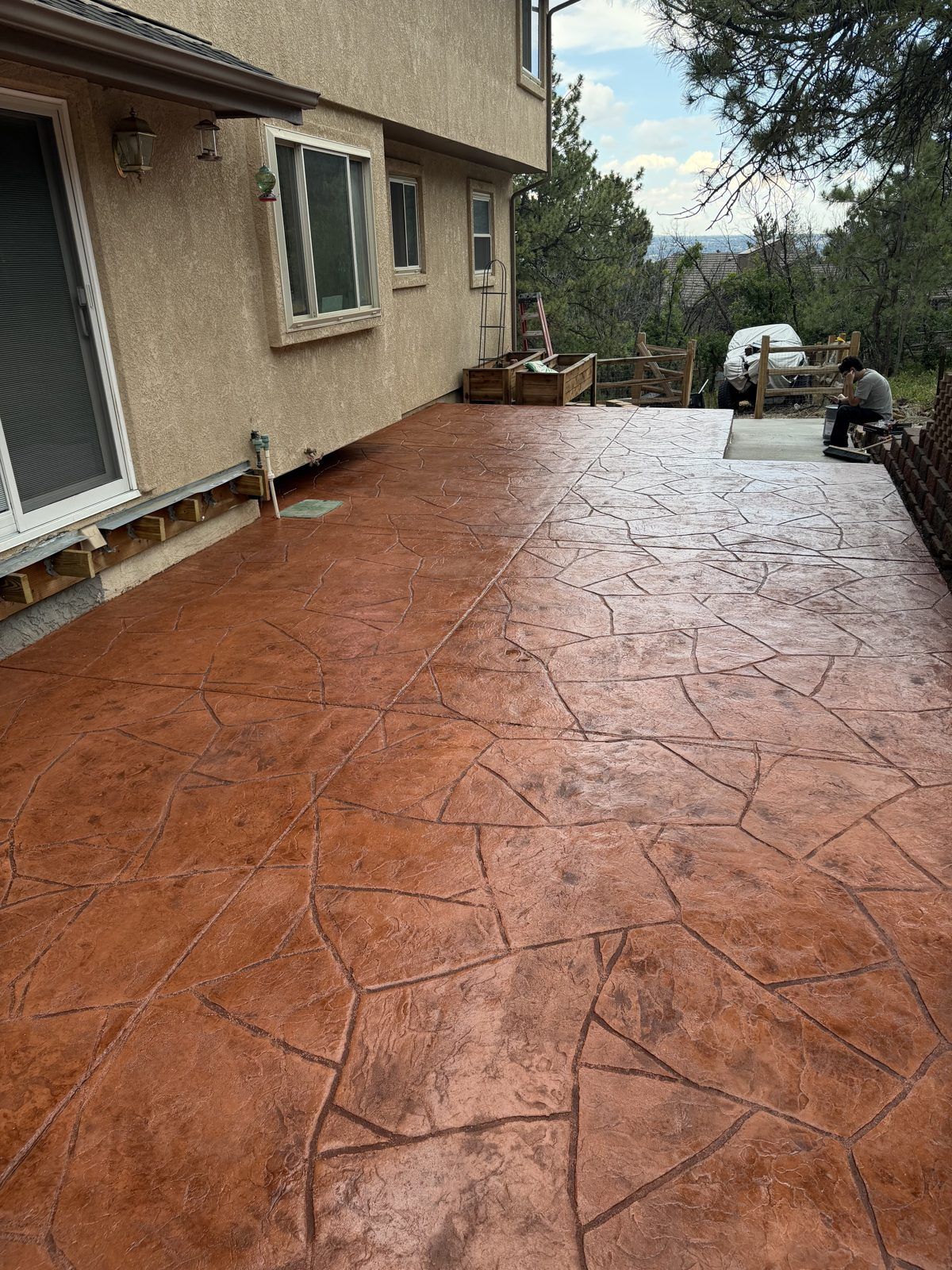
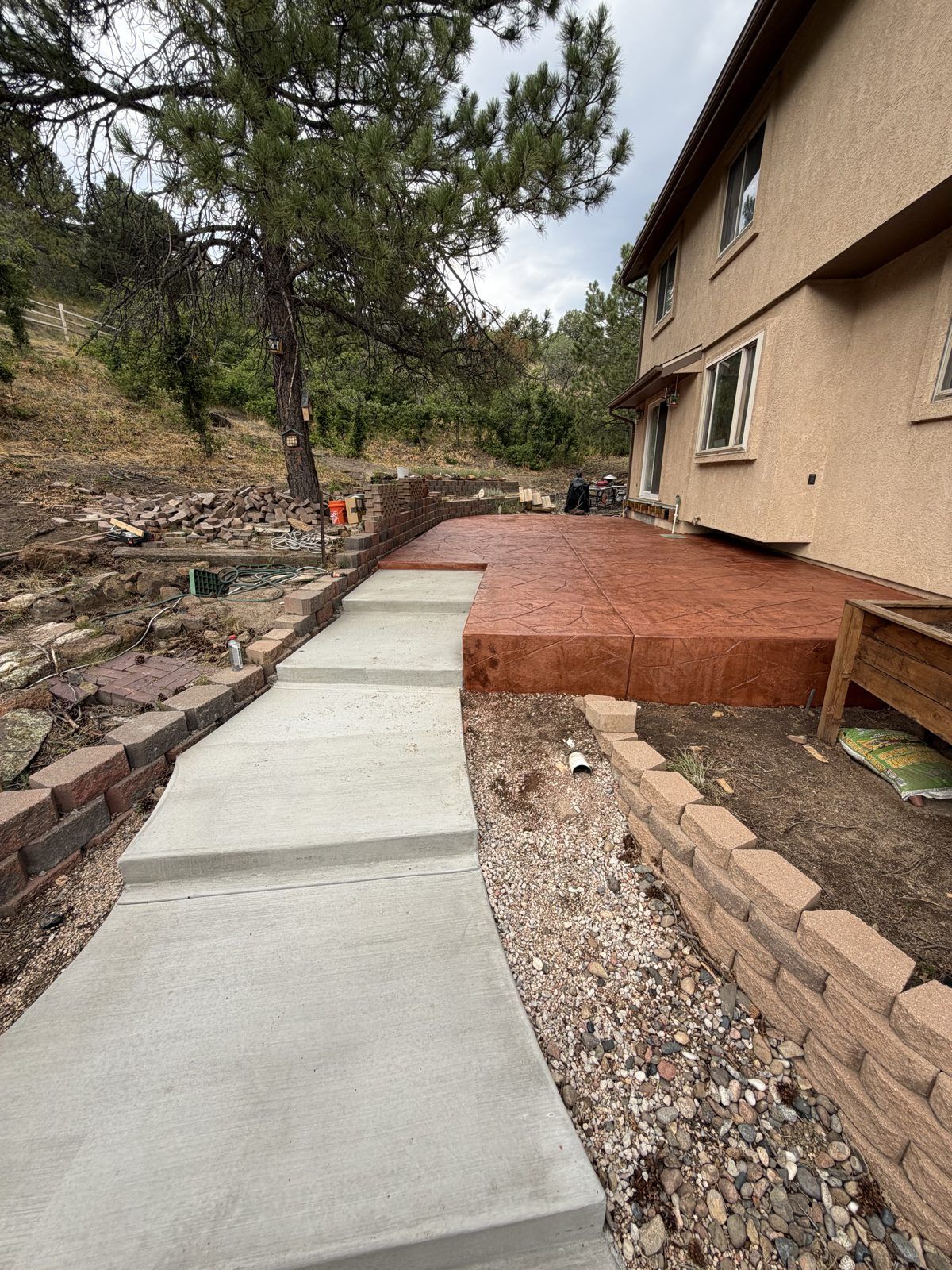
Stamped concrete is pressed with patterned mats while it's still wet to mimic stone, brick, slate, or wood plank. Color is usually mixed in (integral color) plus a surface release. It changes the texture and shape of the slab, not just the color.
Stained concrete
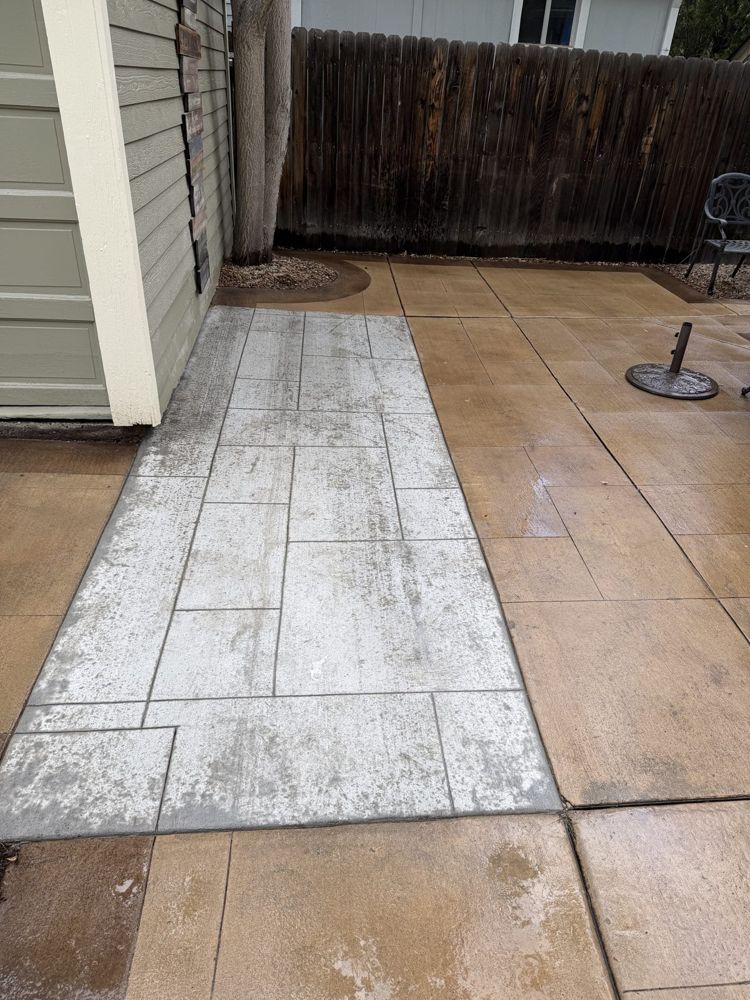
Staining adds color to an existing or new smooth slab—either acid stains that react with the concrete for a marbled, variegated look, or water-based stains for more consistent color. It changes the color, not the texture.
What each costs in Colorado Springs
- Plain broom finish: roughly $8–$12 per square foot
- Stamped concrete: roughly $12–$18 per square foot installed; a typical stamped driveway runs about $7,200–$12,000
- Stamping / exposed aggregate premium: about $2–$5 per square foot over a plain finish
- Stained finishes (as an overlay): commonly $7–$9+ per square foot depending on the system
Prices move with square footage, pattern complexity, and site conditions—but those ranges are a realistic starting point for budgeting in our market.
How they hold up to Colorado's climate
This is where the decision really gets made. Stamped concrete with integral color performs well here because the color runs all the way through—but the sealer that protects the pattern degrades faster at altitude and needs reapplication every 2–3 years. Stamped joints can also trap water, which accelerates freeze-thaw damage if they aren't sealed properly. Exposed-aggregate and textured surfaces naturally hide minor freeze-thaw wear better than a smooth, polished surface.
Surface-only acid stains can fade or wear in high-traffic, high-UV, freeze-thaw conditions if they aren't sealed and maintained. The takeaway: in Colorado Springs, any decorative finish is only as good as the mix beneath it and the sealing schedule that protects it.
Which should you choose?
- Choose stamped if you want the look of stone or pavers with a textured, slip-resistant surface and you're willing to reseal every couple of years.
- Choose stained if you have a sound existing slab you want to dress up, or you prefer a smoother, more subtle color treatment.
- Either way, insist on a 4,500 PSI, air-entrained mix on a properly prepped base. The finish is the part you see; the engineering underneath is the part that lasts.
Not sure which finish fits your budget?
Tell us about your project and we'll walk you through stamped vs. stained, show you samples, and give you a free estimate—no pressure.
Get My Free QuoteReady to Start Your Project?
Get a free, no-obligation quote today—or call us directly.