Local
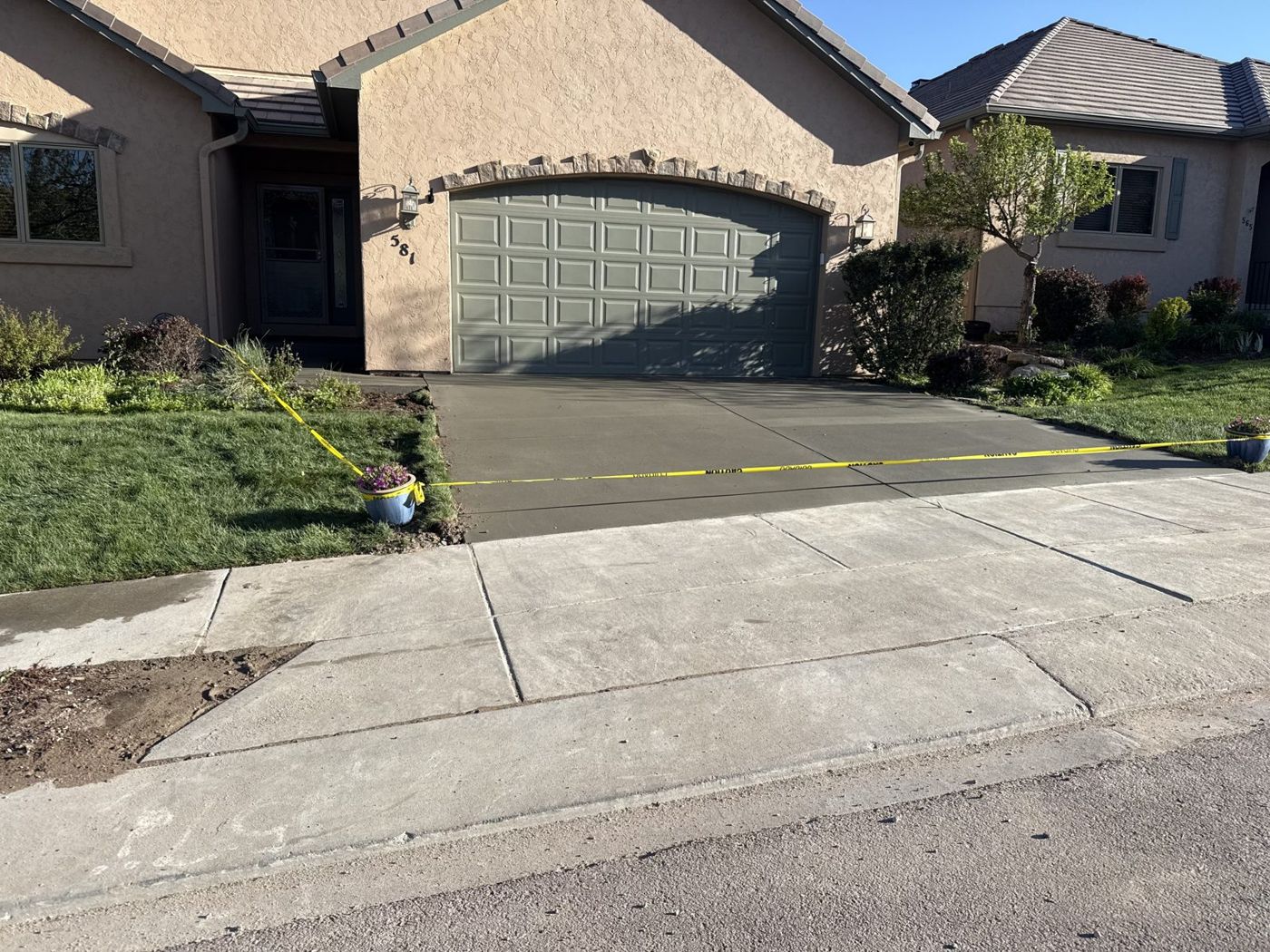
Why newer driveways crack and when to replace one.
Why driveways crack in newer Falcon and Banning Lewis Ranch subdivisions, how to read the damage, and what replacement involves.
Read the article →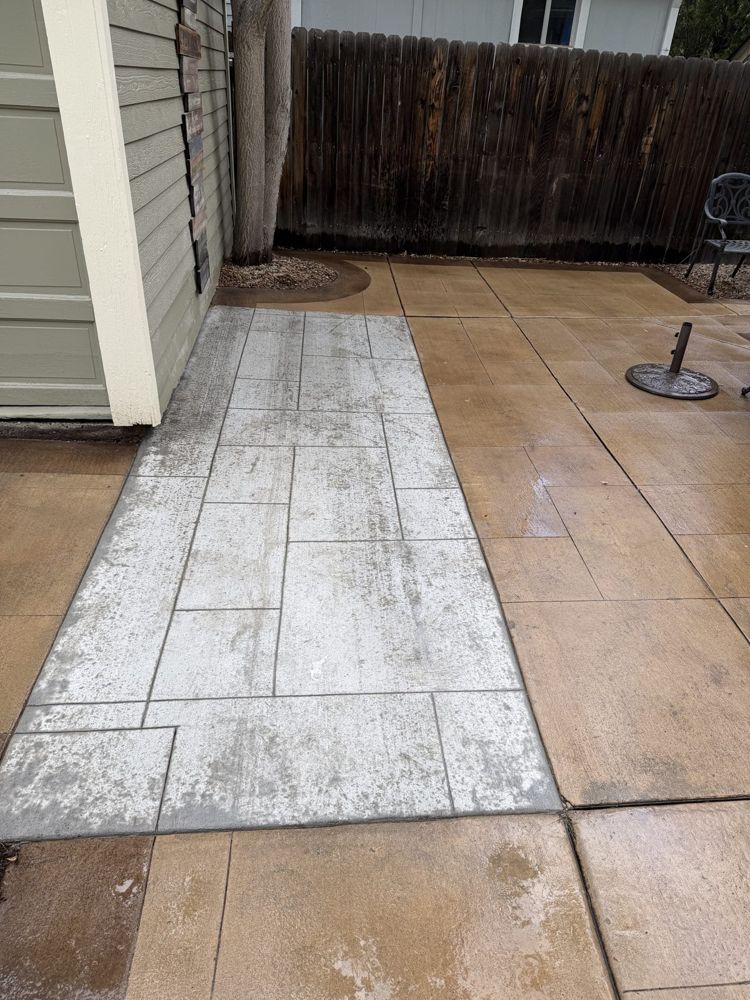
Finishes
One is a single reinforced slab. The other is thousands of units on a sand bed. Here is how each holds up to freeze-thaw, clay soil and snow.
By CO Springs Concrete · Updated September 2026 · 7 min read
Stamped concrete vs pavers comes down to how you want a patio to handle movement. Pavers are separate units on a compacted base, so they flex and can be lifted and reset, but their sand joints need upkeep. Stamped concrete is one reinforced slab with fewer joints to weed, but it can crack and needs resealing. On Colorado Springs clay, base and drainage decide how either one ages.
We build concrete patios, so we have a side in this. Pavers still win on several points. Here is what the Interlocking Concrete Pavement Institute (ICPI), the National Ready Mixed Concrete Association (NRMCA) and Colorado agencies say.
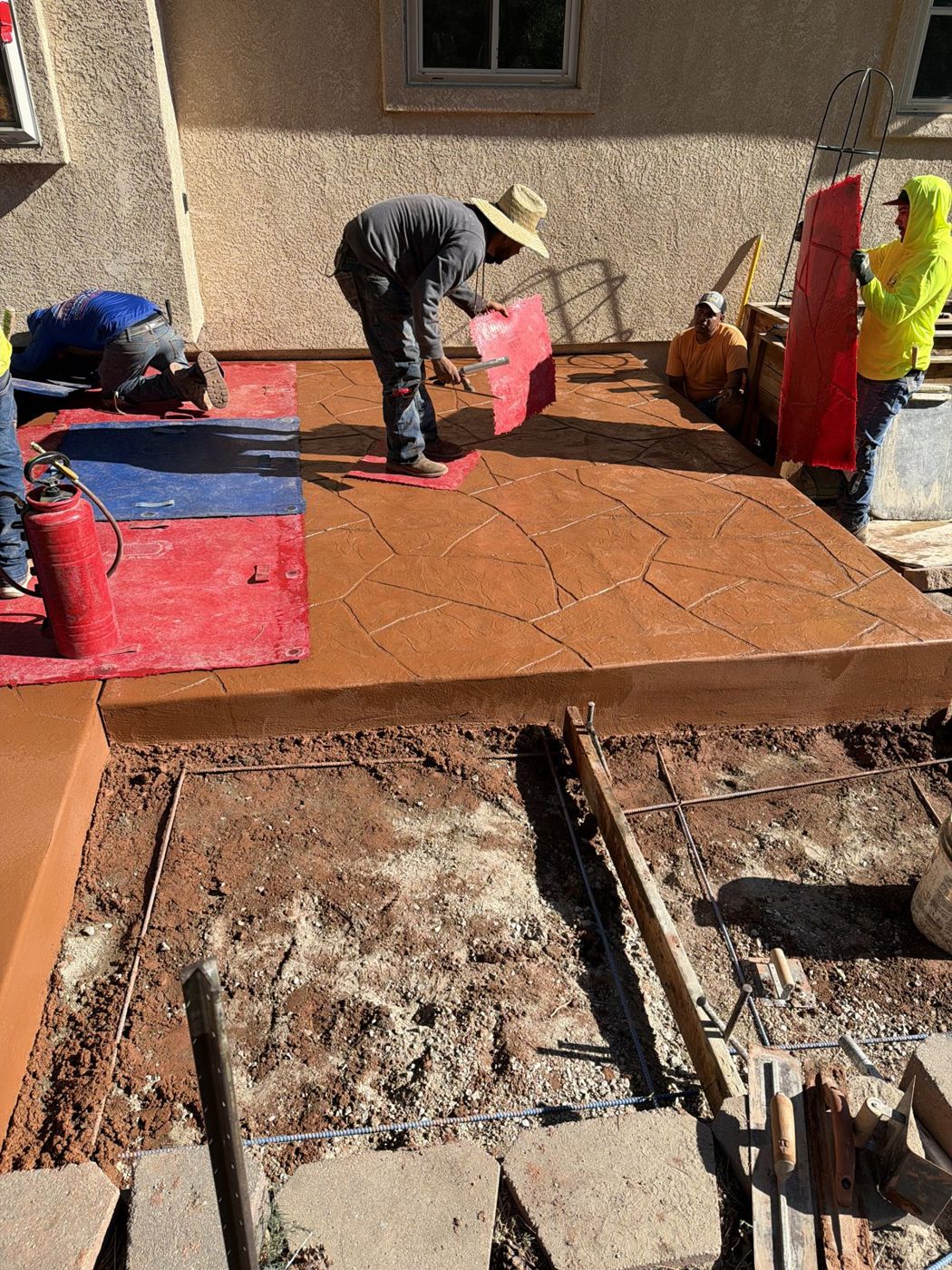
A stamped patio starts as an exterior concrete slab. The Portland Cement Association (PCA) describes the pattern being pressed in with imprinting tools while the concrete is still plastic. Color is mixed into the concrete, broadcast on the surface as a dry-shake hardener, or both.
Under the pattern it is one piece. On our jobs that means an excavated and compacted base, rebar sized to the job, an air-entrained exterior mix and saw-cut control joints. Joints matter because concrete shrinks. NRMCA calls joints pre-planned cracks and recommends spacing them no more than 24 to 36 times the slab thickness, about 10 feet for a 4-inch slab.
Pavers are factory-made concrete units. ICPI's construction guide lists the steps: excavate and compact the soil, add geotextile if needed, compact an aggregate base, set edge restraints, screed a bedding sand layer about 1 inch thick, lay and compact the pavers, then sweep sand into the joints.
Once compacted, the pavers interlock and pass loads to their neighbors through the joint sand. ICPI treats them as a flexible pavement and calls edge restraints essential to their performance.
The National Weather Service lists the Colorado Springs airport station at 6,186 feet. A patio base is only inches deep, so either system sits in soil that freezes and thaws through the winter.
Then there is the clay. The Colorado Geological Survey says bentonite clays can expand up to 20 percent by volume when wet, and it names cracked and heaved patios as common signs. The two systems react to that movement differently:
Neither one beats bad drainage. ICPI says adequate compaction minimizes settlement, notes geotextile may be used over clay and where soil freezes and thaws, and recommends drain pipes in slow-draining clay under vehicle traffic. CSU Extension's advice for swelling soils is to grade so water drains away from the house. Slope either patio away from your foundation.
This is where pavers earn their reputation. ICPI describes pavers as a zipper: lift the same units, fix the sand or base, and put them back. Its reinstatement guide says the repaired area becomes undetectable after a short period. A cracked paver can be swapped for a new one.
Stamped concrete repairs are harder to hide. A crack can be filled or an area patched, but a weathered, colored, patterned surface is hard to match. NRMCA's guidance on resurfacing damaged concrete says repair material will not match the color and characteristics of the original.
Joints give a slab a planned place to crack, so ask how they will be laid out before the pour.
The trade-off for flexibility is a joint around every paver. ICPI's cleaning and sealing guide lists what pulls sand out of joints: flowing water, wind, aggressive cleaning and tire action. Joint sand stabilizers and sealers reduce the potential for weeds and insects in the joints, but they are extra products with their own reapplication schedules.
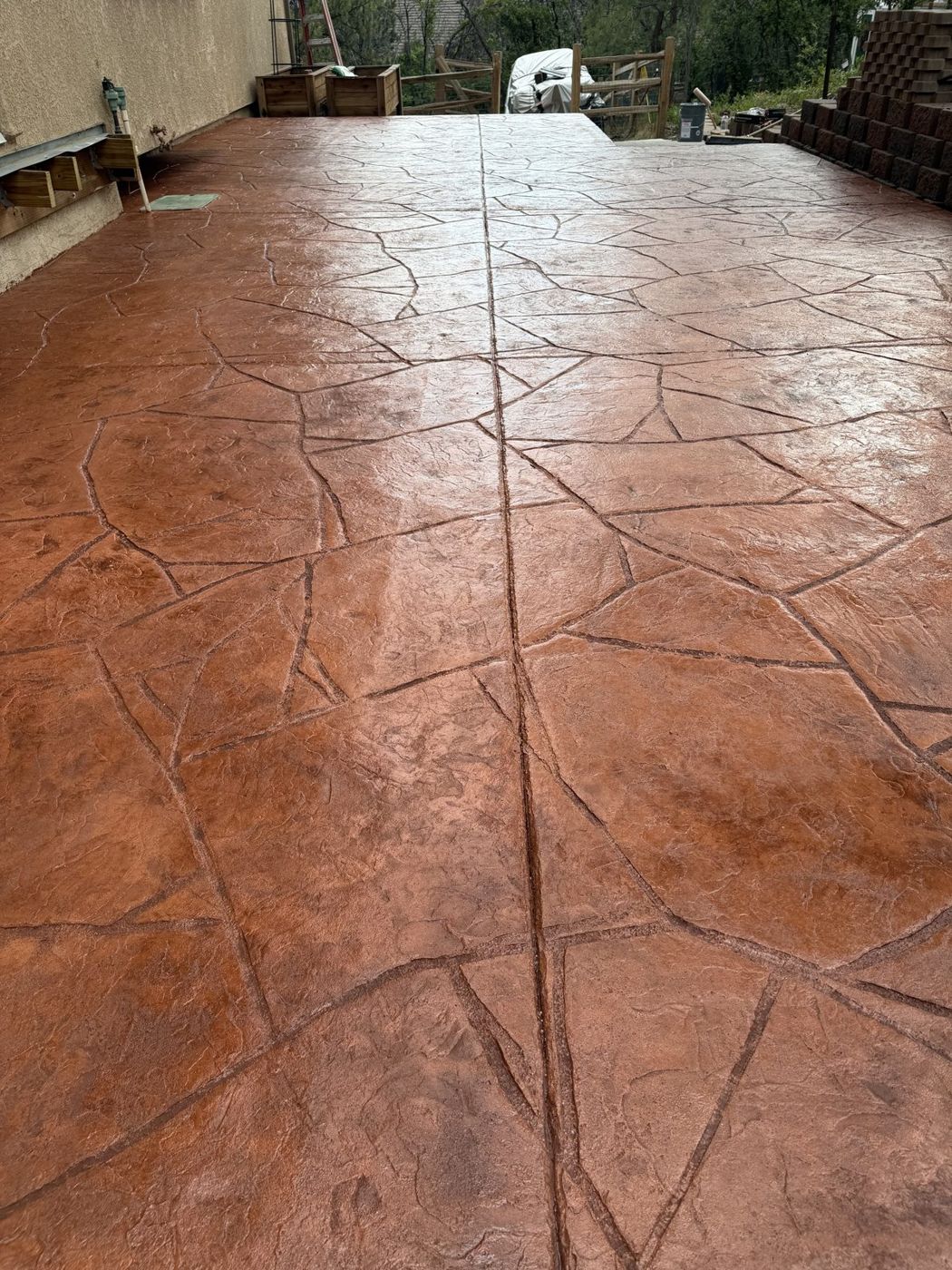
A stamped slab has control joints several feet apart and no sand between them. That leaves far fewer places for sand to wash out, seeds to sprout or ants to dig.
Stamped concrete: plan on it. The American Society of Concrete Contractors (ASCC) sealer guide treats sealer as a sacrificial coat that wears and must be reapplied. Its rule of thumb is new sealer every 2 to 3 years on high-traffic and UV-exposed areas. A sunny, open patio is UV-exposed.
Pavers: optional. ICPI says joint sand stabilization is generally optional and not required for many paver pavements. Sealers can resist stains and deepen color, but they also need reapplying, on a timeline set by use, climate and product quality.
For timing and product choice before cold weather, read our post on sealing concrete before winter.
Snow. ICPI says snow is removed from pavers as with any other pavement. A stamped slab gives the shovel one continuous surface with no loose units or sand joints.
Ice melt. ICPI says concrete pavers can resist deicing salts better than conventional paving because they are dense and absorb little water. For poured concrete, NRMCA advises no deicers in the first winter, clean sand for traction, and moderate amounts after that. It lists calcium chloride and sodium chloride (rock salt) as acceptable and warns never to use ammonium sulfate, ammonium nitrate or magnesium-based salts.
Slip resistance. On stamped concrete, watch the sealer. ASCC says sealer type affects slip resistance and that grit additives can be mixed in at the first coat and at every reseal. It also warns that sealed concrete covered in ice is still slippery, grit or not. ICPI points to the high slip resistance and fast drainage of pavers around pools.
Both can resemble stone. PCA describes stamped patterns that imitate cobblestone, brick and tile, pressed into one continuous surface. Pavers are real individual units, and the pattern comes from how they are laid. If you are also weighing a colored stain on plain concrete, see stamped vs stained concrete.
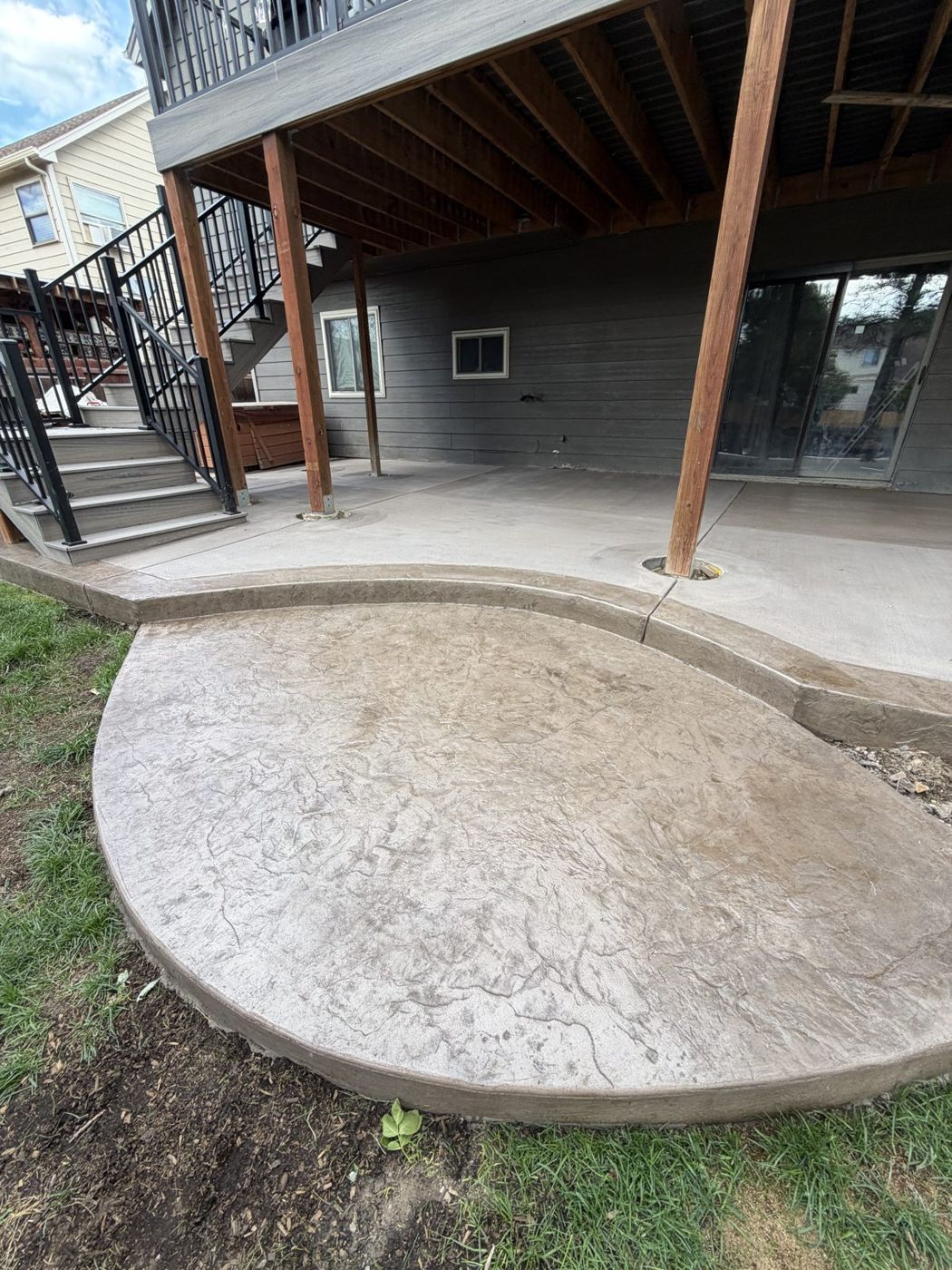
Standard pavers and stamped concrete both need a slope that carries water away from the house. Permeable pavers are different. ICPI says their joints are filled with small angular stone so storm water soaks through, and it lists residential patios among their uses. Clogged joints can be restored with vacuum equipment.
On clay, a permeable patio is an engineered drainage system. An ICPI Foundation study over clay soil used an underdrain. Next to a house on swelling soil, get a drainage design before sending storm water into the ground.
Pavers win on downtime. ICPI says they are ready for traffic immediately after installation. Stamped concrete has to be patterned while still plastic, then cure. The American Cement Association (formerly PCA) explains that curing keeps the cement hydrating so the concrete keeps gaining strength, with most of that gain in the first month. We give every homeowner cure instructions and dates, and our pour day guide covers the timeline.
NRMCA also cautions about placing exterior concrete in late fall, winter or early spring if it could freeze while still saturated. Pavers have no cure to protect.
| Factor | Stamped concrete | Pavers | Edge |
|---|---|---|---|
| Soil movement and frost | Resists small movement; can crack when soil heaves or settles | Flexes; units dip, lift or shift instead of cracking | Pavers |
| Repairs | Fill or patch; color and texture are hard to match | Lift, fix the base, reset the same units | Pavers |
| Joints, weeds and ants | Control joints several feet apart, no sand | Sand joint around every unit | Stamped |
| Sealing | Needed; about every 2 to 3 years in sun and traffic | Optional | Pavers |
| Ice melt | No deicers the first winter; never magnesium or ammonium products | Dense pavers resist deicing salts | Pavers |
| Slip resistance | Texture helps; sealer can cut grip unless grit is added | High slip resistance | Close; depends on the sealer |
| Ready to use | After curing | Immediately | Pavers |
| Surface for furniture | Continuous, no sand joints | Joint around every unit | Stamped |
| Base and edges | One-piece slab | Relies on edge restraints and bedding sand staying put | Stamped |
| Drainage options | Slope to shed water | Standard or permeable | Pavers |
Either way, the parts you cannot see decide how the patio ages: soil prep, compaction, drainage and joints. If stamped concrete is on your list, look through our stamped concrete and concrete patio work, then book a free on-site estimate. The crew that measures your patio is the crew that pours it, and you get a clear written quote.
There is no single lifespan for either. Pavers can be lifted, re-bedded and reset when the base moves, so a paver patio can be repaired in place again and again. A stamped slab holds up as long as its base, drainage and joints do and it is resealed on schedule. Its cracks can be filled, but they rarely disappear.
Pavers handle soil movement better because they flex and can be reset, and they are ready to use right away. Stamped concrete has far fewer joints for weeds, ants and sand loss, and gives a continuous surface for furniture. On Colorado clay, either one lasts longer with a well-compacted base and drainage that carries water away from the house.
They can. Pavers sit on soil that freezes, and swelling clay also lifts when it gets wet. Because pavers are separate units, movement usually shows as raised, sunken or uneven pavers rather than cracks. Those areas can be lifted, the sand or base repaired, and the same pavers reset. Good compaction and drainage reduce how much movement happens.
The texture itself gives some grip, but the sealer on top can make it slick when wet. Decorative concrete guidance from the American Society of Concrete Contractors recommends addressing slip resistance at the first sealer coat and every reseal, often with a grit additive. Any sealed surface covered in ice will still be slippery, so use sand for traction.
Yes, cracks can be filled and damaged areas patched or resurfaced, but the repair is usually visible. Stamped concrete has color, texture and pattern that weather over time, and industry guidance notes that repair material will not match the original concrete. Well-placed control joints are the best way to keep cracks where they are least noticeable.
Usually not. The Interlocking Concrete Pavement Institute says joint sand stabilization is generally optional for many paver installations. Sealers and stabilizers can reduce stains, sand loss, weeds and insects in the joints and can deepen color. Like any sealer, they wear with use and weather and need reapplying on a schedule set by the product.
Keep reading
Why driveways crack in newer Falcon and Banning Lewis Ranch subdivisions, how to read the damage, and what replacement involves.
Read the article →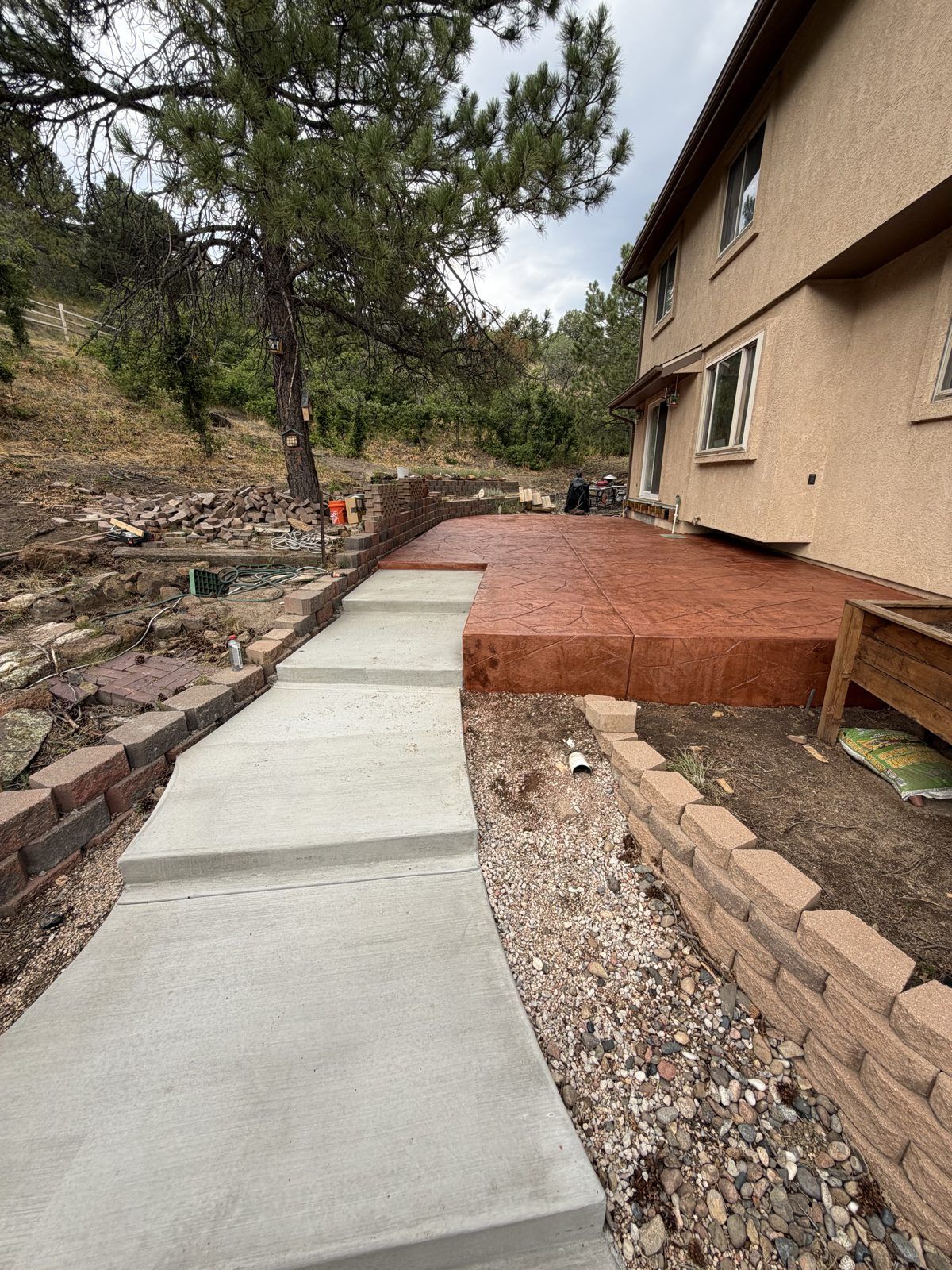
Who repairs the sidewalk in front of your house, when you need a permit, and how wide and sloped a new walkway should be in Colorado Springs.
Read the article →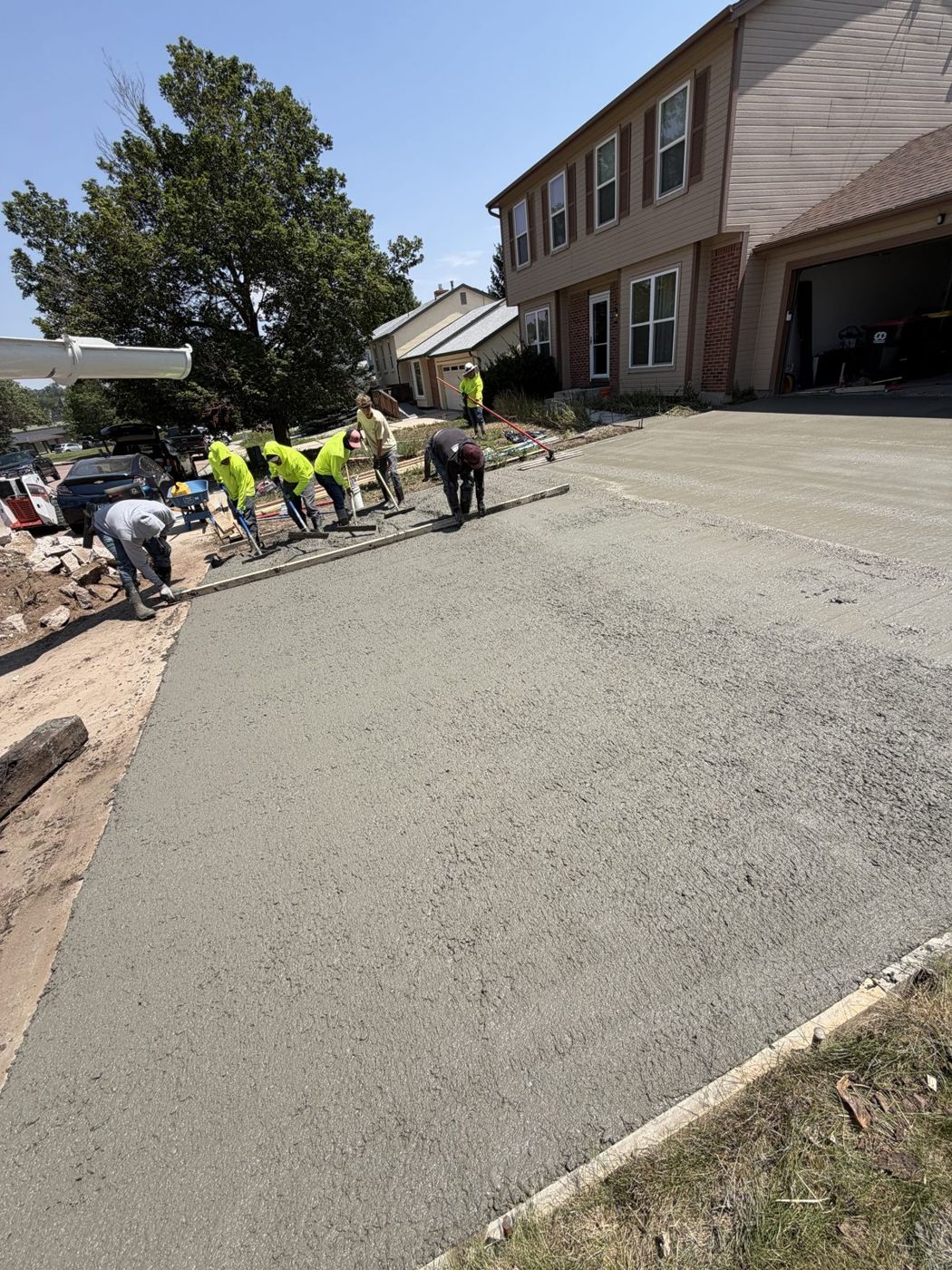
When you can walk and drive on new concrete, what happens on pour day, and how Colorado Springs cold, sun and wind change the schedule.
Read the article →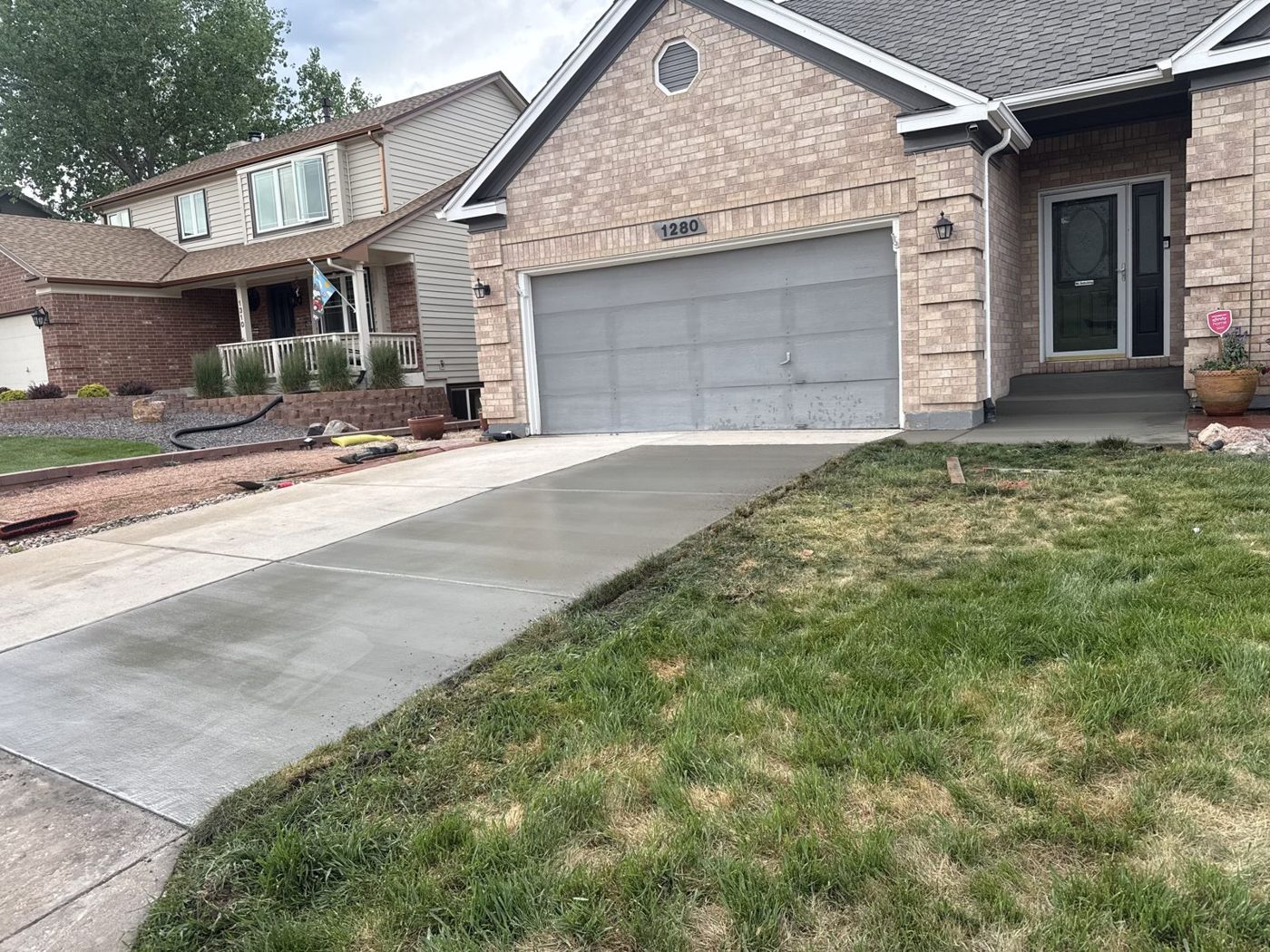
Free on-site estimate. We look at it, measure it and give you a clear written quote.