Planning
How long before you can drive on new concrete?
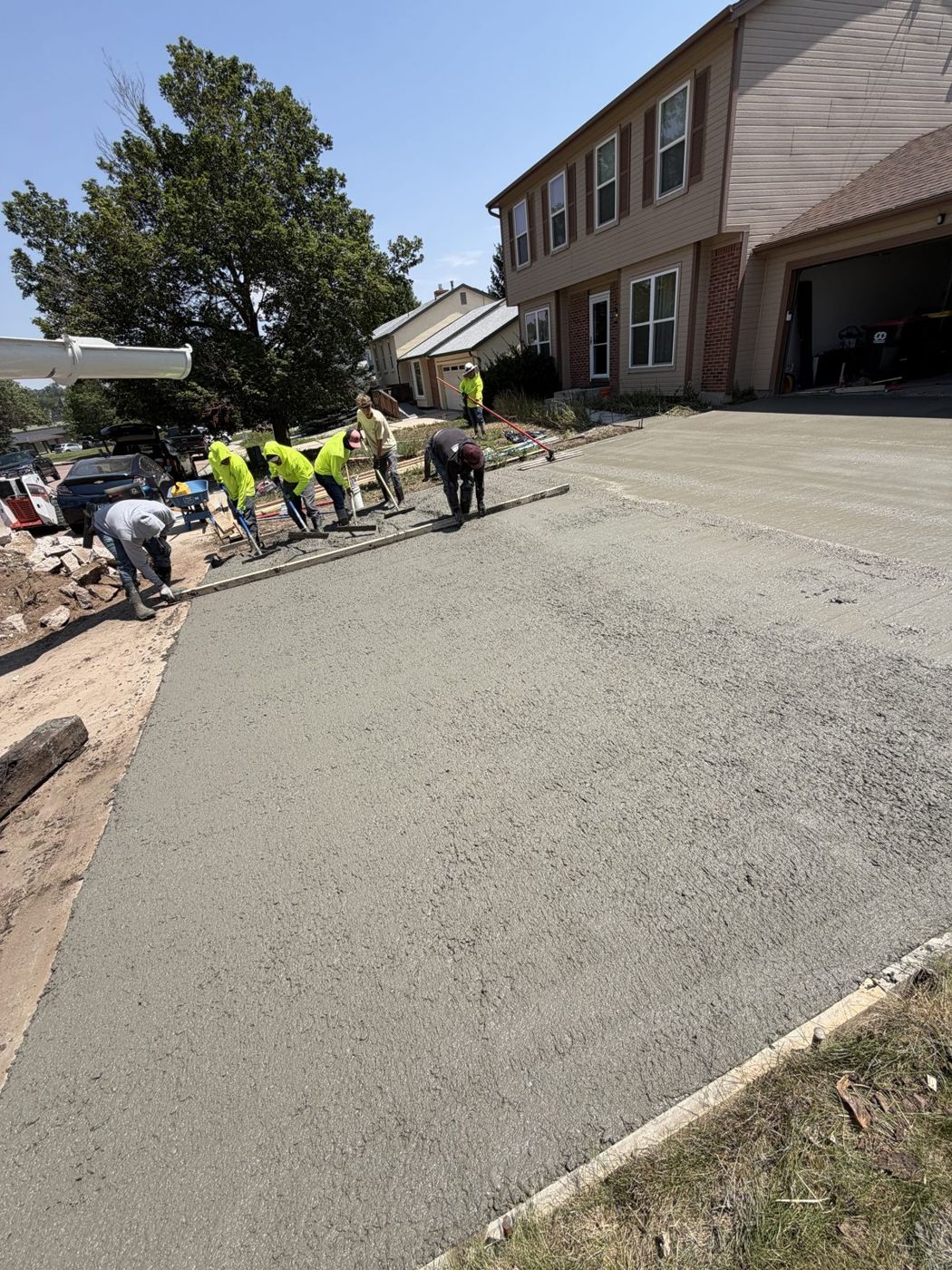
When you can walk and drive on new concrete, what happens on pour day, and how Colorado Springs cold, sun and wind change the schedule.
Read the article →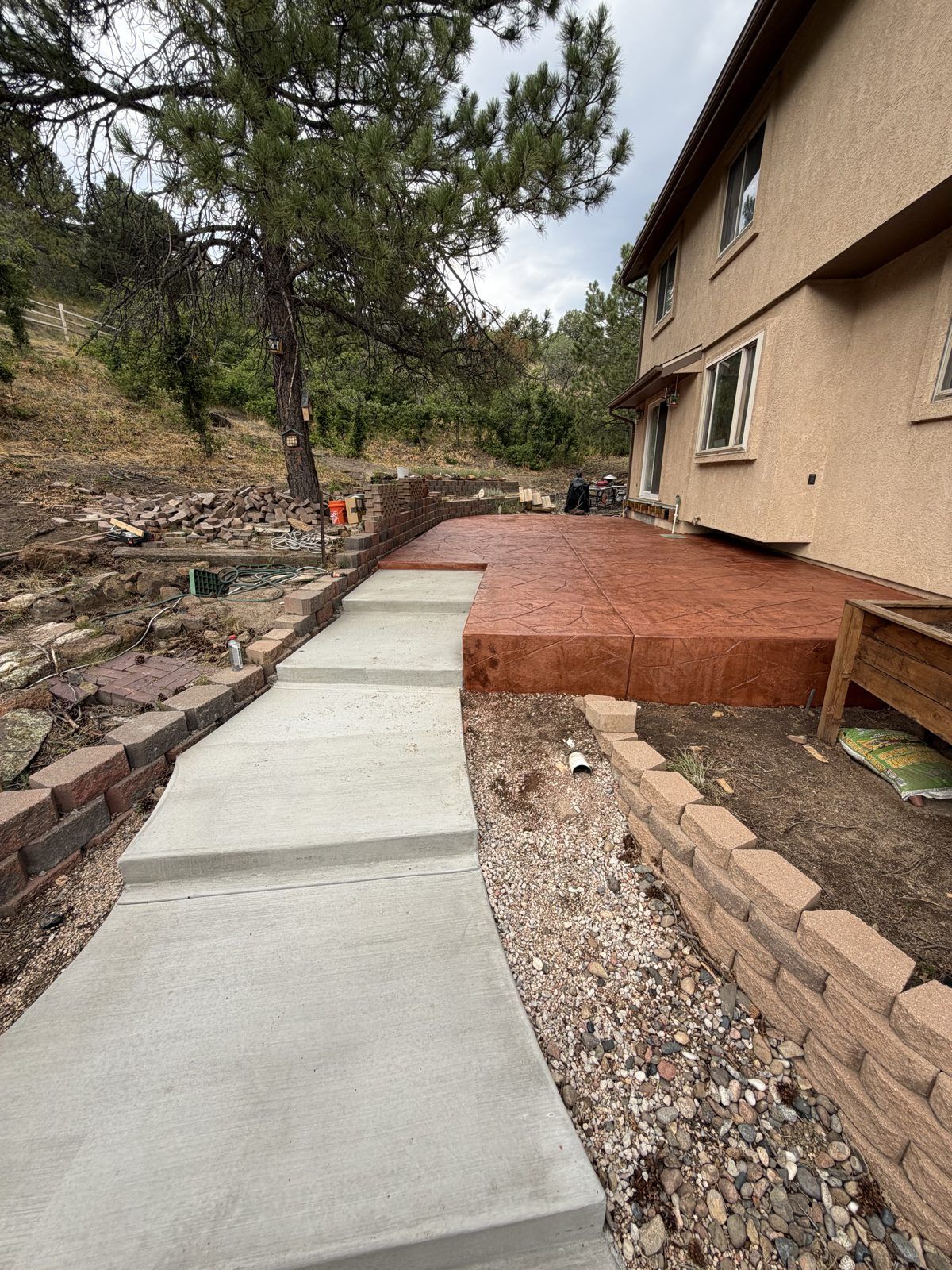
Local
Public sidewalk or private front walk? Who repairs it, when a city permit applies, and the width, slope and joint standards that keep a walk flat and draining.
By CO Springs Concrete · Updated September 2026 · 7 min read
Sidewalk replacement in Colorado Springs starts with one question: is the concrete public or private? The city handles repairs to public sidewalks, and new work there needs a licensed contractor and a city concrete permit. A private walkway on your own lot is on-grade flatwork that the regional building department lists as exempt from building permits. Both should drain and be jointed well.
Each rule below links to the office that publishes it. Rules change, so confirm with that office for your address before work starts.
A public sidewalk sits in the city right-of-way. City Forestry describes the right-of-way as city land for streets, sidewalks and public use, and notes that it includes the parkway strip between the sidewalk and the curb.
A private walkway is everything on your side of that line. That means the front walk from the sidewalk or driveway to your door, a side path to the gate, or a walk out to the patio. You own it, you maintain it, and you choose the layout and finish.
That line decides who repairs the concrete, whether a permit applies, and which standards apply.
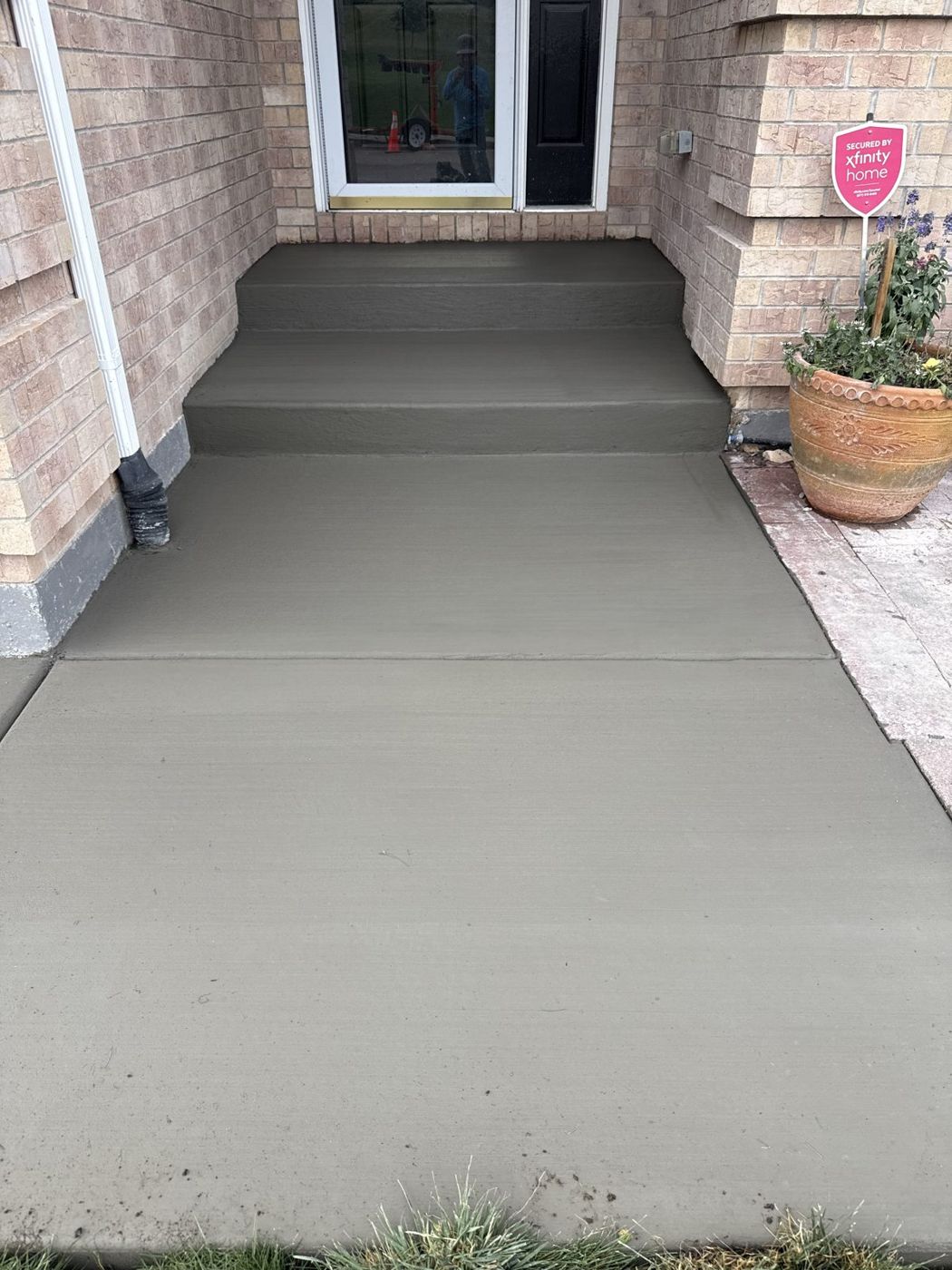
The city's Concrete Maintenance page says property owners are not responsible for maintaining the concrete adjacent to their property. It also says owners are not relieved of legal liability for their sidewalk. Public Works handles repairs to city sidewalks, curb and gutter, and pedestrian ramps.
Report a damaged public sidewalk through GoCOS, the city's online request system, or the phone line on that page. The city rates each request by severity, shown in the trip hazard section below.
The same page describes a Concrete Cost Share Program. Under it, the property owner and the city share a repair that the city bids out to a contractor, and only requests rated high severity are eligible.
The city says yes. Its Engineering, Inspections, Permitting and Fees page states that a concrete permit is required when a licensed contractor installs new or repairs existing sidewalk, curb, gutter or other concrete in the city right-of-way. The City Clerk's concrete contractor license page adds that no one may build or repair a sidewalk, curb and gutter, or driveway in the right-of-way without a license and a permit, except as City Code provides.
Permitted work must follow Section 500 of the city's Standard Specifications and the standard details, using city-approved mixes from approved suppliers. Traffic control is included in the concrete permit. The city notes that a general contractor license does not cover right-of-way work, and its Right-of-Way Management page says applicable inspections are required.
Pikes Peak Regional Building Department's list of work exempt from permits includes "private sidewalks, driveways, and platforms supported directly upon grade." That exemption is about building permits. Steps, retaining walls and HOA rules can change the picture, and PPRBD asks anyone unsure to contact them, so confirm for your address.
If your address is in unincorporated El Paso County, work in the county right-of-way goes through El Paso County Public Works, which takes Work in the Right-of-Way permit applications.
For public sidewalks, Section 511 of the city's Standard Specifications (revised August 2024) sets the baseline. The U.S. Access Board's public right-of-way accessibility guidelines add limits on slope and surface.
| Item | City of Colorado Springs public sidewalk | Access Board guidelines (PROWAG) |
|---|---|---|
| Width | 5 feet minimum | 48 inches minimum clear width |
| Thickness | 4 inches; at least 6 inches where it crosses a residential driveway | Not set |
| Cross slope | 1 to 2 percent | 1:48 (2.1 percent) maximum |
| Running slope | No steeper than the street grade beside it | 1:20 (5 percent), or the street grade where the street is steeper |
| Contraction joints | 5 feet apart or less, at least 1-1/2 inches deep | Not set |
| Surface | Broom finish; no steel trowels on exterior flatwork | Firm, stable and slip resistant |
The Access Board issued these guidelines as a final rule on August 8, 2023. It says they become mandatory once the Department of Justice and Department of Transportation adopt them for enforcement.
No code sets the width of your front walk. University of Florida IFAS Extension advises that walkways meant for more than one person be at least 3 feet wide. For two people to pass easily, 5 feet is a useful reference: it matches the city's public sidewalk width and the 60-inch ADA passing space the city cites.
Slope matters more than width. The U.S. Department of Energy's Building America Solution Center recommends that walkways, patios and driveways slope away from the house at least a quarter inch per foot for the first 10 feet. It also cites the International Residential Code's 2 percent slope for hard surfaces within 10 feet of the foundation.
Where the grade drops too much for a walk to handle, plan concrete steps instead of a steep slab.
The Access Board guidelines allow a vertical change of up to 1/4 inch in a public walking surface. Between 1/4 inch and 1/2 inch, the edge must be beveled. A taller lip needs more than a bevel to meet the guidelines.
Colorado Springs uses its own scale to rank repair requests. The Concrete Maintenance page rates them this way:
| City rating | Surface broken | Vertical settlement | Spalling |
|---|---|---|---|
| Low | Under 25 percent | Up to 1 inch | 25 percent or less |
| Moderate | 25 to 75 percent | 1 to 2 inches | 25 to 75 percent |
| High | 75 to 100 percent | 2 to 3 inches | Over 75 percent |
The city also moves requests up for verified accidents or injuries, blocked disabled access, and busy pedestrian areas. For minor uplift, the City Forestry FAQ notes that sidewalks can be ground down to reduce the trip hazard.
The full story on cracking is in our post on why concrete cracks in Colorado Springs. For sidewalks and walkways, four causes matter most.
Where major uplift has occurred, the Forestry FAQ says Public Works will often bring in City Forestry to look at the root structure. The city's standard sidewalk details for tree root protection, signed by City Forestry, narrow a sidewalk to 4 feet minimum at a tree. They also call for clearing roots within 4 inches of the bottom and sides of a new sidewalk unless directed otherwise. Work on city street trees needs a free City Forester's Permit, so talk to Forestry before anyone cuts roots near a public sidewalk.
The Colorado Geological Survey lists cracked driveways and sidewalks among the damage from expansive soils. These clays absorb water, and soil volume may expand 10 percent or more as they get wet. The survey notes that semi-arid places like Colorado, with seasonal swings in soil moisture, see these problems more often. The city's flatwork spec requires soft, yielding subgrade to be removed at least 12 inches deep and replaced with compacted fill.
NRMCA explains that concrete saturated with water and exposed to freezing and thawing can scale. Deicers make it worse, and poor drainage that lets salt solution sit on the surface raises the severity. It recommends air-entrained concrete with 6 percent total air for common aggregate sizes, proper curing, and avoiding deicers on new concrete where possible. Colorado Springs requires air entrainment on all concrete exposed to weather and deicing agents.
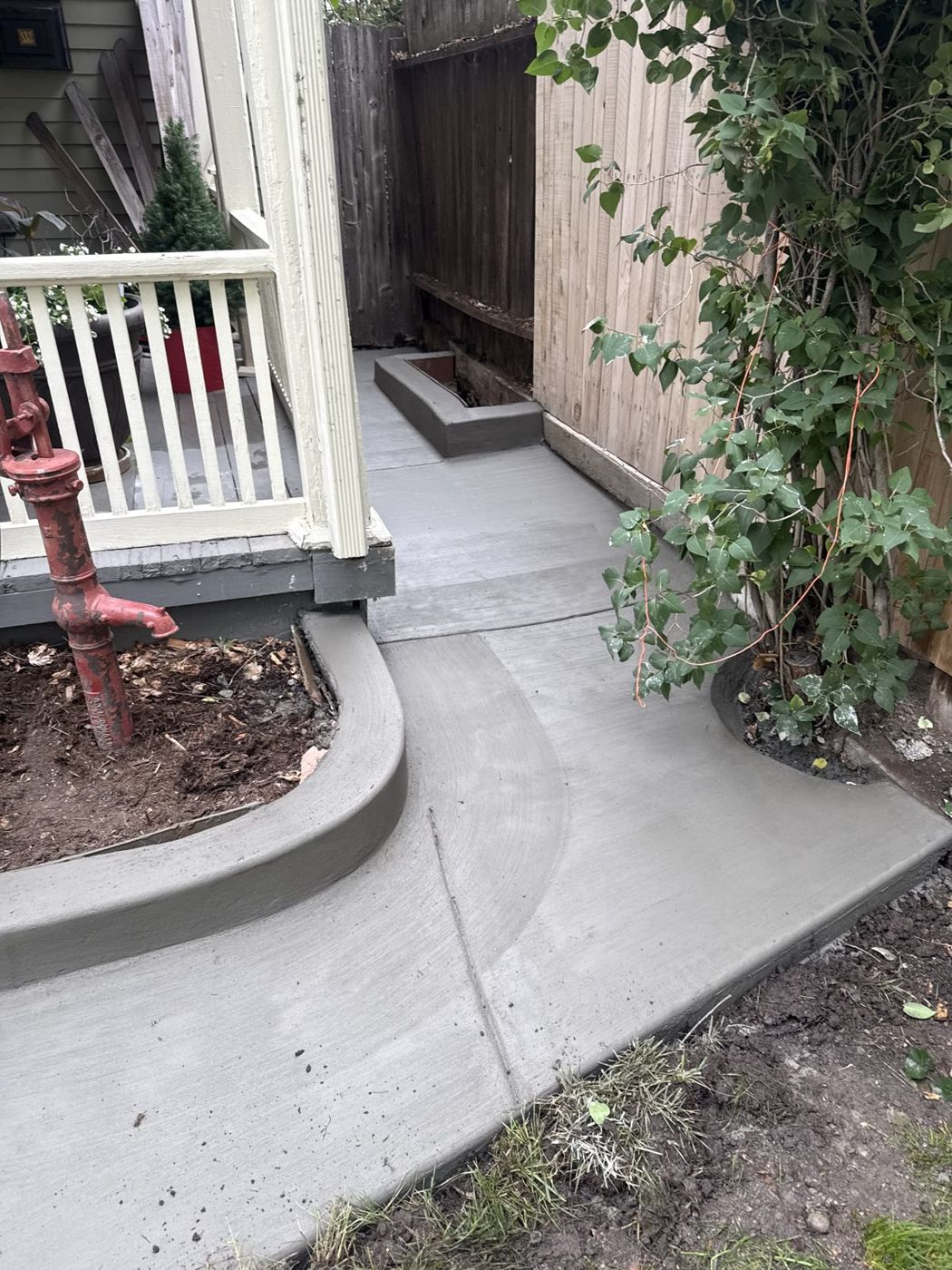
NRMCA calls joints pre-planned cracks. It recommends a maximum joint spacing of 24 to 36 times the slab thickness, panels that are square or nearly so, and grooves at least a quarter of the slab depth. It also recommends isolation joints where driveways meet walks. The city sets sidewalk contraction joints at 5 feet or less. Accessibility guidelines ask for a slip-resistant surface, and on public sidewalks the city specifies a broom finish.
For a public sidewalk, the job runs through the city. A licensed contractor gets the concrete permit, replaces the damaged concrete to Section 500 and the standard details, and schedules inspections. A private walk follows the same basic steps, with the layout and finish up to you.
On every job, our crew excavates and compacts the base, sets rebar sized to the job, and places an air-entrained exterior mix suited to freeze-thaw. We finish by hand, saw-cut control joints, and give you cure instructions and dates. The crew that measures your walk is the crew that pours it, and we end with a walkthrough. For how soon you can walk on it, see what happens on pour day.
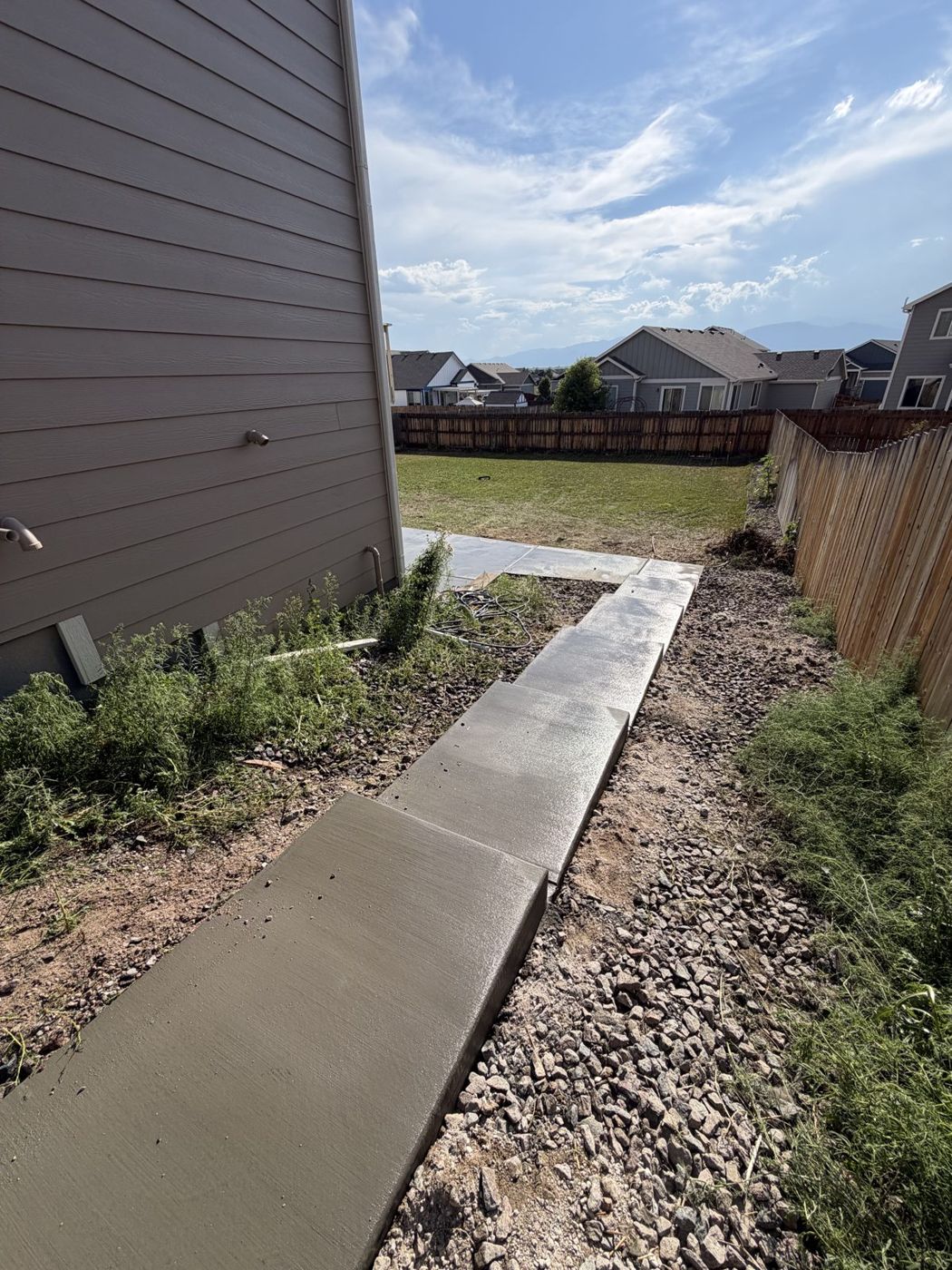
When you are ready, see our sidewalks and walkways work and book a free on-site estimate. You get a clear written quote. We are locally owned, licensed and insured, and we serve Colorado Springs, Monument, Black Forest, Peyton, Falcon and Fountain.
The City of Colorado Springs says property owners are not responsible for maintaining the public sidewalk next to their property, but they are not relieved of legal liability for it. You can report damage to the city online through GoCOS or by phone. The city rates each request by severity and offers a Concrete Cost Share Program for eligible high-severity repairs.
If the sidewalk is in the City of Colorado Springs right-of-way, yes. The city requires a concrete permit and a licensed concrete contractor for new or repaired sidewalk, curb and gutter there, and the work must meet Section 500 of the city's Standard Specifications. Call the city's Right-of-Way Management team to confirm what your job needs.
Pikes Peak Regional Building Department lists private sidewalks, driveways and platforms supported directly on grade among work that does not need a building permit. Steps, retaining walls and HOA rules can change that, and unincorporated El Paso County has its own right-of-way permits. Contact PPRBD to confirm for your address before work starts.
No code sets the width of a private front walk. University of Florida IFAS Extension suggests at least 3 feet for walkways used by more than one person. If you want two people to pass easily, 5 feet is a useful reference, since it is the Colorado Springs minimum for public sidewalks and matches a 60-inch accessible passing space.
U.S. Access Board guidelines for public sidewalks allow a vertical change of up to a quarter inch. Changes between a quarter inch and half an inch must be beveled. Colorado Springs ranks repair requests partly by how far a panel has settled, from up to 1 inch at low severity to 2 to 3 inches at high severity.
The City of Colorado Springs Standard Specifications call for public sidewalks to be 4 inches thick and at least 5 feet wide. Where a sidewalk crosses a residential driveway, it must be at least 6 inches thick. The same section sets a cross slope of 1 to 2 percent and contraction joints no more than 5 feet apart.
Keep reading
When you can walk and drive on new concrete, what happens on pour day, and how Colorado Springs cold, sun and wind change the schedule.
Read the article →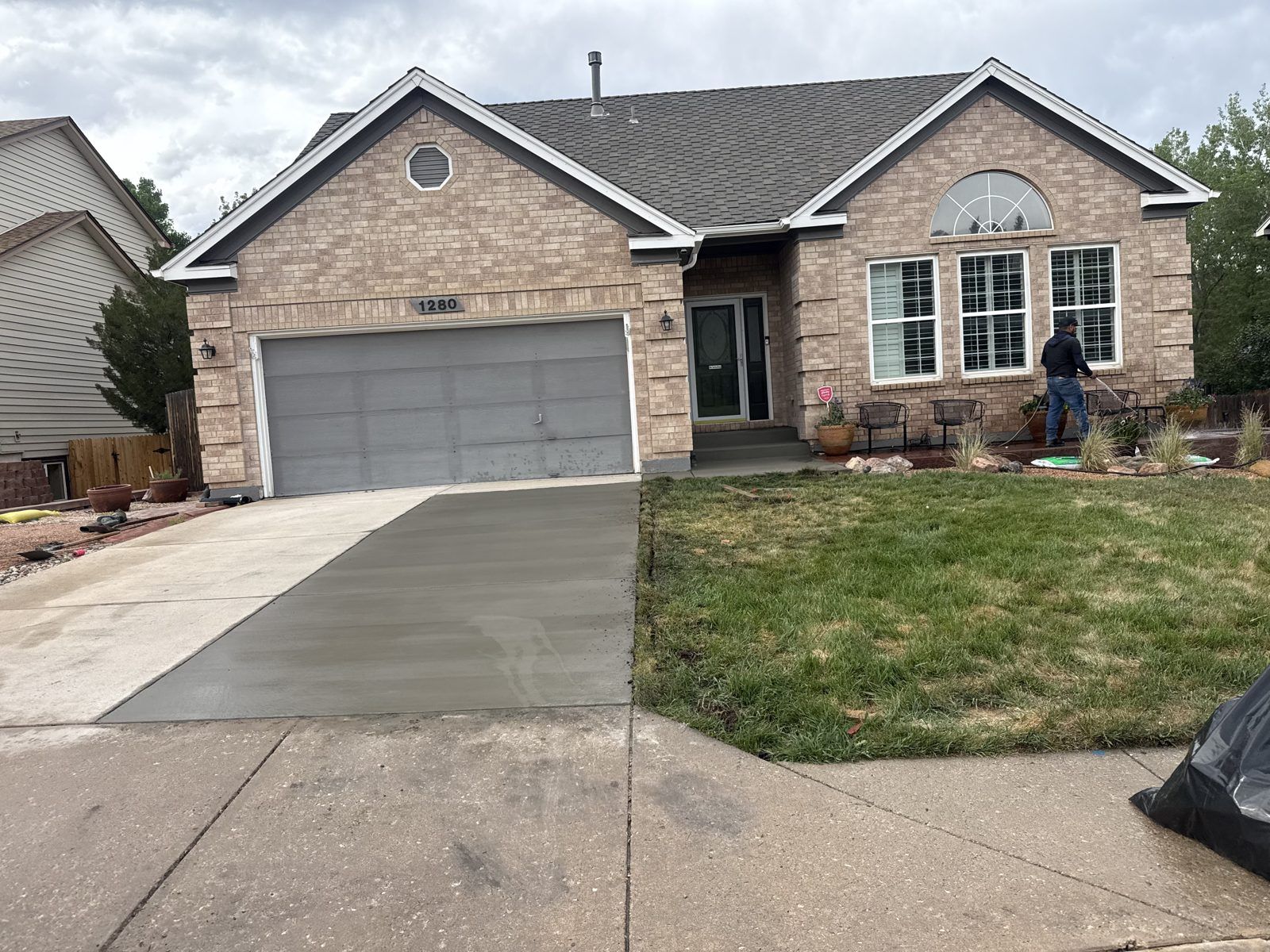
What really decides a concrete driveway estimate in Colorado Springs, why two quotes differ, and the questions to ask any contractor.
Read the article →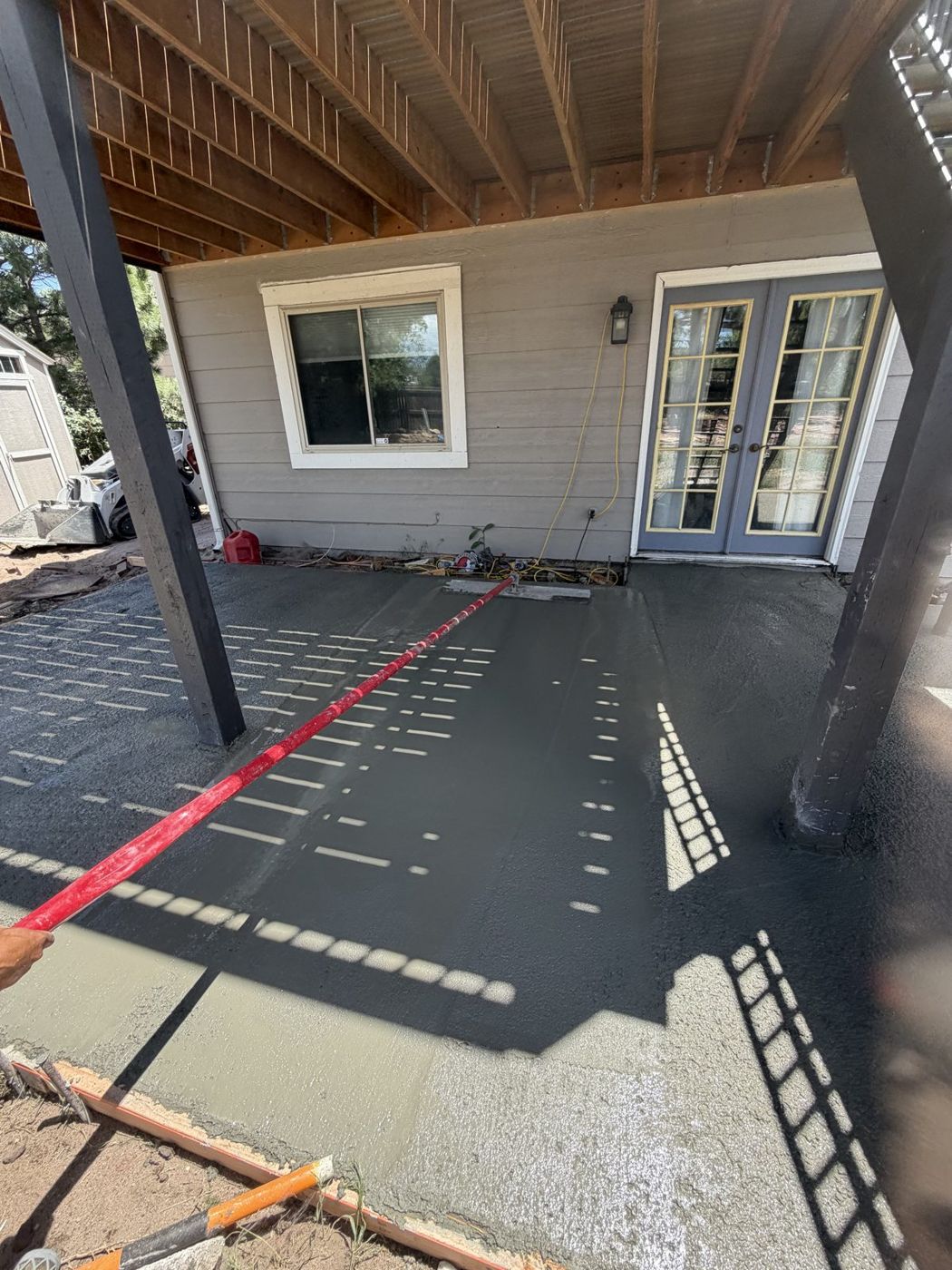
Which concrete cracks are normal in Colorado Springs, which mean trouble, and how the base, mix, joints and curing prevent the rest.
Read the article →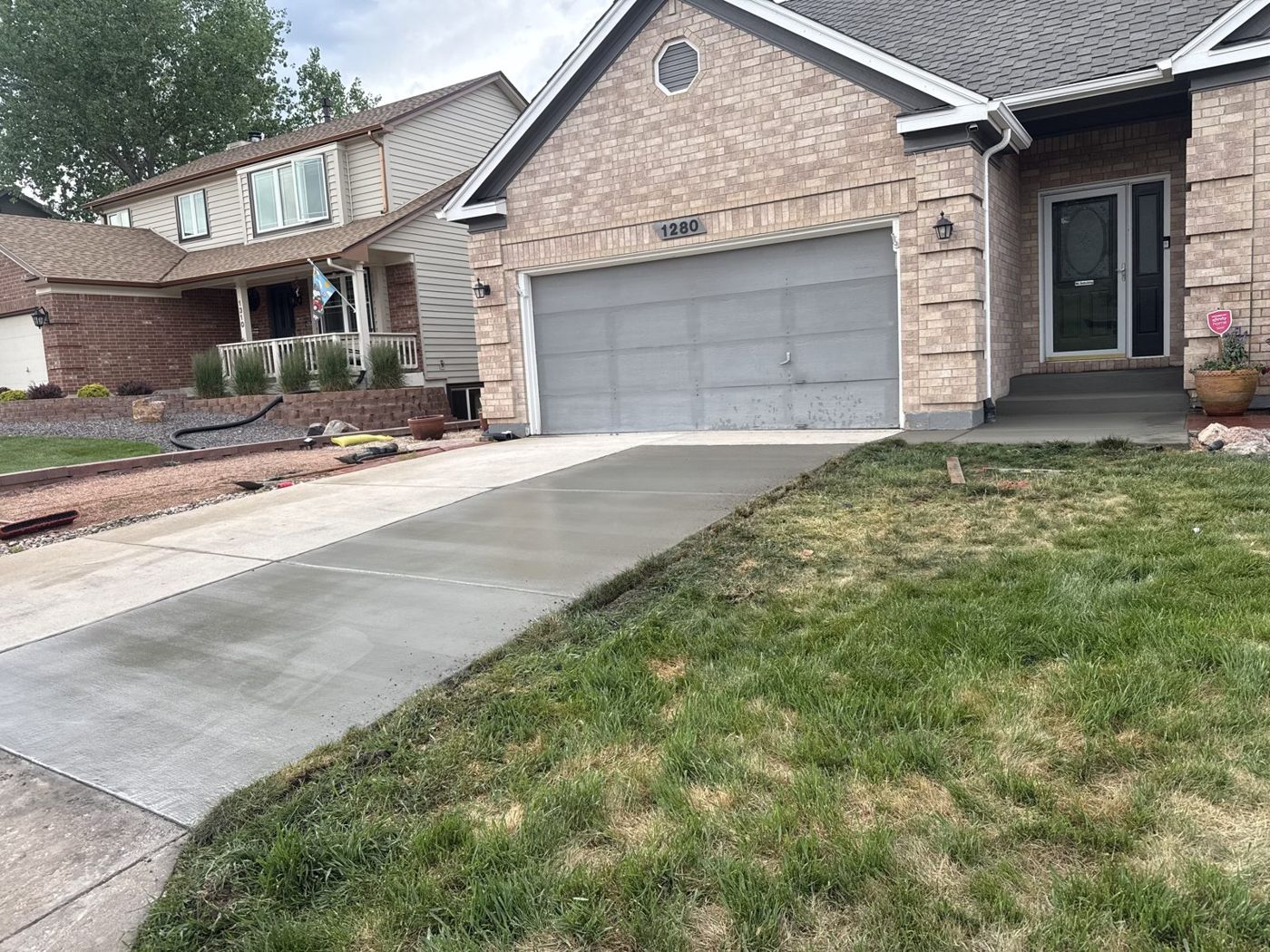
Free on-site estimate. We look at it, measure it and give you a clear written quote.